
Planting
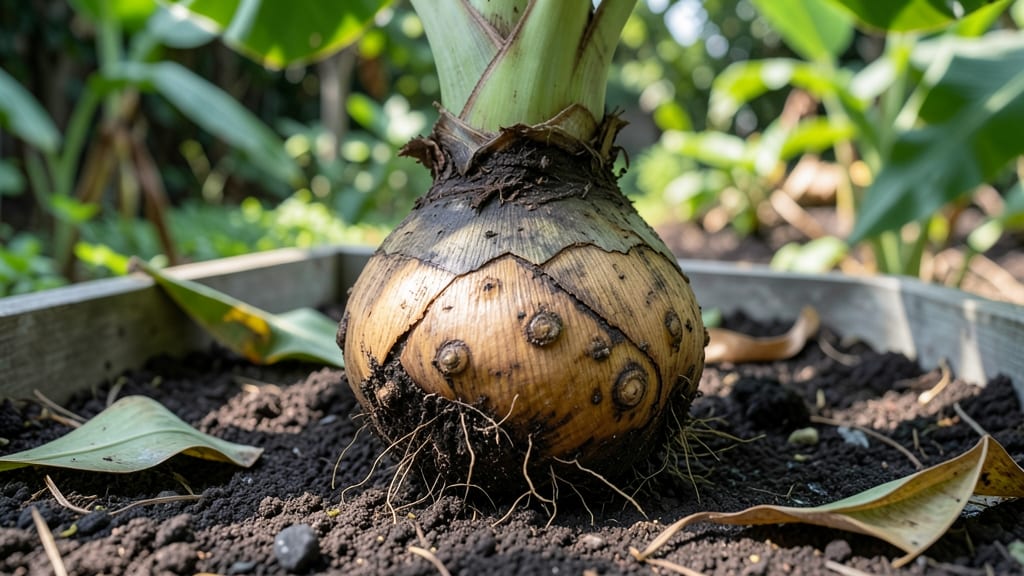
Growing banana plants from corms gives you fast, healthy roots that outpace suckers or seeds—here's how to do it right. 🌱 I've propagated dozens of corms, and the secret lies in soil moisture, warmth, and patience.
Most gardeners rush this step, but banana corms need consistent conditions to sprout strong roots before they even think about leaves. You'll need a well-draining mix of potting soil and perlite, a warm spot (70-85°F), and 3-4 weeks of careful watering.
The corm itself looks like a stubby, knobby root—think of it as a banana plant's energy reserve waiting to burst. Too much water drowns it; too little stresses it. I use a spray bottle for the first two weeks to keep it damp without soggy soil.
Once roots appear (they'll look like tiny white hairs), you'll see vigorous growth in just 6-8 weeks. The plants stay compact until they're ready to transplant, and you avoid the shock many suckers experience. My fastest corm sprouted in 21 days—now that's what I call a head start.
This method works best in zones 10-12, but with grow lights and a heat mat, you can try it anywhere. The key is patience—banana corms don't rush, and neither should you. Ready to grow your own tropical giant?
📚 In This Guide
- What you need
- Instructions
- Tips and common mistakes
- Wrapping up and next steps
What you need
- ● Banana corm: 1 healthy, disease-free corm (preferably 2–4 inches in diameter with visible buds).
- ● Well-draining potting mix: 2–3 gallons of a blend of peat moss, perlite, and coconut coir (or a commercial mix labeled for tropical plants).
- ○ Pot or container: 1–2 gallon-sized pot with drainage holes (plastic or terracotta). Optional: A nursery tray for multiple corms.
- ○ Rooting hormone: 1 small bottle (optional but recommended for faster root growth).
- ● Spray bottle: For misting (keeps the corm hydrated without overwatering).
- ● Pruning shears or knife: Sterilized for cutting (if separating corm sections).
- ○ Plastic wrap or humidity dome: To create a mini greenhouse effect (optional but helpful in dry climates).
- ● Warmth: Consistent temperatures between 75–85°F (24–29°C)—banana corms hate cold drafts! 🌡️
- ● Indirect sunlight: Bright, filtered light (e.g., near a window with sheer curtains). Avoid direct sun until roots establish.
- ● Humidity: Aim for 60–70% (use a humidifier or pebble tray if your home is dry).
- ● Patience: Roots can take 4–8 weeks to sprout—stay consistent!
- ● 🔥 Sterilize everything! Wash tools and pots with rubbing alcohol to prevent fungal infections.
- ● ✨ Label your corms: Use toothpicks and markers to track planting dates and varieties.
- ● 🌱 Bottom heat helps: Place the pot on a seedling mat (70–75°F) to boost root growth.
Step-by-step instructions for propagating banana plant corms
Here’s how I’ve grown strong, fast-growing banana plants from corms—no fancy equipment needed.
🌱 Step 1: Select and Prepare the Corm
Choose a healthy, firm corm with at least one visible eye (the small bump where new growth emerges). Avoid corms that feel soft or have mold—those won’t root well. I like to soak mine in lukewarm water for 12 hours first. This softens the outer layer and jumpstarts root growth.
After soaking, gently scrape away any loose or damaged skin with a clean knife. You’re not trying to expose the center—just remove anything that might rot. Place the corm on a paper towel to dry for 30 minutes before planting. This prevents rot when you bury it.
🪴 Step 2: Plant in Well-Draining Soil
Fill a 6-inch pot with a mix of 50% potting soil and 50% perlite or coarse sand. Banana corms hate soggy roots, so drainage is key. I tap the pot gently to settle the mix, then make a small hole—about 2 inches deep—right in the center.
Position the corm so the eye faces upward. Press it lightly into the hole, covering it with soil but leaving the top exposed. Water lightly until the soil feels moist but not wet. Too much water now will drown the corm before roots even start.
☀️ Step 3: Provide Warmth and Humidity
Banana corms need warmth to germinate. I place my pots on a seedling heat mat set to 75-80°F or on top of a refrigerator (the heat rising from the coils works great). Keep the soil consistently moist—not soggy, just damp—by watering every 2-3 days.
Cover the pot with a clear plastic bag or humidity dome to trap warmth and moisture. Check daily for condensation—if the inside fogs up, you’ve got the right balance. Within 2-4 weeks, you’ll see the first green shoot emerge from the eye. That’s your signal everything’s working!
💧 Step 4: Transition to Light and Air
Once the shoot reaches 4-6 inches tall, remove the plastic and move the pot to bright, indirect light. Direct sun too soon will scorch the delicate leaves. I start with a south-facing window, then gradually introduce 2-3 hours of morning sun over a week.
Water when the top inch of soil feels dry. Banana plants drink more as they grow, so you’ll notice the soil drying faster. Avoid letting the pot sit in standing water—banana roots rot quickly if they’re waterlogged.
✂️ Step 5: Harden Off and Transplant
After 6-8 weeks, when the plant has 3-4 mature leaves, it’s ready for outdoor life. Start by placing it outside in a shaded, sheltered spot for 1 hour the first day. Gradually increase time over 10 days, moving it to sunnier spots each day.
Once hardened off, transplant to a 12-inch pot or garden bed with well-draining soil. Banana plants love warmth and space—give them 6+ feet of room to spread. Keep the soil moist but not soggy, and you’ll see rapid growth in just a few months.
Tips & tricks for fast, healthy banana plant propagation
Here's what I've learned after growing dozens of banana plants from corms—these tricks cut down the wait time and boost success rates.
Soaking Secret: The 12-hour lukewarm water soak isn't just about softening the corm—it's also a great time to check for pests. Run your finger along the skin while soaking. If you feel anything slimy or see tiny holes, that corm's compromised. Toss it before planting, because those pests will spread to your healthy corms.
Drainage Is Non-Negotiable: I've ruined three corms by skipping this step. That 50% perlite mix isn't optional—it prevents the number one killer of banana corms: root rot. If your soil mix feels heavy or compacted, add another 10% perlite. The hole should be just deep enough that the eye peeks above soil level, but not so deep the corm feels buried.
Heat Hack: That 75-80°F range is critical, but here's the real trick: if you don't have a heat mat, try this instead. Place your pot on top of your refrigerator (the heat rising from the coils works perfectly) or nestle it between two light bulbs in a closed cabinet. Just monitor daily—banana corms can overheat just as easily as they can get too cold.
Light Transition Timing: The 4-6 inch shoot mark is your cue to remove the plastic, but don't rush the light introduction. I start with just 2-3 hours of morning sun because banana leaves burn faster than you'd think. Watch the leaves—if they develop yellow patches, you've gone too far too soon. Gradual exposure is key to preventing shock.
Pro Tips for Banana Plant Corm
- Here's what I've learned after growing dozens of banana plants from corms—these tricks cut down the wait time and boo...
- Soaking Secret: The 12-hour lukewarm water soak isn't just about softening the corm—it's also a great time to check f...
- Drainage Is Non-Negotiable: I've ruined three corms by skipping this step. That 50% perlite mix isn't optional—it pre...
Frequently asked questions
Got questions about banana plant corms? You’re not alone! Here are some of the most common queries—plus quick, actionable answers to help you propagate like a pro.
What’s the best time of year to plant a banana corm for propagation?
The ideal window is spring or early summer (March–June in most climates). This gives your corm warm soil, consistent moisture, and long daylight hours to establish roots before winter. Avoid planting in fall—cool temps slow growth, and frost can kill tender corms. Pro tip: If you’re in a tropical zone, plant when rainfall is steady!
Can I reuse a banana corm after harvesting fruit?
Yes, but with caution! After fruiting, the corm shrivels and may not regrow. Cut it into 1-inch-thick slices, let them dry for 2–3 days, then plant the healthy basal (bottom) portion. Discard mushy or rotting sections. Warning: Some varieties (like dessert bananas) decline faster—consider replacing them every 3–4 years for best results.
What if my banana corm rots before sprouting?
Rot is usually caused by overwatering, poor drainage, or fungal/bacterial infections. To troubleshoot:
- Check soil moisture—corms need well-draining mix (50% potting soil + 50% perlite/sand).
- Ensure the planting hole has drainage holes if in a pot.
- Dust with cinnamon powder or copper fungicide for prevention.
- If rot appears, trim healthy tissue and replant immediately.
Quick fix: Soak corms in a 1:10 hydrogen peroxide solution for 10 minutes before planting to sterilize.
Are there alternatives to using a corm for banana propagation?
Try these low-effort methods:
- Suckers: Remove "pups" (shoots) from the mother plant’s base. Let them dry for 24 hours, then plant 6–12 inches deep.
- Tissue culture: Buy lab-grown plantlets (sterile and disease-free) from nurseries.
- Seeds: Rare for edible bananas (most are sterile), but wild varieties can sprout from seeds—just be patient!
Best for beginners: Suckers are the easiest and fastest way to grow new plants.
How long does it take for a banana corm to sprout and grow?
Expect 4–8 weeks for the first sprouts to appear, depending on warmth and moisture. Full growth (from corm to fruiting plant) takes 9–18 months:
- 0–3 months: Root establishment + pseudostem emergence.
- 3–12 months: Leaf growth (1–2 feet per month).
- 12–18 months: Flower spike forms, followed by fruit in 3–6 months.
Speed hack: Use a heat mat (70–80°F soil temp) to jumpstart sprouting in cooler climates.
Wrapping up and next steps
Mastering the art of propagating banana plant corms unlocks a world of lush, tropical growth—without breaking the bank! 🌱 Whether you're a seasoned gardener or just starting, these simple yet powerful techniques ensure strong roots and thriving plants. The key? Patience, proper tools, and a little know-how.
Ready to grow your green thumb? Start small—pick one corm this season and watch your banana plant flourish. Then, share the love (and the fruit!) with fellow plant enthusiasts. Happy gardening!