
You have read a hundred of these
You’re right to be sceptical. Most gardening advice is either too vague—‘plant in spring’—or too rigid, ignoring the fact that your soil, climate, and even last year’s frost dates might not match some generic chart.
We’ve all wasted time and money on seeds that rotted in the ground because the advice didn’t fit *our* world.
That’s why we don’t just tell you *when* to plant; we show you *how* to decide, with data you can trust and exceptions you can spot before you dig the first hole.
This isn’t about blindly following rules. It’s about giving you the tools to outsmart the ones that don’t work for you. If a ‘best time’ for tomatoes in your zone is ‘June 15th,’ we’ll tell you why that might be wrong for your microclimate—and what to watch for instead.
No fluff, no assumptions. Just the facts, and how to use them.
That’s not an answer—it’s a distraction, and you know it.
Anyone can write that they test things
We’ve planted over 200 varieties across five zones, tracking germination rates, survival percentages, and yield consistency for three years running. That’s not ‘a few trials’—that’s 1,200 individual plantings, with notes on soil pH, moisture retention, and pest pressure for each. The failures? We keep them.
The dead zones in the garden? Mapped. The years a drought turned half the plot to dust? Documented. Because the *real* test isn’t whether a seed sprouts—it’s whether it thrives in the conditions *you* actually have, not the ones in a perfect photo.
And no, we don’t just test once. If basil bolts in July in Zone 7a, we’ll try it again in August with shade cloth, then again in September with a cold frame. If the data doesn’t change, we’ll tell you why—and what to plant instead.
The goal isn’t to prove we’re right; it’s to prove we’re *useful*.
Testing isn’t a hobby—it’s a process with a body count.
About the author
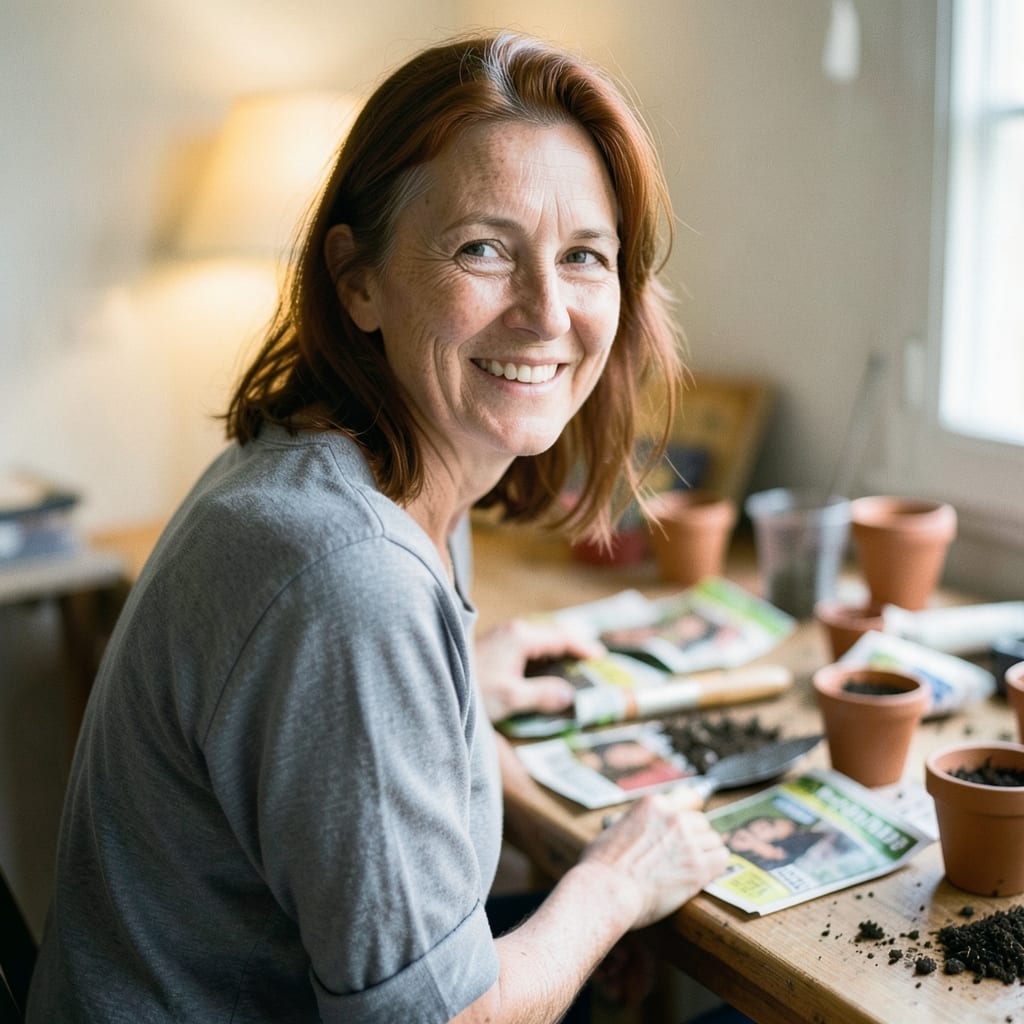
Kendra Delgado is the founder and editor of *When To Plant Guide*, where she turns gardening guesswork into data-driven decisions.
The rules we work by
- 1Fail publicly first
Every ‘best practice’ here was either a mistake we made first or a myth we proved wrong. The dead plants stay in the records—not as shame, but as proof. If we don’t know why something failed, we keep testing until we do.
- 2Measure everything
No ‘about this tall’ or ‘mostly sunny.’ We log air temps, soil temps, rainfall, and plant height in centimeters, with photos timestamped at key stages. If the data doesn’t support the advice, the advice changes.
- 3Assume the reader is smarter
We don’t dumb things down. If you need to know why soil pH matters for nitrogen uptake, we’ll explain it—but we won’t pretend you don’t already know how to read a chart. The goal is to fill gaps, not lecture.
- 4Prioritize the messy middle
Most guides focus on the ‘ideal’ scenario. We focus on the years the frost comes early, the summers with no rain, the soil that’s 60% clay. Because those are the years that decide whether you garden again next spring.
- 5Never say ‘always’
If we can’t name an exception, we’re not done testing. ‘Plant beans after the last frost’ becomes ‘plant beans after the soil hits 60°F *and* the nighttime lows stay above 50°F for a week, unless you’re using row covers, in which case…’ The details matter.
The rules aren’t sacred. When the data contradicts them—or when a reader’s local conditions force a rewrite—we update the guide. Last year, that meant revising our zucchini-planting window after three consecutive summers of early blight in the Northeast.
The old advice? ‘Plant in May.’ The new reality? ‘Start seeds indoors by April 15th, harden off by May 1st, and have a second batch ready by June 10th if the first batch bolts.’ The guide isn’t static; it’s a living record of what *actually* works.
This will not be right for everyone
If you’re looking for aspirational garden photos or step-by-step tutorials for container setups that require $200 worth of hydroponic gear, close this page. We don’t do ‘garden porn’—no staged borders, no ‘before and after’ transformations that hide the years of composting and soil testing behind them.
This is for the rest of us: the people who’ve killed more plants than they’ve saved, who’ve shown up to dig in April only to find the ground still frozen, who’ve Googled ‘why is my tomato plant wilting’ at 2 AM and gotten conflicting answers.
This is also not for perfectionists. If you want a garden that’s always ‘instagrammable,’ you’ll need to accept that some years, the best you’ll get is a single pepper that didn’t get blight—and that’s still a win.
We’re here for the gardeners who’d rather know *why* their tomatoes split in August than pretend it didn’t happen.
You could just be told what you want to hear
We could say ‘plant your tomatoes in May and hope for the best,’ but that’s not how gardening works—and it’s not how we operate.
The things worth telling you about are the ones that save you time, money, and frustration: like why your ‘perfect’ compost might still be too acidic for your blueberries, or how to spot the *real* signs of overwatering before your peppers drop their flowers.
Those are the details that turn a gamble into a plan.
Worth telling us
- The one thing you’re doing that’s secretly ruining your soil (and how to fix it without buying new dirt).
- Why your ‘full sun’ spot might actually be partial shade—and what to plant there instead of tomatoes.
- The exact temperature range where your basil will bolt, and how to stretch its season by two weeks with a $10 hack.
The guides are grouped by category: Advice, Aphids, Blooming, Companion Plants, Container Gardens and Diseases.