
Flowers
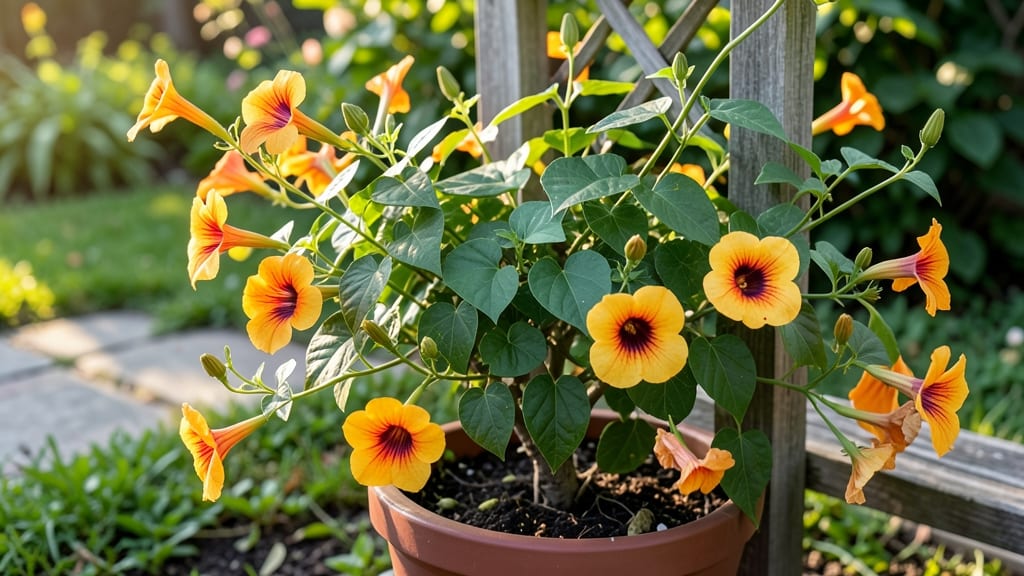
Black Eyed Susan vines grow best in USDA hardiness zones 6 through 11, handling winter lows down to -10°F and summer highs up to 40°F. For lush growth, plant after your last frost date in nutrient-rich, well-draining soil.
These vibrant vines adapt beautifully to diverse climates within their zone range, though their hardiness varies slightly by cultivar. 🌿 In colder zones like 6, they'll need winter protection, while hotter zones (9-11) benefit from afternoon shade during peak summer months.
The key to success lies in their root systems—once established, they develop deep roots that help them survive temperature fluctuations better than many other vines.
When planting, I always recommend amending the soil with compost to improve drainage, as Black Eyed Susans hate soggy roots. Mulching with 2-3 inches of organic material helps regulate soil temperature and retain moisture during dry spells.
For zones 6-7, I suggest covering the base with straw or leaves before the first hard frost to protect emerging shoots in spring.
💡 In This Article
- Understanding Black Eyed Susan Vine Cold Hardiness
- Best Planting and Care Tips for Black Eyed Susan Vines
Understanding Black Eyed Susan vine cold hardiness
The Black Eyed Susan vine's cold tolerance stems from its native adaptation to North American prairies, where it evolved to handle dramatic temperature swings.
Its hardiness zones 6-11 correlate directly with average annual minimum temperatures: zone 6 (-10°F to 0°F), zone 7 (0°F to 10°F), and so on up to zone 11 (40°F to 50°F).
The plant's secret lies in its deep taproot system that can reach 3-4 feet underground, allowing it to access moisture and nutrients even when surface soil freezes. This root structure acts like a natural insulator, protecting the crown from extreme cold.
Frost triggers a fascinating physiological response in Black Eyed Susan vines. When nighttime temperatures drop below 32°F, the plant begins producing antifreeze proteins that prevent ice crystal formation in its cells.
These proteins bind to water molecules, lowering the freezing point by 5-10°F—similar to how salt melts ice on roads. The foliage will typically die back in winter, but the roots remain dormant and protected until spring warmth stimulates regrowth.
In zones 6-7, this dormancy period can last 4-6 months, while warmer zones (8-11) may experience only mild winter slowdowns.
Seasonal growth patterns reveal why these vines thrive in their zone range. Spring growth begins when soil temperatures reach 50°F, with new shoots emerging from the crown.
The plant enters its most active growth phase during summer, when consistent 60-75°F temperatures and 6-8 hours of sunlight daily produce those signature golden-yellow blooms.
What's remarkable is how the vine's flowering period often aligns with late summer heat waves—its natural timing ensures pollinators are most active during these peak temperature windows.
Here's what happens when you push the limits: In zone 5 (-20°F winters), Black Eyed Susan vines may survive but often produce weak regrowth due to crown damage.
Conversely, in zone 12 (50°F+ winters), the vine may struggle with heat stress and fungal diseases that thrive in consistently warm, humid conditions. The 10°F-40°F range represents the Goldilocks zone where the plant's natural defenses work optimally without environmental extremes.
For gardeners in marginal zones, understanding these mechanisms helps create ideal microclimates. Planting near south-facing walls or using black plastic mulch can raise soil temperatures by 5-10°F in spring, giving cold-sensitive varieties a head start.
In hotter zones, providing afternoon shade during 90°F+ periods prevents heat stress that can cause leaf scorch. The vine's ability to handle both cold snaps and summer heat makes it one of the most adaptable perennials in its range.
What most gardeners don't realize is how the vine's growth habit changes with latitude. Northern varieties (zones 6-7) develop more compact, bushy growth to conserve heat, while southern varieties (zones 9-11) grow taller and more vine-like to maximize sunlight exposure.
This geographic variation explains why you'll see different cultivar heights—some reaching 3-5 feet in cooler climates versus 6-8 feet in warmer ones. 🌟