
Planting
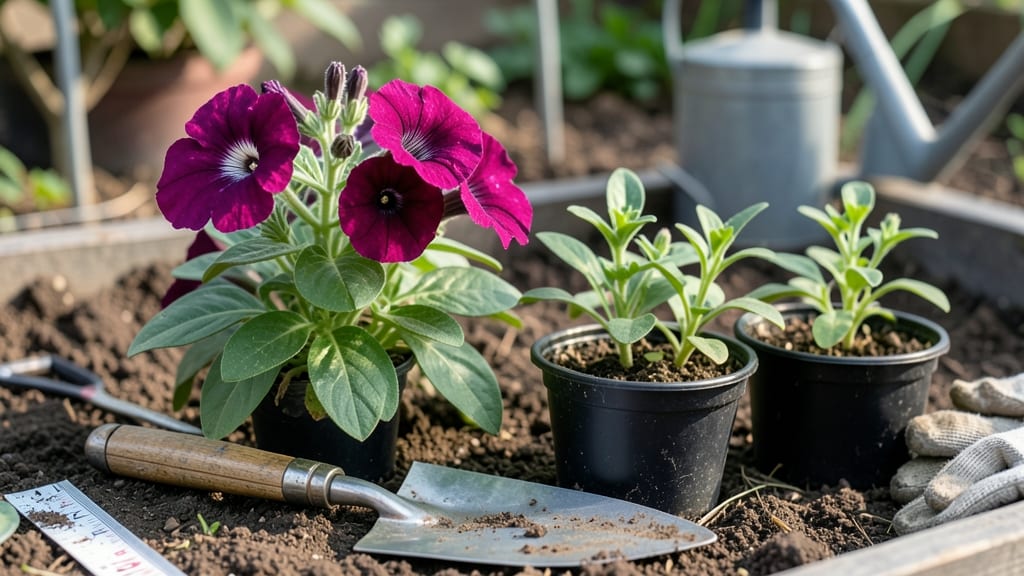
Planting petunias in flower beds transforms dull spaces into vibrant, summer-long displays that even my neighbor's green thumb envies. 🌸 The secret isn't just dropping seeds or transplants anywhere—it's all about sunlight, soil prep, and spacing that keeps them blooming until frost.
I've learned the hard way that petunias need full sun (6+ hours daily) and well-draining soil, or they'll sulk with sparse flowers and floppy stems.
Start with healthy transplants from a nursery (not seeds unless you're patient—germination takes 7-14 days). Amend your soil with compost to improve drainage, and choose a spot where petunias will get morning sun and afternoon shade if you're in a hot climate.
Space them 12-18 inches apart—this prevents overcrowding, which leads to disease and fewer blooms. My first year, I planted them too close, and by July, I had a sea of leaves and zero flowers.
After planting, water deeply to settle the roots, then keep the soil consistently moist but not soggy. A 1-inch layer of mulch helps retain moisture and keeps weeds at bay.
Within weeks, you'll see those first trumpet-shaped blooms appear, and with proper care, your petunias will reward you with color until the first frost. The key is deadheading spent blooms regularly—this encourages nonstop flowering all season.
This method works for both in-ground beds and raised planters, making it perfect for any yard size. Whether you're lining a walkway, filling a window box, or creating a bold border, petunias deliver foolproof color that brightens every corner. Let's get those blooms going!
📚 In This Guide
- What you need
- Instructions
- Tips and common mistakes
- Wrapping up and next steps
What you need
- ● Petunia plants: Choose between seedlings (6–8 weeks old) or transplants (4–6 inches tall). For a full flower bed (8' x 4'), plan for 24–36 plants spaced 10–12 inches apart.
- ● High-quality potting soil or garden soil: 1 cubic yard (or enough to fill a 6-inch-deep bed). Mix in 2–3 inches of compost for nutrients.
- ○ Slow-release fertilizer: 10-10-10 or 14-14-14 (1 lb per 100 sq ft). Optional: Add a time-release granular fertilizer (like Osmocote) at planting.
- ● Mulch: 1–2 inches of shredded bark, pine straw, or straw to retain moisture and suppress weeds.
- ● Watering can or hose with a gentle spray nozzle: Petunias need 1–1.5 inches of water per week (daily watering in hot climates).
- ● Garden trowel or hand shovel: For digging holes and loosening soil.
- ● Measuring tape or ruler: To ensure proper 10–12 inch spacing between plants.
- ● Garden gloves: Because nobody wants prickly fingers! 😉
- ● Epsom salt (magnesium sulfate): 1 tablespoon per plant at planting for extra blooms.
- ● Plant stakes or cages: For trailing varieties (e.g., Petunia ‘Wave’) to keep them contained.
- ● Landscape fabric: Lay 1 layer under mulch to block weeds (skip if using straw mulch).
- ● Drip irrigation kit: For automated watering in larger beds.
- ● Pruning shears: To deadhead spent blooms and encourage more flowers.
Step-by-Step instructions for planting petunias in flower beds
Here’s how to create a vibrant, long-lasting petunia display with the perfect balance of sun, space, and care.
🌱 Step 1: Prepare the Flower Bed for Planting
Choose a location with 6+ hours of direct sunlight daily—petunias thrive in full sun and bloom best when exposed. Clear the area of weeds, rocks, or debris, then loosen the soil to a depth of 12 inches using a garden fork or tiller. This helps roots spread easily and prevents compaction.
Mix in 2-3 inches of compost or aged manure into the top 6 inches of soil. Petunias love rich, well-draining soil, so avoid heavy clay. If your soil feels dense, blend in a handful of perlite or sand to improve drainage. A soil pH between 6.0 and 7.0 is ideal—test it with a kit if unsure.
🪴 Step 2: Space and Plant Petunias for Fullness
Petunias grow best when spaced 12-18 inches apart, depending on the variety. Dwarf types (like 'Supertunia') can go closer (12 inches), while trailing or bushy varieties need 18 inches to prevent overcrowding. Dig holes just deep enough to accommodate the root ball—planting too deep can suffocate roots.
Gently remove each petunia from its container and tease apart any tangled roots. Place the plant in the hole, ensuring the top of the root ball sits just below soil level. Fill the hole with soil and press lightly around the base to eliminate air pockets. Water deeply right after planting to settle the soil and encourage root contact.
☀️ Step 3: Water and Mulch for Healthy Growth
Water newly planted petunias 1 inch per week, ensuring the soil stays consistently moist but not soggy. The first few weeks are critical—water in the morning to reduce evaporation and fungal risks. You’ll know it’s right when the top inch of soil feels damp but not wet to the touch.
Apply a 2-3 inch layer of mulch (like shredded bark or pine straw) around each plant, keeping it 2 inches away from the stems to prevent rot. Mulch conserves moisture, regulates soil temperature, and suppresses weeds. Replenish mulch as it breaks down to maintain coverage.
✂️ Step 4: Maintain for Continuous Blooms
Deadhead spent blooms regularly by pinching off faded flowers with your fingers or shears. This encourages new growth and prolongs the blooming season. Petunias also benefit from a light trim after the first flush of flowers—cut back stems by ⅓ to promote bushier, fuller plants.
Feed petunias every 2-3 weeks with a balanced, water-soluble fertilizer (like 10-10-10) during the growing season. Follow label instructions for dilution, and always water the soil before applying fertilizer to prevent root burn. In cooler months, reduce feeding to once a month.
🌿 Step 5: Protect and Extend the Season
If frost threatens, cover petunias with frost cloth or bring potted varieties indoors before temperatures drop below 40°F. In warmer climates, petunias can bloom year-round with consistent care. Pinch back leggy stems in late summer to rejuvenate growth and prepare for another round of flowers.
Watch for pests like aphids or spider mites—spray plants with water to dislodge them or use neem oil for organic control. With proper spacing and care, your petunias will reward you with vibrant color from spring through fall, and sometimes beyond!
Tips & tricks for planting petunias in flower beds
Took me a while to learn these tricks—here's how to avoid common pitfalls and create a thriving petunia display that lasts all season.
Soil Preparation Secret: In Step 1, don't just loosen the soil—work in that 2-3 inches of compost until it's evenly distributed through the top 6 inches. I learned this the hard way after seeing petunias struggle in patchy soil. For clay-heavy areas, mix in 1 part perlite to 3 parts soil to improve drainage without sacrificing nutrients. This creates the perfect foundation for those 6+ hours of sunlight to work its magic.
Planting Depth Matters: When placing petunias in Step 2, the top of the root ball should sit just below soil level—not buried, not exposed. I used to plant them too deep, which caused stunted growth. Think of it like a goldilocks zone: the roots need to breathe but stay supported. After planting, give each one a thorough drink to help settle the soil around the roots.
Watering Wisdom: That 1 inch per week guideline in Step 3 is perfect, but timing matters just as much. Water in the morning so foliage has all day to dry, preventing fungal issues. I've seen petunias develop powdery mildew when watered at night—trust me, you don't want that. And here's a pro move: water at the base rather than overhead to keep those beautiful blooms dry and vibrant.
Mulch Like a Pro: The 2-3 inch layer of mulch in Step 3 deserves special attention. Apply it after watering so it settles properly around the base. I like to use shredded bark because it breaks down slowly, but pine straw works too. Just remember to keep it 2 inches away from stems—this prevents rot while still protecting roots from temperature swings. Refresh it every few months as it decomposes.
Pro Tips for Plant Petunias In Flower Beds
- Took me a while to learn these tricks—here's how to avoid common pitfalls and create a thriving petunia display that ...
- Soil Preparation Secret: In Step 1, don't just loosen the soil—work in that 2-3 inches of compost until it's evenly d...
- Planting Depth Matters: When placing petunias in Step 2, the top of the root ball should sit just below soil level—no...
Frequently asked questions
Got questions about planting petunias like a pro? Here are answers to the most common ones—so you can skip the guesswork and dive right into blooms!
When is the best time to plant petunias in my flower bed?
For warm climates, plant petunias after the last frost (spring) or up to 6–8 weeks before the first fall frost for late-season color. In cooler zones, start seeds indoors 8–10 weeks before transplanting. Pro tip: Petunias thrive in soil temps above 60°F—wait until the ground warms up!
How far apart should I space petunias in a flower bed?
Space petunias 12–18 inches apart for bush varieties (like ‘Wave’ or ‘Supertunia’) and 10–12 inches for trailing types (e.g., ‘Tumbling Waters’). Crowding leads to poor airflow and disease, while over-spacing wastes space. Use a trowel or measuring tape to mark spots for even spacing!
Why are my petunia leaves turning yellow or brown?
Yellowing leaves often signal overwatering or poor drainage, while brown edges can mean underwatering or fungal issues (like powdery mildew). Check soil moisture—petunias like consistently moist but not soggy soil. Improve drainage by amending soil with compost or perlite before planting.
Can I plant petunias with other flowers in mixed beds?
Petunias pair beautifully with salvias, marigolds, or zinnias for height contrast, or sweet alyssum for a cascading effect. Avoid planting with mint or invasive ground covers, which can smother them. Group petunias with similar sun/water needs for low-maintenance beds.
Do petunias survive winter, or should I replant every year?
Petunias are annuals in most climates, but in USDA Zones 9–11, they may return with mild winters. For colder areas, treat them as yearly plants and save seeds (if open-pollinated) or start fresh each spring. Deadhead spent blooms to encourage new flowers all season!
Wrapping up and next steps
Planting petunias in your flower beds is a rewarding way to add vibrant color and life to your garden! 🌸 With the right spacing, sunlight, and soil prep, you’ll enjoy stunning blooms from spring to frost.
Remember to choose healthy plants, space them properly for airflow, and keep up with regular care—your efforts will pay off in a breathtaking display.
Now that you’re ready to plant, grab your gloves and get growing! For extra tips, check out our guide on maintaining petunias for long-lasting beauty—your garden will thank you. Happy planting! 🌞