
Planting
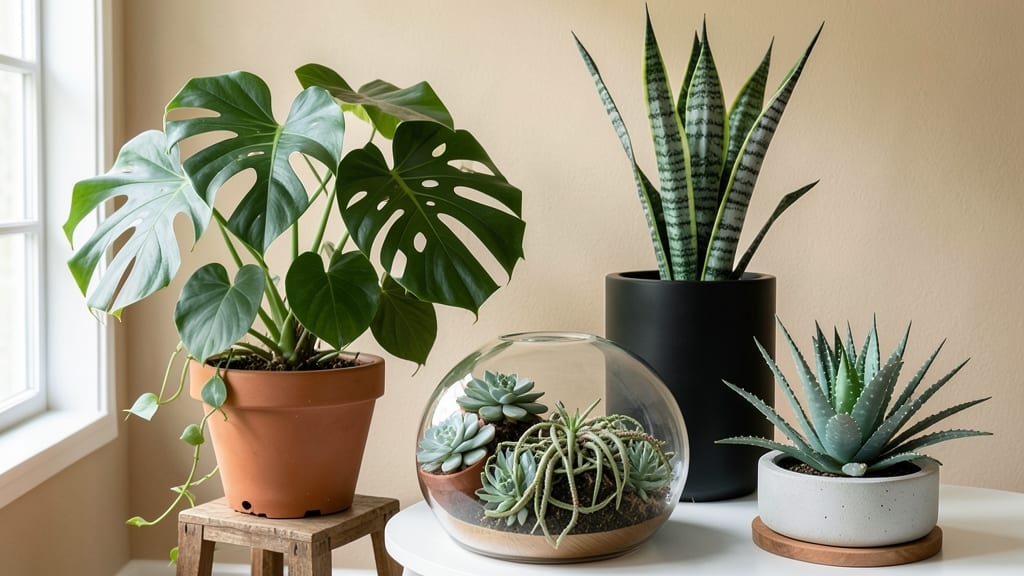
Identifying that mysterious plant in your yard just got easier—no botanist degree required. 🌿 Free online tools let you snap a photo or describe key features, then instantly match it to thousands of species, from weeds to prized perennials.
I’ve used these same apps to confirm nursery purchases, diagnose sick plants, and even track down invasive species before they spread. The secret to accurate results lies in clear photos and precise details: leaf shape, flower color, stem texture, and growth habit.
Most tools guide you through this process step-by-step, so even beginners get reliable matches. My first try with a suspicious weed led to a match within seconds—no more guessing or wasted herbicide.
You’ll walk away knowing exactly what’s growing in your garden, whether it’s a rare heirloom or a troublesome pest. These tools even help spot early signs of disease by comparing your plant to healthy examples. No more second-guessing your green thumb—or your local nursery’s labels.
Works for gardeners, hikers, or anyone curious about the natural world. Let’s get that plant identified!
Hidden Factors Behind Plant Misidentification
Misidentifying plants—even with free online tools—often boils down to subtle yet critical factors that trip up both beginners and seasoned gardeners. Understanding these causes helps you refine your approach and avoid common pitfalls. Here’s why plant ID apps or databases might fail you:
---
Plants undergo dramatic changes across their lifecycle, and an app trained on mature specimens may struggle to recognize seedlings or dormant plants.
- Why it happens: Many databases rely on images of fully grown leaves, flowers, or fruits. A young plant’s cotyledons (first leaves) or juvenile foliage can look entirely different from its adult form.
For example: - Poison ivy 🌿 as a seedling has smooth, lobed leaves, while mature plants develop jagged edges and a glossy finish. - Oak trees 🌳 may sprout with rounded leaves that only develop their signature lobes as they age. - Actionable fix: Capture multiple angles and growth stages.
If possible, note the plant’s height, stem texture, and whether it’s flowering or fruiting—even if it’s not in its "prime."
---
Disease, pests, or environmental conditions can drastically alter a plant’s appearance, making it unrecognizable to algorithms.
- Why it happens: - Pests: Chewed leaves, holes, or webbing (e.g., spider mites 🕷️) distort natural shapes. - Disease: Fungal spots (like powdery mildew 🍄), wilting, or discoloration (e.g., chlorosis from nutrient deficiency) create red flags for misidentification. - Physical damage: Broken stems, bruised bark, or even pruning can make a plant look foreign to its database match. - Actionable fix: Look for undamaged parts of the plant—like new growth or healthy leaves—and avoid uploading distorted images.
Note any unusual symptoms (e.g., "yellowing leaves but no pests visible") to narrow down causes.
---
A blurry, low-light, or cropped image is like giving a doctor a fingerprint instead of a full medical history—they can’t diagnose accurately.
- Why it happens: - Lighting issues: Shadows or backlighting 🌇 can wash out colors or create glare, obscuring key features (e.g., vein patterns or hair-like trichomes). - Angle problems: Top-down shots 📷 hide stem details, while extreme close-ups may exclude context (e.g., leaf arrangement or bark texture). - Background clutter: Overlapping branches, dirt, or other plants can confuse the algorithm’s focus. - Actionable fix: - Use natural light and avoid midday sun (which causes harsh shadows). - Include a full-plant view + close-ups of critical features (e.g., leaf undersides, flower structures). - Clean the lens and ensure the plant fills at least 50% of the frame.
---
Not all plants look the same worldwide—or even in your backyard. Hybrids, cultivars, and local adaptations can stump databases.
- Why it happens: - Geographic variants: A black walnut tree 🌳 in the Midwest might have smoother bark than its Southern cousin, which develops deeper ridges. - Hybrids: Crossbreeds (e.g., Hosta hybrids 🌿) blend traits, creating unique but unlogged combinations. - Invasive species: Plants like Japanese knotweed adapt to new climates, altering their growth patterns. - Actionable fix: Specify your location and note any unusual traits (e.g., "this rose has double petals but no thorns").
Some apps (like iNaturalist) let you filter by region.
--- Even the best free tools rely on crowdsourced data—and gaps exist.
- Why it happens: - Underrepresented species: Rare or newly discovered plants may lack images in databases. - Mislabeling: User-submitted photos can be incorrect, training the AI on flawed data. - Algorithmic biases: Some tools prioritize common plants (e.g., houseplants 🏡) over wild or agricultural species. - Actionable fix: If the app suggests a match but something feels "off," cross-check with scientific databases like Plants of the World Online or USDA Plants.
Combine multiple tools (e.g., PictureThis + Google Lens) for consensus.
--- Sometimes, the problem isn’t the plant—it’s the user.
- Why it happens: - Ignoring non-leaf traits: Flowers, fruits, or root structures are often overlooked but critical (e.g., a dandelion 🌼 is identifiable by its milky sap, not just leaves). - Seasonal blindness: Uploading a bare-branched tree 🌲 in winter makes ID nearly impossible without prior knowledge. - Assuming "one feature fits all": Relying solely on leaf shape (e.g., "all maples have lobed leaves") ignores exceptions like boxelder maples, which have serrated edges. - Actionable fix: Treat plant ID like a detective game—gather clues (habitat, smell, growth habit) and eliminate options systematically.
Use a checklist: - Leaf arrangement: Alternate, opposite, or whorled? - Stem texture: Hairy, smooth, or spiny? - Smell/touch: Minty, sticky, or prickly?
Quick Fixes for Plant ID Struggles
When your plant identification quest hits a snag, don’t let frustration take root—there’s always a workaround! Whether you’re dealing with blurry photos, vague descriptions, or tech hiccups, these step-by-step solutions will help you identify plants online for free like a pro.
Below, we’ve mapped common issues to their fixes, plus prevention tips to avoid future headaches.
---
Why it happens: Low light, shaky hands, or wrong angles make it hard for apps to recognize your plant.
How to Fix It: ✅ 🔥 Capture the Right Shots - Lighting: Shoot in natural daylight (avoid shadows or harsh sun). Hold your phone near a window or use a ring light for even illumination. - Angles: Take three clear photos: 1. Leaf close-up (underside + top, if possible). 2. Full plant shot (showing shape, height, and structure). 3. Flower/fruit (if applicable—colors and textures are key!). - Focus: Tap the screen to auto-focus on the most detailed part (e.g., leaf veins or flower center).
✅ 👨🍳 Edit Before Uploading - Use free apps like Snapseed or Google Photos to: - Crop out backgrounds (focus on the plant only). - Adjust brightness/contrast (but keep colors natural). - Remove dust spots (use the healing tool).
💡 Pro Tip: If your plant is large (e.g., a tree), include a reference object (like a hand or ruler) for scale.
--- Why it happens: Some tools struggle with rare species, hybrid plants, or unusual growth stages.
How to Fix It: ✅ 🔍 Try Multiple Tools Not all plant ID apps are equal! Test these free options in order of specificity: 1. Generalists: [PlantNet](https://identify.plantnet.org/) (great for flowers/leaves) or [Google Lens](https://lens.google.com/) (quick but less detailed). 2. Specialists: [iNaturalist](https://www.inaturalist.org/) (best for wild/rare plants) or [PictureThis](https://www.picturethisai.com/) (AI-powered, but has a free tier). 3. Local Databases: Check your state’s agricultural extension site (e.g., [U.S. Forest Service](https://www.fs.usda.gov/) for trees).
✅ ⏰ Be Patient with Descriptions If photos fail, describe your plant in detail using: - Leaf shape (lobed, serrated, smooth?). - Growth habit (vine, shrub, succulent?). - Bloom time (if applicable). - Location (indoors/outdoors, climate zone).
💡 Pro Tip: If the plant is young or unusual, compare it to similar species in Wikipedia’s “Plant Lists” or Reddit’s r/whatsthisplant.
--- Why it happens: Apps sometimes misidentify plants due to similar-looking species (e.g., poison ivy vs. Virginia creeper).
How to Fix It: ✅ 🔪 Cross-Reference with Experts - Double-check the suggested name using: - Books: The New Sunset Western Garden Book (for regional plants). - Forums: Post on [GardenWeb](https://forums.gardenweb.com/) or [Reddit’s r/plantclinic](https://www.reddit.com/r/plantclinic/). - Look for red flags: Does the plant’s habitat (e.g., desert vs. rainforest) match the ID?
✅ 🌡️ Test with Environmental Clues Ask yourself: - Is the plant toxic? (Check [Poison Control’s plant database](https://www.poison.org/)) - Does it attract specific pollinators? (e.g., hummingbirds love trumpet vines). - What’s its hardiness zone? (Use [USDA’s zone map](https://planthardiness.ars.usda.gov/)).
💡 Pro Tip: If the ID is off by one letter (e.g., “Monstera” vs. “Monstera deliciosa”), search for common names like “Swiss cheese plant.”
--- Why it happens: Slow internet, outdated apps, or browser issues can derail your search.
How to Fix It: ✅ 🔄 Refresh and Retry - Close the app/website and reopen it (sometimes a simple restart helps). - Clear cache (on mobile: Settings > App > Storage > Clear Cache). - Use a different browser (e.g., switch from Chrome to Firefox if images load slowly).
✅ 📊 Offline Workarounds - Download plant databases like [Flora of North America](https://www.efloras.org/) (for advanced users). - Bookmark trusted sites (e.g., [Missouri Botanical Garden’s PlantFinder](https://www.missouribotanicalgarden.org/plantfinder)) for later use.
💡 Pro Tip: If an app crashes repeatedly, check for updates in the App Store/Play Store.
--- - 📅 Keep a Plant Journal: Note growth stages, blooms, and changes over time. - 📸 Take “ID-Ready” Photos Monthly: Store them in a folder labeled by plant name. - 🌍 Learn Local Flora: Familiarize yourself with common plants in your area to spot outliers faster. - 🤝 Join Plant Groups: Local Facebook groups or Meetup.com events often have ID experts.
--- Final Thought: Most plant ID struggles are solved with better prep—clear photos, detailed descriptions, and cross-checking tools. Bookmark this guide for your next gardening mystery! 🌿✨
Frequently asked questions
Which free plant ID apps work best for beginners?
Start with PlantNet or Google Lens for quick, visual matches. For more detailed results, try iNaturalist—it’s community-driven and great for wild plants. All three are completely free and user-friendly, with step-by-step photo guides to help you capture the right details.
Can I identify plants from just a leaf photo?
Sometimes, but it’s riskier than including more details. Apps need both leaf shape and growth habit (e.g., vine, shrub) for accuracy. For best results, snap three photos: a close-up of the leaf (top and bottom), a full plant shot, and any flowers/fruits. This gives the algorithm the clues it needs to avoid misidentification.
What if the app gives me a wrong answer?
Cross-check with a second tool like PictureThis or consult local plant databases (e.g., your state’s agricultural extension site). Look for inconsistencies—like habitat mismatches or unusual traits—and verify with a plant forum (e.g., r/whatsthisplant). Most mistakes happen with rare species or hybrids.
How do I describe a plant if I can’t take photos?
Use this checklist: leaf shape (lobed, serrated?), growth habit (vine, tree?), flower color, and location (indoors/outdoors). For example: "Small indoor plant with fuzzy leaves, purple flowers, and a minty scent" narrows it down to Lavender. Apps like iNaturalist let you input detailed descriptions if photos aren’t an option.
Are there free tools for identifying plant diseases?
Yes! Use PlantVillage (PSU’s free tool) to upload photos of spots, wilting, or discoloration. It compares symptoms to known diseases and suggests treatments. For general plant health, PictureThis also flags potential issues alongside identification. Always confirm with a local extension office for severe problems.