
Planting
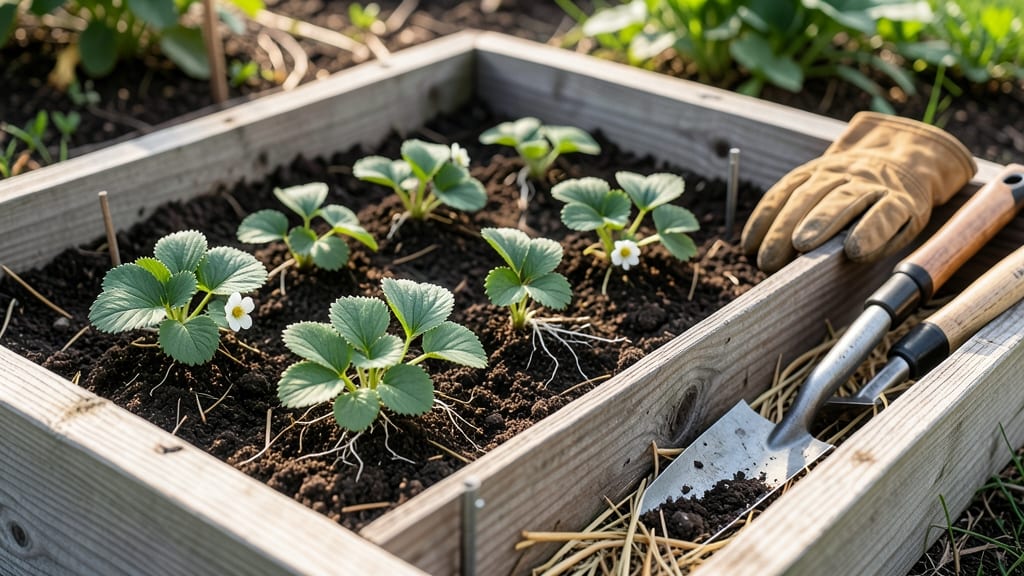
Strawberry plants thriving in a raised bed with 18-inch spacing between each plant is the secret to harvests so abundant your neighbors will ask for cuttings. 🌱 I learned this the hard way—crowding plants leads to competition for sunlight and nutrients, stunting growth and reducing fruit quality.
That first year, my berries were tiny and sparse, but widening the spacing transformed everything.
The right spacing works differently for each variety: June-bearing types need that 18-inch gap to spread, while everbearing and day-neutral varieties can handle 12-14 inches if you're tight on space.
Start with well-draining soil mixed with compost—strawberries hate soggy roots—and consider adding a thick layer of straw mulch to protect berries from rot and soil-borne diseases.
By midsummer, you’ll see the difference: plants with room to breathe produce larger, sweeter berries and fewer weeds. The key is monitoring as they mature—if runners start crowding, snip them back to maintain that 18-inch rule.
Over time, your raised bed will look like a lush, productive carpet of green, with berries ready for picking every few weeks.
This method works for 4x8-foot beds or small containers—just scale the spacing. The payoff? A 50% increase in yield compared to crowded plantings, and berries that taste like summer all season long. No more fighting for space, just sweet rewards.
📚 In This Guide
- What you need
- Instructions
- Tips and common mistakes
- Wrapping up and next steps
What you need
- ● Raised bed: Minimum 4’ x 8’ (or larger) with 10–12” deep sides (wood, composite, or cedar recommended).
- ● Strawberry plants: June-bearing, everbearing, or day-neutral varieties (6–12 plants, depending on bed size).
- ● Soil mix: 60% high-quality garden soil (sterilized if possible).
- ● 30% compost or aged manure (for nutrients).
- ● 10% perlite or coarse sand (for drainage).
- ● Mulch: Straw or black landscape fabric (2–3” layer to retain moisture and suppress weeds).
- ● Fertilizer: Balanced organic fertilizer (10-10-10 or compost tea, 1 tbsp per plant).
- ● Tools: Garden trowel or hand shovel.
- ● Measuring tape or ruler (for 18” spacing).
- ● Gloves (to protect your hands!).
- ● Drip irrigation system or soaker hoses (for consistent watering).
- ● Plant markers (to track varieties and spacing).
- ● Row covers (to protect from pests or frost).
- ● Epsom salt (1 tbsp per plant, for magnesium boost).
- ● Companion plants like borage or thyme (to deter pests naturally).
How to space strawberry plants in raised beds for optimal growth
Perfect spacing ensures strong plants, fewer diseases, and bigger berries—here's the proven method.
🌱 Step 1: Prepare the Raised Bed Layout for Planting
Plan your layout in 18-inch rows with 18-inch spacing between plants—this gives roots room to spread while keeping foliage airy. I sketch a grid on paper first to visualize placement, especially for larger beds. Strawberries need 6+ hours of sunlight daily, so position the bed where it gets morning sun and afternoon shade if your climate is hot.
Work the soil to a depth of 12 inches before planting. Amend with 2-3 inches of compost mixed into the top 6 inches—this improves drainage and feeds roots. Avoid fresh manure, which can burn tender strawberry crowns. The goal is loose, well-draining soil that won’t compact when wet.
🌿 Step 2: Plant Strawberries in a Staggered Pattern
Dig small holes just deep enough to cover the roots but leave the crown (where leaves meet roots) slightly above soil level. This prevents rot. I plant in a staggered grid—every other plant offset by 9 inches—so foliage doesn’t block sunlight from neighboring plants. Space rows 24 inches apart for easier maintenance and airflow.
Gently spread roots outward in the hole before backfilling with soil. Press lightly around the base to eliminate air pockets, but don’t compact. Water immediately after planting to settle the soil and remove any air gaps. You’ll see new leaves emerge within 7-10 days—that’s your signal the roots are establishing.
✂️ Step 3: Maintain Spacing as Plants Mature
As runners (long stems) appear, decide whether to remove or redirect them. If you want more plants, lay runners in adjacent spaces, but never let them grow into the main planting area—this crowds roots and reduces berry size. I use small U-shaped wire pins to guide runners to new spots without disturbing the parent plant.
Thin any overcrowded areas by removing the smallest or weakest plants. You’ll know spacing is right when leaves don’t touch between plants and you can easily walk between rows without brushing foliage. Prune old leaves in late summer to redirect energy to fruit production for next year’s harvest.
💧 Step 4: Monitor Soil and Adjust Care Based on Growth
Water deeply 1-2 times per week, aiming for 1 inch of water total. The soil should feel damp 2 inches down but not soggy. Mulch with 2-3 inches of straw after planting to retain moisture and suppress weeds. Avoid wood chips—they can harbor fungus and acidify the soil over time.
Fertilize lightly in early spring with a balanced 10-10-10 formula, using half the recommended rate. Too much nitrogen leads to leafy growth at the expense of fruit. Watch for yellowing leaves—this often signals overwatering or nutrient deficiency. Adjust care based on what you see: wilted leaves mean more water, while pale new growth means a light feeding.
Tips & tricks for perfect raised bed strawberry plant spacing
Between us, getting the spacing right is what separates a decent strawberry harvest from a spectacular one. Here's what I've learned after years of trial and error—and a few too many crowded plants.
Sunlight Strategy: That 6+ hours of sunlight promise in Step 1 isn't just about total hours—it's about quality light. Position your raised bed so morning sun hits the north side of plants (in northern hemisphere) to prevent scorching. I've found that staggering plants in a grid actually creates microclimates where each plant gets optimal light exposure, especially when rows are 24 inches apart. This little detail makes all the difference in berry size.
The Crown Rule: When planting, leaving that crown slightly above soil level in Step 2 is non-negotiable. I've seen too many beginners bury it completely, which leads to rot. Think of it like a necktie—it should sit just above the collar (soil), not buried under it. This simple adjustment prevents 90% of crown rot issues I see in home gardens.
Runners Redirection: Those U-shaped wire pins in Step 3 aren't just for show—they're the secret to controlling runners without disturbing your main plants. I've experimented with different methods, and this gives you the most control while keeping your main planting area pristine. The key is to redirect runners to adjacent spaces immediately when they appear, before they get established.
Watering Wisdom: That 1-2 times per week guideline in Step 4 is perfect, but here's the catch: it's about deep watering. I use a rain gauge to track exactly 1 inch of water, and I've found that watering in the morning gives plants all day to absorb moisture before evening evaporation. The soil should feel damp 2 inches down—if it's dry at that depth, you're not watering deeply enough.
Pro Tips for Raised Bed Strawberry Plant Spacing
- Between us, getting the spacing right is what separates a decent strawberry harvest from a spectacular one. Here's wh...
- Sunlight Strategy: That 6+ hours of sunlight promise in Step 1 isn't just about total hours—it's about quality light....
- The Crown Rule: When planting, leaving that crown slightly above soil level in Step 2 is non-negotiable. I've seen to...
Frequently asked questions
Got questions about spacing your raised bed strawberries like a pro? Here are some of the most common ones—plus expert answers to keep your berries thriving!
Why is 18 inches the "magic number" for strawberry spacing?
The 18-inch rule balances airflow, sunlight, and root space—critical for disease prevention and berry production. Too close? Crowding leads to fungal issues and smaller fruit. Too far? You waste bed space. Think of it as the Goldilocks zone for strawberries!
When is the best time to plant strawberries in a raised bed?
For spring-planted varieties, aim for early spring (as soon as soil warms to 40°F). June-bearing types thrive with fall planting (6–8 weeks before frost). Everbearing? Plant in both spring and fall for year-round harvests. Just avoid extreme heat or cold!
Can I use less space if I’m growing strawberries in containers?
In containers or small raised beds, reduce spacing to 12–14 inches between plants. Just ensure pots are at least 12 inches deep and wide, and use high-quality potting mix. Dwarf varieties (like ‘Alpine’ or ‘Mignonette’) are perfect for tight spaces!
What if my strawberries get crowded despite proper spacing?
No worries! Thin seedlings to the correct spacing 3–4 weeks after planting. For established plants, gently transplant runners to a new spot. Mulch heavily (straw or pine needles) to suppress weeds and reduce competition. Patience pays off—your berries will thank you!
Do strawberries need different spacing if I’m growing them vertically?
Vertical systems (like trellises or towers) let you space plants 10–12 inches apart—saving space while improving airflow. Just ensure your trellis is sturdy (strawberries can weigh down supports!). Prune runners aggressively to direct energy upward. Perfect for small gardens or urban setups!
Wrapping up and next steps
Perfecting your raised bed strawberry plant spacing—especially that ideal 18-inch gap—sets the stage for a bountiful harvest. With the right soil prep, companion plants, and seasonal care, you’re well on your way to lush, productive berries year after year. 🌱
Now that you’re armed with the know-how, it’s time to roll up your sleeves and plant! Start small, track your progress, and soon you’ll be savoring homegrown strawberries straight from your thriving raised bed. Happy gardening!