
Planting
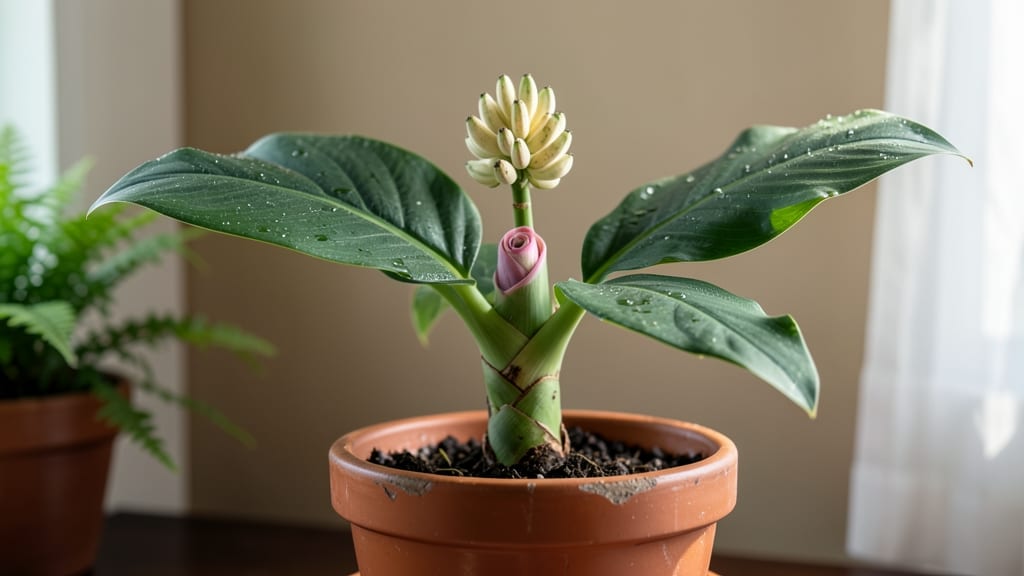
Growing a banana plant that fits your patio isn't a fantasy—it's Musa acuminata 'Dwarf Cavendish', the smallest banana variety that thrives in containers. 🌱 I've grown mine in a 15-gallon pot for three years now, and it produces edible (though tiny) fruit every summer.
The key? Choosing the right dwarf variety and giving it the right care from day one.
These compact plants stay under 5 feet tall and handle container life beautifully, as long as you mimic their tropical roots. You'll need a pot with drainage, a well-draining mix, and a spot that gets 6+ hours of sunlight daily—even indoors near a south-facing window works.
The real secret? Regular feeding with banana-specific fertilizer keeps them happy and productive without shooting up like a jungle giant.
By summer, you'll see those signature banana leaves unfurling, followed by clusters of small, sweet fruit. Yes, they're not grocery-store sized, but the novelty of growing your own banana—even in a pot—is unmatched. The plants stay compact year-round, making them perfect for patios, balconies, or even sunny indoor spaces.
Cold sensitivity is the only real challenge—bring them indoors before 40°F nights or wrap the pot in bubble wrap for extra protection. With the right care, these dwarf bananas reward you with tropical vibes, exotic fruit, and a conversation piece that never goes out of style. Ready to try?
📚 In This Guide
- What you need
- Instructions
- Tips and common mistakes
- Wrapping up and next steps
What you need
- ● Dwarf banana plant: Choose a Musa acuminata 'Dwarf Cavendish' or Musa velutina (hardy banana) from a nursery or online supplier. Quantity: 1-2 plants.
- ○ Container: A 5-gallon pot or larger (minimum 12" diameter) with drainage holes. Optional: Self-watering pots or fabric grow bags for better moisture control.
- ● Well-draining potting mix: A blend of 60% peat or coco coir, 30% perlite or pumice, and 10% compost. Quantity: 1-2 bags (1-2 cubic feet each).
- ● Slow-release fertilizer: A balanced 10-10-10 or 20-20-20 fertilizer labeled for tropical plants. Quantity: 1-2 lbs.
- ● Watering can or hose: With a gentle spray nozzle for hydration.
- ● Mulch: Pine bark or straw (1-2 inches) to retain moisture and regulate temperature.
- ● Support stake or trellis: For varieties that grow slightly taller (e.g., Musa basjoo ‘Dwarf’). Height: 3-4 feet.
- ● Grow lights: If indoors and natural light is Type: LED full-spectrum bulbs (12-16 hours/day).
- ● Humidity tray: A pebble tray with water to boost humidity in dry climates.
- ● Pruning shears: For trimming dead fronds or overgrowth.
- ● Soil moisture meter: To avoid over/under-watering.
How to grow dwarf banana plants in small spaces
Here's how to cultivate compact banana varieties that thrive in pots and tight spaces.
🌱 Step 1: Select the Right Dwarf Variety and Container
Choose a dwarf banana cultivar like 'Dwarf Cavendish' or 'Ice Cream' that stays under 6 feet tall at maturity. These varieties produce edible fruit while remaining manageable in containers. Select a pot with a minimum 18-inch diameter and 12-inch depth—banana plants need room for their rhizomes to expand.
Ensure the container has multiple drainage holes to prevent waterlogging, which causes root rot. I use unglazed terra cotta because it breathes better than plastic, helping maintain proper moisture levels. Fill the bottom 3 inches with gravel or broken pottery to create an effective drainage layer that prevents soil compaction.
🌿 Step 2: Prepare the Soil Mix for Optimal Growth
Use a well-draining potting mix blended with 20% perlite or coarse sand to improve aeration. I avoid garden soil—it compacts in containers and suffocates roots. Mix in 1 part compost to provide nutrients without being too dense. The ideal soil should feel light and fluffy, almost like a sponge that holds moisture but drains freely.
Add a slow-release fertilizer (like 10-10-10) at planting time—banana plants are heavy feeders but hate salts. Work it into the bottom 4 inches of soil to give roots an immediate nutrient boost. Water the mix thoroughly until it's evenly moist but not soggy, then let it drain completely before planting.
☀️ Step 3: Plant the Rhizome and Provide Warmth
Place the banana rhizome (the thick, horizontal root stalk) 1 inch below the soil surface with the buds facing upward. Gently firm the soil around it—don't pack it down too tightly, or the roots won't spread properly. Keep the pot in a location with full sun (6+ hours daily) and warmth (70-85°F) during the growing season.
Here's the thing—banana plants need consistent warmth. If your space dips below 60°F at night, growth will stall. I use a heat mat under the pot during cooler months to maintain root temperature. Watch for new fronds emerging within 4-6 weeks—this is your sign the rhizome has rooted and is growing.
💧 Step 4: Water and Fertilize for Healthy Growth
Water when the top 2 inches of soil feel dry to the touch. Banana plants love moisture but hate soggy roots. I water deeply until it drains from the bottom, then empty the saucer to prevent salt buildup. During hot weather, you may need to water every 2-3 days, but always check soil moisture first—overwatering kills more banana plants than underwatering.
Feed every 4-6 weeks with a balanced liquid fertilizer (20-20-20) diluted to half strength. Banana plants respond dramatically to nutrients—you'll see larger fronds and more buds within weeks. I also spray the leaves with a seaweed extract solution monthly to boost growth and resilience. Stop fertilizing in late summer to encourage dormancy if you're in a cooler climate.
✂️ Step 5: Prune and Overwinter for Next Year's Growth
When the oldest fronds turn yellow and die back, cut them down to 4 inches above the soil to redirect energy to new growth. This also keeps the plant compact and manageable. In Zone 9 and warmer, banana plants can stay outdoors year-round, but in cooler climates, bring the pot indoors before temperatures drop below 50°F.
Reduce watering in fall and stop fertilizing entirely by November. Place the pot in a bright, cool spot (60-65°F) with minimal watering until spring. You'll see new shoots emerge in early spring—this is your cue to resume regular care. With proper overwintering, your dwarf banana can produce fruit for years in small spaces.
Tips & tricks for growing compact banana varieties
These practical insights will help you maximize your dwarf banana's potential in limited spaces.
Container Selection: While the minimum 18-inch diameter is ideal, don't settle for anything less than 16 inches—banana rhizomes need room to expand. I've seen growers use oversized pots (20+ inches) for multiple rhizomes, but this requires more soil and water. For single plants, stick to the 18-inch minimum to prevent root binding, which stunts growth. Unglazed terra cotta isn't just about aesthetics—its porous nature helps regulate moisture better than plastic, especially during those critical first 4-6 weeks when roots establish.
Soil Science: The 20% perlite/sand amendment is non-negotiable for container growing. I've tried skipping this and ended up with compacted soil that suffocated roots. For even better drainage, mix in 10% coconut coir alongside the perlite—it holds moisture without compacting. When testing your soil mix, squeeze it gently: if it holds its shape but crumbles easily, you've got the right balance. The compost addition is key too—banana plants are heavy feeders, and organic matter provides slow-release nutrients that prevent salt buildup from fertilizers.
Temperature Management: The 70-85°F range during growing season is your target, but nighttime temperatures below 60°F can stall growth completely. I've used heat mats successfully in spring/fall, but for consistent warmth, consider moving your pot to a sunroom or under grow lights during cooler months. Pro tip: Place your thermometer near the pot's base—air temperature can differ significantly from root zone temperature, especially in drafty areas. If you notice fronds wilting during the day but recovering at night, your plant is likely too warm.
Fertilizer Strategy: That slow-release 10-10-10 at planting time gives roots an immediate nutrient boost, but don't overdo it—the 4-6 week feeding schedule is crucial. I've learned the hard way that banana plants respond dramatically to nutrients, but too much fertilizer causes salt buildup that burns roots. For organic options, try worm castings instead of chemical fertilizers—they provide nutrients without the salt risk. And remember: stop fertilizing by late summer to encourage dormancy, especially if you're in a cooler climate where winter temperatures drop below 50°F.
Pro Tips for Smallest Banana Plant
- These practical insights will help you maximize your dwarf banana's potential in limited spaces.
- Container Selection: While the minimum 18-inch diameter is ideal, don't settle for anything less than 16 inches—banan...
- Soil Science: The 20% perlite/sand amendment is non-negotiable for container growing. I've tried skipping this and en...
Frequently asked questions
Got questions about growing the smallest banana plants? We’ve got answers!
Whether you’re a space-challenged gardener or just curious about these tiny tropical wonders, here’s what you need to know.
How fast do dwarf banana plants grow compared to regular bananas?
Dwarf banana plants grow much faster than their full-sized cousins! While standard banana trees can take 9–12 months to produce fruit, dwarf varieties like ‘Dwarf Brazilian’ or ‘Lady Finger’ may bear edible (though small) bananas in 6–9 months—sometimes even sooner in ideal conditions. Their compact size also means they mature quicker overall.
Can I grow a dwarf banana plant indoors year-round?
Yes, but with caveats! Dwarf banana plants thrive indoors near bright, south-facing windows or under grow lights (12+ hours/day). Keep temperatures above 60°F (15°C) and use a well-draining pot with drainage holes. Expect slower growth indoors, but they’ll still reward you with mini bananas and lush foliage!
Are the bananas from dwarf plants actually edible?
While they’re tiny (often <1–3 inches long), dwarf bananas are fully edible and sweeter than commercial varieties. Varieties like ‘Apple Banana’ or ‘Ice Cream Banana’ are especially flavorful. Just note: They’re not as sturdy as grocery-store bananas—handle with care!
How do I protect my dwarf banana plant in winter?
Most dwarf bananas are tender perennials and need winter care. Move potted plants indoors to a bright spot (like a sunroom) or wrap outdoor plants in burlap and frost cloth. Reduce watering and fertilize lightly. In cold climates (<20°F/-7°C), treat them as annuals—they’ll bounce back in spring!
What’s the smallest banana plant variety for containers?
If space is ultra limited, try these pint-sized picks:
- ‘Dwarf Brazilian’: Stays under 4–5 feet tall, perfect for 15-gallon pots.
- ‘Lady Finger’: Compact (3–4 feet) with tiny, sweet bananas.
- ‘Saba’: Dwarf habit, cold-hardier, and great for containers.
Wrapping up and next steps
Discovering the smallest banana plant opens up a world of possibilities for urban gardeners and space-conscious plant lovers! These dwarf varieties prove that you don’t need a sprawling backyard to grow tropical beauty—just a little creativity and care.
Whether you’re drawn to the Dwarf Cavendish or Red Dwarf, these plants offer a fun, low-maintenance way to enjoy bananas (and stunning foliage!) year after year.
Ready to get growing? Start small—literally! Pick your favorite dwarf variety, grab a cozy container, and give it a try. Who knows? You might just inspire your neighbors to join the mini-banana revolution! 🌱🍌