
Planting
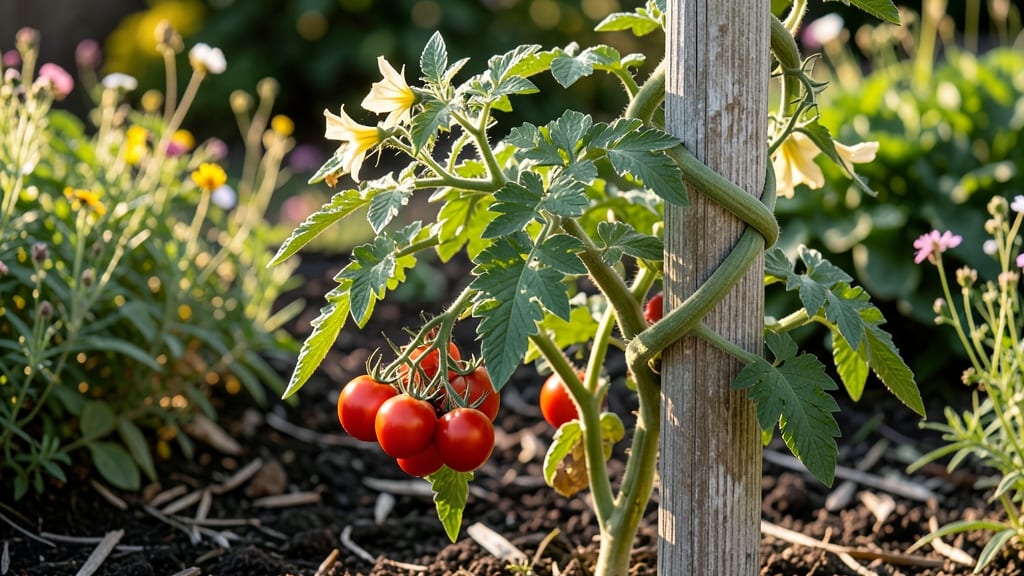
A tomato plant twist turns sprawling vines into a stunning vertical masterpiece while saving space and boosting yields. 🌱 I first saw it in a neighbor’s garden—twisted tomato plants climbing a decorative arch, their fruit heavy with color against a purple backdrop.
The technique isn’t just pretty; it maximizes small spaces and keeps plants healthy with better air circulation. The twist works by gently spiraling the main stem as it grows, encouraging upward growth without pruning.
You’ll need sturdy supports (like bamboo stakes or a metal trellis) and a little patience—just wrap the vine around the support every 6-12 inches as it climbs. The result? A compact, productive plant that produces fruit earlier and resists diseases better than sprawling varieties.
By midsummer, your twisted tomato plants will be a garden showstopper—vibrant reds, yellows, and purples cascading down your trellis while saving precious ground space. The best part? It’s simple enough for beginners but impressive enough to make your garden the talk of the neighborhood.
Works for determinate and indeterminate varieties, and the same method applies to cucumbers or beans. Here’s how to do it without damaging your plants—step by step!
Root Of The Twist Problem
If your tomato plants are growing in a twisted, gnarled, or spiral pattern instead of standing tall and straight, don’t panic—it’s often a sign of underlying issues rather than a death sentence for your plants.
Understanding the why behind this quirky growth habit is the first step to correcting it. Below, we break down the most common causes of tomato plant twists, backed by science and actionable fixes.
When tomato plants are grown in containers, vertical gardens, or small spaces, their roots can become root-bound—a condition where roots grow in a circular pattern, twisting around the edges of the pot or growing medium. This happens because:
- Limited space: Roots seek out nutrients and water, and when confined, they spiral outward like a snail’s shell. 🐌
- Poor drainage: Compacted or waterlogged soil restricts root expansion, forcing them to grow in erratic directions.
- Lack of pruning: Overgrown roots can tangle, pulling the plant into a twisted shape as it struggles to stabilize.
🔍 What to watch for: Check the base of your plant—if you see roots circling the pot’s edges or the plant leaning at odd angles, root-binding is likely the culprit.
Tomatoes are not naturally rigid like corn or sunflowers—they’re flexible but can develop permanent twists if exposed to:
- Strong, consistent winds: Young stems are soft and can bend or twist over time, especially if they’re not yet woody. 💨
- Improper staking or trellising: Loose or uneven support forces the plant to compensate by growing in crooked directions.
- Human interference: Rough handling (like moving pots frequently or tying vines too tightly) can cause stress twists.
💡 Pro tip: If wind is the issue, consider windbreaks (like burlap screens) or sturdy cages to protect your plants. For physical stress, use soft ties (like old T-shirts or rubber bands) to secure stems without crushing them.
Tomatoes are thermophilic (heat-loving) and need consistent light to grow upright. Extreme fluctuations or uneven exposure can lead to twisted growth:
- Cold drafts: Chilly air (below 50°F/10°C) weakens cell walls, causing stems to bend or spiral as they struggle to reach warmth. ❄️
- One-sided light: Plants lean toward the strongest light source (like a south-facing window), but if the light shifts (e.g., moving the plant), the stem can twist to follow.
- Heat stress: Scorching sun (especially in containers) can cause uneven growth, leading to weak, twisted stems.
🌡️ Actionable fix: Rotate your plants quarter-turn weekly to ensure even light exposure. If growing indoors, use a grow light on a timer to mimic natural sunlight.
Hidden invaders can chew, gnaw, or infect tomato stems, causing them to grow unevenly or twist as the plant compensates for damage:
| Pest/Disease | How It Causes Twists | Signs to Spot |
|---|---|---|
| 🐜 Corn Earworms or Hornworms | Larvae burrow into stems, creating weak points that cause the plant to bend or spiral as it tries to support itself. | Holes in stems, chewed leaves, or frass (black waste pellets) near the base. |
| 🍄 Fungal infections (e.g., Fusarium wilt) | Fungi disrupt water transport, leading to stunted, twisted growth as the plant struggles to distribute nutrients. | Yellowing leaves, wilting (even with water), or black streaks in stems. |
| 🐛 Root-knot nematodes | These microscopic worms physically deform roots, causing the plant to grow in twisted patterns as it searches for stable anchorage. | Gnarled, knotty roots when you inspect the soil. |
✨ Prevention tip: Inspect stems and soil regularly. For pests, handpick larvae or use neem oil. For diseases, remove infected plants immediately and sterilize tools with 10% bleach solution.
A tomato plant’s twist can also signal nutritional stress. Too much or too little of certain nutrients throws off growth patterns:
- Nitrogen deficiency: Leads to weak, spindly stems that twist as they stretch toward light. 🌿
- Potassium excess: Can cause over-softening of stems, making them prone to bending or spiraling.
- Calcium deficiency: Weakens cell walls, leading to blossom-end rot and misshapen, twisted new growth.
📊 Quick test: Check your soil’s pH (ideal: 6.0–6.8). Use a soil test kit to identify deficiencies, then amend with:
- Nitrogen: Fish emulsion or blood meal
- Calcium: Crushed eggshells or gypsum
- Potassium: Banana peel tea or wood ash (sparingly)
Fixing Your Twisted Tomato Plants
A tomato plant twist can feel like a major setback, but with the right approach, you can straighten things out and keep your garden thriving. Below, we’ll break down the most common causes of twisting and provide practical, step-by-step solutions—plus tips to prevent future issues.
If your tomato plants are twisting because they lack proper support or are competing for space, the fix is simple but requires quick action.
🔥 Strengthen the Stems
- 👨🍳 Install sturdy supports immediately—use tomato cages, stakes, or trellises to guide growth.
- 🌿 Prune lower leaves (up to 12 inches from the ground) to reduce weight and encourage upward growth.
- ⏰ Check daily for new twists and gently tie stems to supports with soft plant ties or old fabric strips.
💡 Prevention Tip:
Plant tomatoes 18–24 inches apart to avoid overcrowding. If using containers, choose deep, wide pots (at least 5 gallons) to support root stability.
If your plants are twisting due to wind or rough handling, they may need emergency care.
🍳 Straighten and Secure
- 🌿 Gently untwist the stem by hand (avoid snapping it).
- 🔪 Use soft ties (like old T-shirts or rubber bands) to hold the stem in place while it heals.
- 🌡️ Shield from wind by placing a windbreak (like a bamboo screen or old fence) nearby.
🎯 Prevention Tip:
- 🌿 Bury stakes deeper (6–8 inches) for extra stability.
- ✨ Plant near a fence or wall to act as a natural windbreak.
Twisting can also happen when plants don’t get enough water or nutrients, causing weak, spindly stems.
💧 Adjust Watering & Fertilizing
- 🌱 Water deeply 1–2 times per week (early morning is best) to prevent stress.
- 🍎 Use a balanced fertilizer (like 10-10-10) every 3–4 weeks, but avoid over-fertilizing with nitrogen (it causes leafy growth, not strong stems).
- 🥗 Add compost or worm castings to improve soil structure and root strength.
🔥 Quick Fix for Weak Plants:
- 🍳 Mix 1 tbsp of Epsom salt (magnesium sulfate) in a gallon of water and water the base to strengthen stems.
💡 Prevention Tip:
- 🌡️ Mulch around plants (with straw or grass clippings) to retain moisture and regulate soil temperature.
If pests (like aphids or whiteflies) or diseases (like blight) are attacking your plants, they may twist as they struggle to survive.
🔪 Treat Infestations & Diseases
- 🍳 Spray with neem oil (mix 1 tbsp neem oil + 1 tsp mild soap + 1 quart water) to deter pests.
- 🌿 Remove affected leaves and dispose of them in a sealed bag (don’t compost).
- 🌱 Apply copper fungicide if signs of blight appear (brown spots on leaves).
🎯 Prevention Tip:
- 💡 Rotate crops yearly to prevent soil-borne diseases.
- ✨ Inspect plants weekly for early signs of pests or disease.
If your tomato plant is twisting due to too many suckers (side shoots), pruning can help redirect energy to stronger stem growth.
⏰ How to Prune Correctly
- 🍳 Remove suckers (the small shoots between the main stem and branches) when they’re smaller than a pencil.
- 🌿 Keep 3–4 main stems (for indeterminate varieties) or 1–2 for determinate types.
- 🔪 Use clean pruners to avoid damaging the plant.
💡 Pro Tip:
- 🌡️ Prune in the morning so wounds dry quickly, reducing disease risk.
By addressing the root cause—whether it’s support, water, pests, or pruning—you’ll help your tomato plants grow strong and straight. With a little care, your vertical garden will soon be producing bountiful, twist-free tomatoes! 🍅🌟
Frequently asked questions
Can I use the tomato plant twist technique with all tomato varieties?
The twist technique works best with indeterminate varieties (like 'Sungold' or 'Better Boy') because their vines keep growing. For determinate varieties (like 'Roma' or 'Celebrity'), use it cautiously—they grow to a fixed size and may not handle twisting as well. Always start with young, flexible stems for best results.
How often should I wrap the vine around the support?
Wrap the vine every 6-12 inches as it grows to maintain the spiral shape. Check weekly and adjust ties if the vine outgrows them. Use soft materials like old T-shirts or rubber bands to avoid damaging the stem. The key is gentle, consistent guidance—not forcing the plant.
Will twisting my tomato plant reduce my harvest?
Not if done correctly! The twist technique actually increases yields by improving air circulation and sunlight exposure. However, avoid over-twisting—keep the main stem flexible and prune aggressively to focus energy on fruit production. Healthy twisted plants often produce earlier and more abundant harvests than sprawling ones.
Can I use this method for other vegetables besides tomatoes?
The technique works beautifully with cucumbers, beans, and even some squash varieties. The same principles apply—use flexible supports and gentle wrapping. Just avoid rigid-stemmed plants like corn or sunflowers. For cucumbers, you might even get longer, straighter fruits with this method.
What's the best support material for tomato plant twists?
Use bamboo stakes, metal trellises, or decorative arches for best results. Avoid plastic stakes—they can get too hot in sunlight. For artistic gardens, try wrought iron or wooden spirals. The support should be at least 6 feet tall for indeterminate varieties to accommodate full growth.