
Planting
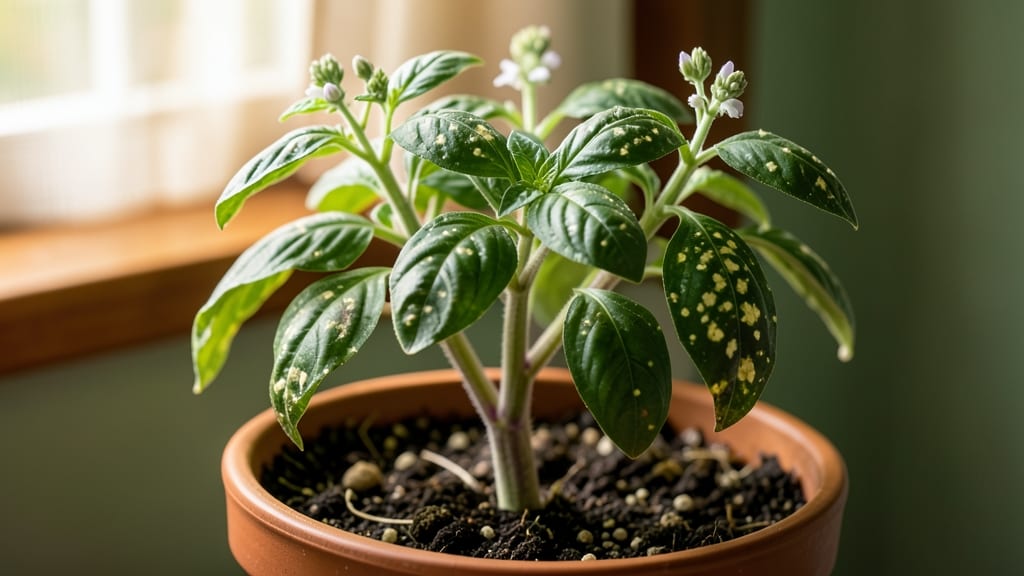
When your basil plant has white spots, it’s not just unsightly—it’s a sign your plant is fighting for its life. 🌿 I’ve seen this happen after just one humid week, and the good news is copper spray can turn things around fast if you catch it early.
Those white spots are usually powdery mildew, a fungal infection that thrives in shady, damp conditions. The key is acting fast: prune infected leaves immediately, then spray with a copper fungicide (like copper sulfate) every 7-10 days until the spots disappear.
Avoid wetting the leaves when watering—focus on the soil instead. Within 2-3 weeks, you’ll see new growth pushing through, free of those white patches. The plants will bounce back stronger, and you’ll learn exactly how much airflow and sunlight your basil needs to stay healthy.
This fix works for basil, tomatoes, and peppers too—so bookmark it for next time your garden gets hit. The secret is early action and consistent care.
Root Causes Of White Spots
White spots on your basil plant can feel like a sudden mystery—one day your leaves are lush and vibrant, the next they’re dotted with eerie white patches. But don’t panic! Understanding the why behind these spots is the first step to saving your plant.
Below, we break down the most common culprits, backed by science, so you can diagnose and treat the issue with confidence.
Fungal diseases like downy mildew or powdery mildew are the #1 reason basil develops white spots. These fungi thrive in warm, humid conditions and spread rapidly when airflow is poor.
- How it happens: Spores land on leaves, germinate, and create a white, powdery or fuzzy coating. Unlike mold, fungal mildew often appears on the undersides of leaves first.
- Science behind it: Fungi release enzymes that break down cell walls, causing white, necrotic (dead) spots. Pseudoperonospora belbahrii (downy mildew) is especially aggressive in basil.
- Tell-tale signs:
- White, cottony growth (powdery mildew)
- Yellowing leaves with white "fuzz" underneath (downy mildew)
- Spots that spread quickly in damp weather
💡 Pro Tip: Check the undersides of leaves first—this is where fungal spores often hide before spreading.
Tiny pests can leave behind white residue that looks like spots. Spider mites, for example, produce webbing and excrete honeydew (a sticky substance that attracts sooty mold), while whiteflies leave behind a white, powdery coating from their waste.
- How it happens: Pests feed on sap, weakening the plant. Their waste creates a white, sticky film or attracts secondary fungal growth.
- Science behind it: Honeydew contains sugars that promote sooty mold (a black or white fungal growth), while mite webbing traps moisture, encouraging fungal spread.
- Tell-tale signs:
- Sticky residue on leaves (honeydew)
- Fine webbing (spider mites)
- White, flying insects (whiteflies)
🔥 Quick Check: Hold a white sheet under the plant and shake it—if tiny white bugs fly up, you’ve got pests!
Basil hates soggy roots. When soil stays too wet, it creates the perfect breeding ground for fungi and bacteria, leading to white, water-soaked spots.
- How it happens: Excess moisture stresses the plant, weakening its defenses. Fungi like Phytophthora (root rot) can cause white, mushy spots on stems and leaves.
- Science behind it: Waterlogged soil reduces oxygen, suffocating roots. This triggers anaerobic bacteria and fungi to multiply, causing white, necrotic lesions.
- Tell-tale signs:
- Yellowing leaves
- Soft, white spots that feel mushy
- Bad odor from the soil
✨ Prevention Tip: Ensure pots have drainage holes and water only when the top inch of soil is dry.
Sudden temperature swings or extreme heat can cause basil to develop white, crinkled spots as a stress response.
- How it happens: Basil thrives in warm (65–80°F) conditions. Too much heat or cold disrupts cell function, leading to white, sun-scorched or frost-bitten patches.
- Science behind it: High temperatures denature proteins in leaf cells, causing chlorosis (loss of green pigment) and white, papery spots. Cold stress triggers ice crystal formation, damaging cell walls.
- Tell-tale signs:
- White, crispy edges (heat stress)
- White, frosted-looking spots (cold damage)
- Wilting despite moist soil
🌡️ Fix It: Move basil to a spot with indirect light and stable temps (avoid drafts or direct sun).
Now that you know the why, the next step is treatment—stay tuned for actionable fixes to restore your basil’s health! 🌿
Practical fixes for white-spotted basil
Reviving your basil plant starts with identifying the root cause of those pesky white spots—whether it’s fungal blight, powdery mildew, or environmental stress—and taking targeted action. Below, we break down step-by-step solutions tailored to each culprit, plus prevention tips to keep your basil thriving.
Let’s get your plant back to its lush, aromatic best!
---
Fungal blight thrives in damp, humid conditions, turning basil leaves into a white-spotted mess. Here’s how to stop the spread and restore health:
#### 🔥 Step 1: Isolate the Plant - Move your basil to a dry, shaded spot (out of direct sunlight) to slow fungal growth. - Avoid placing it near other plants—fungi spread like wildfire! 🌱💨
#### 🍳 Step 2: Prune Affected Leaves - Use sterilized scissors (wipe with rubbing alcohol) to snip off white-spotted leaves—don’t compost them! Toss them in the trash to prevent reinfection. - Focus on lower leaves first, as they’re often the most infected.
#### 👨🍳 Step 3: Apply Copper Spray (The Game-Changer) Copper is a natural fungicide that disrupts fungal spores. Here’s how to use it: 1. Mix a solution: Combine 1 tsp copper sulfate (or a pre-made copper fungicide like Bonide Copper Fungicide) with 1 gallon of water.
2. Spray thoroughly: Drench both sides of leaves and the soil base. Repeat every 7–10 days until new growth appears. 3. Pro tip: Spray early in the morning so leaves dry quickly—moisture fuels fungi! ☀️💦
#### 🥘 Step 4: Boost Airflow & Light - Space plants apart (12–18 inches between basil plants) to improve airflow. - Increase sunlight: Basil needs 6–8 hours of sun daily. If indoors, move it near a south-facing window or use a grow light.
#### ⏰ Step 5: Monitor & Repeat - Check leaves daily for new spots. If they reappear, reapply copper spray and adjust care (e.g., reduce watering).
--- If the spots look like talcum powder, it’s powdery mildew—a fungal cousin of blight but often less aggressive.
#### 💡 Quick Fix: Baking Soda Spray 1. Mix 1 tsp baking soda + 1 tsp horticultural oil + 1 tsp mild soap in 1 quart of water.
2. Spray leaves and stems until damp. Repeat every 7–10 days. 3. Why it works: Baking soda raises the leaf’s pH, making it inhospitable for fungi. 🧂✨
#### 🌿 Prevention Combo - Water at the base (avoid wetting leaves). - Space plants for airflow. - Rotate pots if indoors to ensure even light exposure.
--- If the spots are soft, waterlogged, or appear after overwatering, your basil is stressed—not necessarily infected.
#### 💦 Adjust Watering Habits - Let soil dry slightly between waterings. Stick your finger 1 inch deep—if it’s damp, wait. - Use pots with drainage holes to prevent soggy roots. - Pro tip: Water in the morning so leaves dry by night. 🌅💧
#### 🌡️ Optimize Temperature & Humidity - Basil hates extreme heat or cold. Keep temps between 60–75°F (15–24°C). - If humidity is high (e.g., bathrooms), use a fan on low setting to circulate air.
--- Once your basil recovers, lock in its health with these habits: - Rotate pots weekly for even sunlight. - Fertilize lightly (every 4–6 weeks with a balanced 10-10-10 fertilizer). - Harvest regularly to encourage new growth and airflow. - Clean tools with rubbing alcohol after pruning to avoid cross-contamination. - Inspect new plants before adding them to your garden—quarantine for a week! 🛡️
--- | Action Taken | Expected Results | |-------------------------|-----------------------------------------------| | Pruning + copper spray | Spots slow in 3–5 days; new growth in 1–2 weeks. | | Baking soda spray | Mildew reduces in 5–7 days; full recovery in 2 weeks. | | Watering adjustments | Stress spots fade in 3–7 days. |
--- Remember: Patience is key! Basil is resilient—with the right care, it’ll bounce back stronger and more flavorful than ever. 🌿💚 Now grab that spray bottle and get to work!
Frequently asked questions
Are white spots on basil always a sign of disease?
Not necessarily! While fungal infections like powdery mildew are common, white spots can also appear from pest damage (like spider mites or whiteflies) or environmental stress (heat, cold, or overwatering). Always check the leaf undersides first—if you see webbing or sticky residue, pests are likely the culprit.
How do I tell if my basil has powdery mildew vs. downy mildew?
Powdery mildew looks like a white, powdery coating on both leaf surfaces, while downy mildew appears as yellow spots with fuzzy white growth on the undersides. Downy mildew spreads faster in humid conditions and often causes leaves to curl. Test by gently rubbing a spot—powdery mildew wipes off easily.
Can I still use basil leaves with white spots for cooking?
Only if the spots are minor and the rest of the leaf is healthy! Remove any severely infected leaves, but you can still harvest spot-free leaves for cooking. Just wash all basil thoroughly before use. For severe cases, wait until the plant recovers to ensure your dish stays free of fungal flavors.
Will neem oil work for white spots on basil?
Yes! Neem oil is effective against fungal infections and pests. Mix 1 tsp neem oil + 1 tsp mild soap + 1 quart water, then spray leaves thoroughly. Repeat every 7 days until spots disappear. Neem oil also acts as a preventative—use it during humid months to keep basil healthy.
How long does it take to see improvement after treatment?
With proper care, you should see results within 3–7 days. Copper spray or baking soda treatments typically show improvement in 5–10 days, while environmental fixes (like adjusting watering) may take 1–2 weeks. Consistency is key—keep monitoring and reapplying treatments as needed.