
Planting
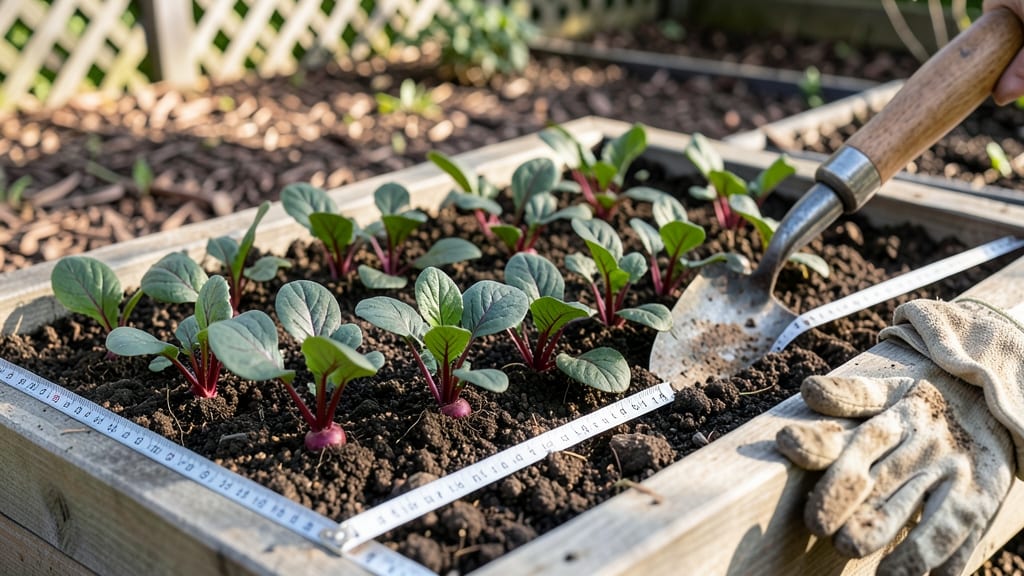
Proper beets spacing in raised beds starts with 2-3 inches between plants—crowd them too close, and you’ll end up pulling tiny, misshapen roots instead of the plump, sweet harvests you crave. 🌱 I learned this the hard way last spring when my overcrowded beets grew into gnarled, underdeveloped clumps that tasted more like dirt than earthy sweetness.
The secret isn’t just the inches between plants; it’s the balance of space, soil, and sunlight that turns your raised bed into a beet-growing powerhouse.
Raised beds give you an edge with their deep, well-draining soil—aim for at least 10-12 inches of depth to accommodate beet roots that can grow surprisingly long. Plant seeds ½ inch deep and 1 inch apart, then thin to 2-3 inches once they sprout.
This spacing gives roots room to swell without competing for nutrients, and it keeps the foliage from shading out neighbors. For maximum yield, stagger rows every 12 inches to create a checkerboard pattern that maximizes sunlight exposure.
You’ll notice the difference in just 4-6 weeks: instead of scraggly greens and stunted roots, you’ll pull out bold, round beets that store well and taste like summer in every bite.
Pair them with companion plants like lettuce or radishes (which mature faster) to make the most of your bed’s real estate. The key is patience—beets take their time, but the payoff is worth it when your raised bed becomes a beet bonanza.
Here’s the pro tip: if your soil feels too dense, mix in compost or aged manure before planting to loosen it up. Beets hate soggy roots, so raised beds with good drainage are your best friend.
And if you’re new to spacing, mark your rows with toothpicks or a simple grid—trust me, you’ll thank yourself later when those beets come out perfectly shaped and ready to roast.
📚 In This Guide
- What you need
- Instructions
- Tips and common mistakes
- Wrapping up and next steps
What you need
- ● Raised bed: At least 4’ x 8’ (or larger) with 10–12” deep sides to accommodate beet roots. Wood, cedar, or composite materials work best. 🌱
- ● Beet seeds: Choose heirloom or hybrid varieties like Detroit Dark Red or Golden. Aim for 1–2 oz (per 100 sq ft)—they’re tiny but mighty! 🌱
- ● High-quality soil: Mix 60% compost, 30% topsoil, and 10% perlite/sand for drainage. Test pH (ideal: 6.0–7.0).
- ● Watering can or hose: With a gentle spray nozzle to avoid displacing seeds.
- ● Row marker or string: For precise 12–18” spacing between rows (beets need elbow room!).
- ○ Mulch (optional but helpful): Straw or shredded leaves to retain moisture and suppress weeds.
- ● 🔥 Pre-soak seeds: Beets germinate faster if soaked overnight in warm water.
- ● 🌡️ Temperature check: Wait until soil is at least 50°F (10°C)—cold soil = slow sprouting.
- ● ✨ Thin seedlings: Once sprouts have 2 true leaves, thin to 3–4” apart for optimal growth.
Step-by-step guide to proper beet spacing in raised beds
Here's the method I've perfected to grow beets that are plump, tender, and free from competition.
🌱 Step 1: Plan Your Raised Bed Layout for Optimal Spacing
Beets need 1-3 inches of space between plants to develop their signature round shape without crowding. In a raised bed, I arrange them in neat rows with 3-4 inches between seeds and 12-18 inches between rows. This gives roots room to spread while keeping the bed organized for easy thinning later.
Draw a simple grid on paper first—beets grow best when planted in straight lines. I use a 1-inch spacing for baby beets (harvested young) and 3-inch spacing for full-sized beets. Mark your rows with a stick or string to keep them straight, as crooked rows waste space and make thinning messy.
💧 Step 2: Sow Seeds at the Right Depth and Thinning Schedule
Plant beet seeds ½ inch deep—any deeper delays germination, and they’ll struggle to push through the soil. I use a small hand trowel to make shallow furrows, space seeds 1 inch apart, then cover lightly with soil. Mist the bed gently to settle the seeds without disturbing them.
Thinning is critical—wait until seedlings reach 2 inches tall with 2 true leaves. Use scissors to snip unwanted seedlings at soil level (pulling risks disturbing roots). Leave only the strongest plants with 3 inches between them. This prevents competition and ensures you harvest perfectly shaped beets.
☀️ Step 3: Monitor Soil Moisture and Adjust Spacing for Varieties
Beets need consistent moisture, especially in raised beds where soil dries faster. Water 1 inch per week, keeping the soil evenly damp but not soggy. Overcrowding stresses plants, so if your bed feels too packed, thin again at 4 weeks—some varieties (like Detroit Dark Red) benefit from extra space.
For long, cylindrical beets (like Chioggia), space them 4 inches apart to prevent forking. Round varieties (like Golden) can handle 3 inches. Watch for yellowing leaves—this often signals overcrowding. If you see stunted growth, thin immediately and mulch with 1 inch of straw to retain moisture.
✂️ Step 4: Harvest Strategically to Encourage Continuous Growth
Baby beets are ready in 30-40 days—harvest a few early to encourage the remaining plants to bulk up. Use a fork to gently loosen soil around the root before pulling. For full-sized beets, wait until 50-60 days when tops reach 6-8 inches tall. Leave 1 inch of stem attached to prevent bleeding.
After harvest, fill gaps with quick-growing greens like lettuce or radishes. Beets self-sow poorly, so plan succession plantings if you want a continuous supply. I always save seeds from my best specimens—store them in a cool, dry place until next season.
🌿 Step 5: Maintain Soil Health Between Plantings
After harvesting, remove all beet foliage to prevent disease. Amend the bed with 2 inches of compost and a light top dressing of 5-10-10 fertilizer to replenish nutrients. Raised beds deplete faster than in-ground plots, so I test soil pH annually—beets prefer 6.0-7.0.
Rotate crops next season—never plant beets in the same spot two years in a row. Instead, follow them with brassicas (like kale) or legumes (like peas). This breaks pest cycles and keeps your raised bed productive. Mark your bed layout with stakes so you remember rotations.
Tips & tricks for perfect beet spacing in raised beds
These game-changing insights will help you maximize your harvest without the common pitfalls that turn promising plantings into disappointing yields.
The Layout Secret: Before planting, sketch your raised bed layout to scale—this prevents the "eyeballing" mistakes that waste space. I use graph paper where each square represents 1 inch, then mark my 3-inch spacing for full-sized beets with a pencil. This visual map helps me account for the 12-18 inches between rows that's often overlooked in crowded beds.
Thinning Technique: The 2-inch height with 2 true leaves is your perfect thinning window—any earlier and roots may not establish, any later and competition begins. I use clean kitchen scissors (sterilized with rubbing alcohol) to snip seedlings at soil level rather than pulling, which prevents disturbing the remaining plants' roots. This precision thinning gives you perfectly shaped beets without the stress of overcrowding.
Variety-Specific Adjustments: Don't treat all beets the same! Chioggia's long, cylindrical shape needs that extra 4 inches of space to prevent forking, while round varieties like Golden can handle the standard 3 inches. I always label my rows with plant markers to track varieties—this prevents mixing up spacing requirements mid-season when plants look similar.
Moisture Management: The 1 inch per week watering guideline works best when applied consistently. I set a rain gauge in my garden to monitor actual rainfall, then supplement with drip irrigation during dry spells. Mulching with 1 inch of straw immediately after planting helps maintain that critical moisture level while preventing soil crusting that can smother seedlings.
Pro Tips for Beets Spacing Raised Bed
- These game-changing insights will help you maximize your harvest without the common pitfalls that turn promising plantings into disappointing yields.
- The Layout Secret: Before planting, sketch your raised bed layout to scale—this prevents the "eyeballing" mistakes that waste space.
- Thinning Technique: The 2-inch height with 2 true leaves is your perfect thinning window—any earlier and roots may not establish, any later and competition begins.
Frequently asked questions
about growing beets in raised beds—because even the best-laid plans need a little troubleshooting!How close can I plant beets in a raised bed?
Beets need 1–3 inches apart in rows spaced 12–18 inches apart for optimal growth. Crowding leads to misshapen roots, while over-spacing wastes space. For baby beets, plant them 2 inches apart—they’ll mature faster and leave room for succession planting!
When is the best time to harvest beets in a raised bed?
Baby beets are ready in 4–6 weeks, while full-sized ones take 70–80 days. Check size (1–3 inches wide) and pull gently—if the root resists, it’s not ready! Harvest on a cool morning for tender, sweet beets. Over-mature beets get woody, so stay vigilant!
Can I grow beets in a raised bed with other vegetables?
Yes! Beets pair well with onions, lettuce, or bush beans (they deter pests). Avoid planting near pole beans or brassicas (like cabbage), as they compete for nutrients. Use the square foot gardening method (1 beet per square foot) to maximize space without overcrowding.
Why are my beets bolting or turning bitter in the raised bed?
Bolting (flowering early) happens with heat stress (above 80°F) or long days. To prevent it, plant heat-tolerant varieties (e.g., ‘Detroit Dark Red’) and use shade cloth in peak summer. For bitter flavor, harvest earlier or grow in cooler seasons (spring/fall)—beets taste sweeter when stressed less!
How do I succession plant beets in a raised bed for continuous harvest?
Plant every 2–3 weeks in early spring and again in late summer for fall harvests. Use fast-maturing varieties (30–50 days) for quick turns. Leave space between plantings—beets need 6–8 hours of sun daily, so rotate crops to avoid soil depletion.
Wrapping up and next steps
Mastering beets spacing in raised beds is your golden ticket to a bountiful, healthy harvest! 🌱 With the right techniques—like proper row spacing (3–6 inches apart), deep soil prep, and companion planting—you’ll enjoy sweet, tender roots and lush greens all season.
Whether you’re a beginner or a seasoned gardener, these tips ensure your raised bed thrives.
Now that you’re armed with knowledge, roll up your sleeves and plant! Start small, experiment with varieties, and watch your garden flourish. Happy growing—your future salads (and dinner plates) will thank you! 🥕✨