
Planting
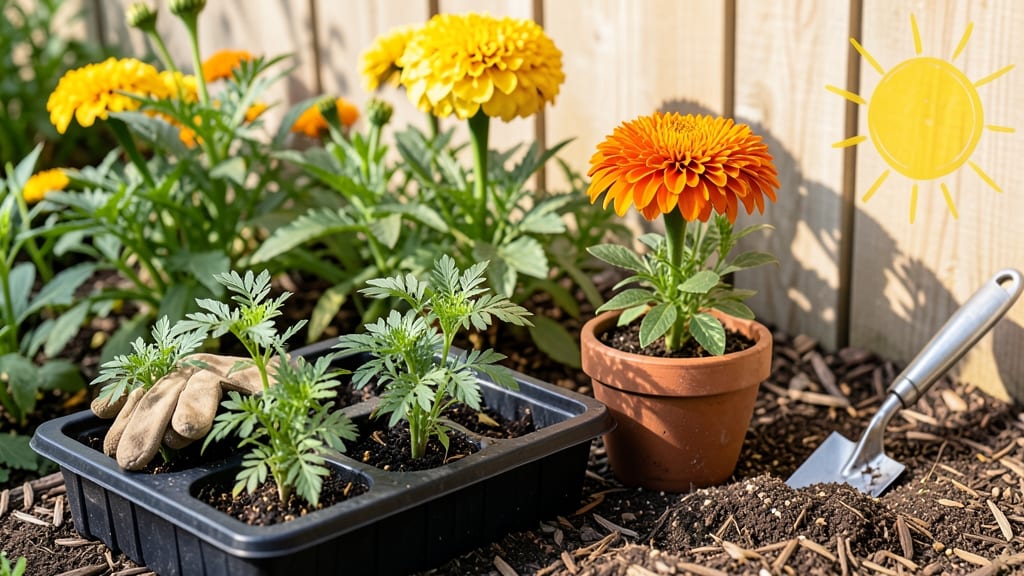
Plant marigolds where they’ll thrive—and where pests will dread to tread. 🌻 The best place for these sun-loving annuals is in full-sun borders, where their vibrant blooms repel nematodes and aphids while adding bold color to your garden.
I’ve found they perform best in well-draining soil, planted alongside tomatoes, peppers, or French marigolds for maximum pest control. Marigolds handle heat and dry spells better than most flowers, making them perfect for southern exposures or container gardens on patios. Just avoid soggy soil—they’ll rot faster than they’ll bloom.
For extra protection, interplant them with basil or nasturtiums to create a natural pest barrier that works year after year. By mid-summer, you’ll have a nearly pest-free garden corner bursting with gold, orange, or deep red blooms that keep coming back.
The fragrance alone deters many garden nuisances, and the flowers last longer than store-bought arrangements. Works for in-ground beds, raised planters, or even hanging baskets—just ensure they get 6+ hours of direct sun daily. Here’s how to place them for the most impact (and the fewest pests).
📚 In This Guide
- What you need
- Instructions
- Tips and common mistakes
- Wrapping up and next steps
What you need
- ● Marigold seeds or seedlings: Choose between French, African, or Mexican varieties (10–20 plants per 100 sq. ft. for optimal pest control and aesthetics).
- ● Well-draining potting soil or garden soil: 1–2 cubic yards (enough to amend a 10’x10’ bed to a depth of 6–12 inches). Mix in compost (1 part compost to 3 parts soil) for nutrient-rich soil.
- ● Sunlight: A location with 6–8+ hours of direct sunlight daily (marigolds are sun-worshippers!).
- ● Water: Consistent moisture (1–1.5 inches per week, especially during dry spells).
- ● Spacing tools: A tape measure or spacer sticks to mark 12–18 inches apart (for seedlings) or 6–12 inches apart (for seeds).
- ● Garden trowel or hand shovel: For digging holes (6 inches deep for seeds, 8–10 inches for seedlings).
- ● Gloves: A pair of gardening gloves (nitrile or leather) to protect your hands.
- ● Watering can or hose with a gentle spray nozzle: Avoid disturbing soil when watering seedlings.
- ○ Mulch (optional but recommended): Straw or shredded leaves: 2–3 inches thick to retain moisture and suppress weeds.
- ● Organic mulch (e.g., pine straw): Adds a polished look while deterring pests.
- ○ Fertilizer (optional): Balanced, slow-release fertilizer (10-10-10): 1–2 tablespoons per plant at planting time.
- ● Compost tea or fish emulsion: For a natural nutrient boost mid-season.
- ● Test your soil: Use a pH test kit (aim for 6.0–7.0; marigolds tolerate slightly acidic to neutral soil).
- ● Companion plants: Pair with basil, tomatoes, or herbs to maximize pest-repelling benefits!
- ● Deadhead regularly: Snip off spent blooms with pruning shears to encourage more flowers.
How to choose and plant marigolds for maximum pest-repelling power
Here's where marigolds thrive—and how to place them for the strongest pest defense in your garden.
🌱 Step 1: Select the Perfect Sun Exposure
Marigolds demand full sun—that means 6-8 hours of direct sunlight daily. I always plant mine where the morning sun hits first, then they get afternoon shade from taller plants. This prevents sunburn on their delicate petals while ensuring enough light for flowering.
Watch for leggy stems with sparse blooms—that’s your sign they’re not getting enough light. If your garden only offers partial sun, choose French marigolds (like 'Bonanza') over African types—they tolerate slightly shadier spots better.
☀️ Step 2: Position Along Garden Edges and Plant Borders
The best pest-repelling placement is right at the garden’s perimeter. I plant marigolds in a 2-foot-wide border around vegetables like tomatoes and peppers, creating a natural barrier. Their strong scent confuses pests like nematodes, aphids, and even rabbits.
For container gardens, place pots near entry points where pests might enter. You’ll notice fewer pests venturing past the marigolds—it’s like an invisible shield. Just avoid planting them directly next to herbs like basil, which they can inhibit.
🪴 Step 3: Space Plants for Airflow and Pest Prevention
Keep marigolds 12-18 inches apart in rows or 10-12 inches apart in clusters. Crowding invites fungal diseases like powdery mildew, which thrives in damp, stagnant air. I always space them wider than the seed packet suggests—trust me, your plants will thank you.
Watch for yellowing leaves or black spots—that’s your cue to thin out overcrowded areas. Proper spacing also lets you easily spot pests early (like spider mites on the undersides of leaves) before they spread.
✂️ Step 4: Plant in Late Spring After Soil Warms
Marigolds hate cold soil. Wait until nighttime temperatures stay above 50°F before planting. I test soil warmth by pressing my hand into it—if it feels warm to the touch, it’s ready. Plant seeds ¼ inch deep or transplants 1 inch deep.
After planting, water deeply but avoid soggy soil. You’ll see first true leaves in 7-10 days. If germination takes longer, check that the soil isn’t too cold—marigolds need warmth to sprout efficiently.
🌿 Step 5: Maintain for Continuous Pest Defense
Deadhead spent blooms regularly to encourage more flowers—the more blooms, the stronger the pest-repelling scent. I pinch off faded flowers every 2-3 weeks during peak season. Also, mulch around plants with 1-2 inches of straw to keep soil moist and deter weeds that attract pests.
If you notice pests creeping past your marigolds, add a second row closer to the problem area. Sometimes, you need to double down on the natural defense. With consistent care, your marigolds will keep pests at bay all season long.
Tips & tricks for perfect marigold pest-repelling placement
These game-changing insights will help you maximize your marigolds' pest-repelling power and ensure a thriving garden border.
Sunlight Strategy: For those 6-8 hours of direct sunlight per day, position your marigolds where they'll receive morning sun first—this gradual exposure prevents sunburn on their sensitive petals. I've found that planting them slightly east of taller plants creates a perfect sun/shade balance. If your garden has afternoon shade, French marigolds like 'Bonanza' are your best bet—they handle partial sun better than African varieties.
Companion Planting Secrets: The 2-foot-wide border around vegetables isn't just about pest control—it's about creating an ecosystem. Plant marigolds near tomatoes, peppers, and squash, but keep them 12 inches away from basil, which they can inhibit. For container gardens, place pots near entry points where pests might enter, creating an invisible shield. I've seen aphids completely avoid marigold borders—it's like they're saying "no thanks!" to the strong scent.
Spacing for Success: Those 12-18 inches apart in rows might seem generous, but trust me—it's worth it. Proper spacing prevents fungal diseases like powdery mildew by allowing airflow, and it makes pest detection easier. I always space mine wider than seed packets suggest because crowded plants stress out and become more vulnerable. Watch for yellowing leaves or black spots—they're your first warning signs to thin out overcrowded areas.
Soil Warmth Test: That 50°F nighttime temperature minimum is non-negotiable. I test soil warmth by pressing my hand into it—if it feels warm to the touch, it's ready. Plant seeds ¼ inch deep or transplants 1 inch deep, then water deeply but avoid soggy soil. You'll see those first true leaves in 7-10 days, but if germination takes longer, check that the soil isn't too cold—marigolds need warmth to sprout efficiently.
Pro Tips for Best Place To Plant Marigolds
- These game-changing insights will help you maximize your marigolds' pest-repelling power and ensure a thriving garden border.
- Sunlight Strategy: For those 6-8 hours of direct sunlight per day, position your marigolds where they'll receive morning sun first—this gradual exposure prevents sunburn on their sensitive petals.
- Companion Planting Secrets: The 2-foot-wide border around vegetables isn't just about pest control—it's about creating an ecosystem.
Frequently asked questions
Got questions about where and how to plant marigolds for the best results? Here are some common ones—and their answers—to help you grow a thriving, pest-repelling garden!
When is the best time to plant marigolds?
Marigolds thrive in warm soil, so plant them after the last frost when temperatures stay above 50°F (10°C). For fall blooms, sow seeds 8–10 weeks before the first frost. In warmer climates, you can plant year-round!
Do marigolds really keep pests away?
Yes! Their strong scent repels aphids, nematodes, and even rabbits. Plant them near veggies like tomatoes, peppers, and cucumbers for natural pest control. Just avoid planting near beans—they’re sensitive to marigold’s allelopathic properties.
Can I grow marigolds in containers?
Choose dwarf varieties (like ‘Tangerine’ or ‘Bonanza’) for pots. Use a well-draining mix with compost, and place containers in full sun. Just ensure pots are at least 6–8 inches deep to accommodate roots.
Why aren’t my marigolds blooming?
Overcrowding, poor sunlight, or too much nitrogen (from fertilizer) can stunt blooms. Deadhead spent flowers, ensure they get 6+ hours of sun, and use a low-nitrogen, high-phosphorus fertilizer to encourage blooming.
What’s a good alternative if I hate marigolds?
Try nasturtiums (edible, pest-repelling) or calendula (bright blooms, medicinal). Both thrive in sun and deter pests naturally—just check their spacing needs!
Wrapping up and next steps
Choosing the best place to plant marigolds means embracing their sunny, pest-repelling charm while giving them the care they deserve! Whether you opt for sunny borders, companion plantings, or containers, these vibrant blooms will thrive—and keep unwanted critters at bay. 🌻
Now that you’re armed with the perfect spot, roll up your sleeves and get planting! Grab your marigolds, pick your location, and watch your garden transform into a lively, low-maintenance haven. Happy gardening—your future pest-free paradise starts today! 🌱