
Plants
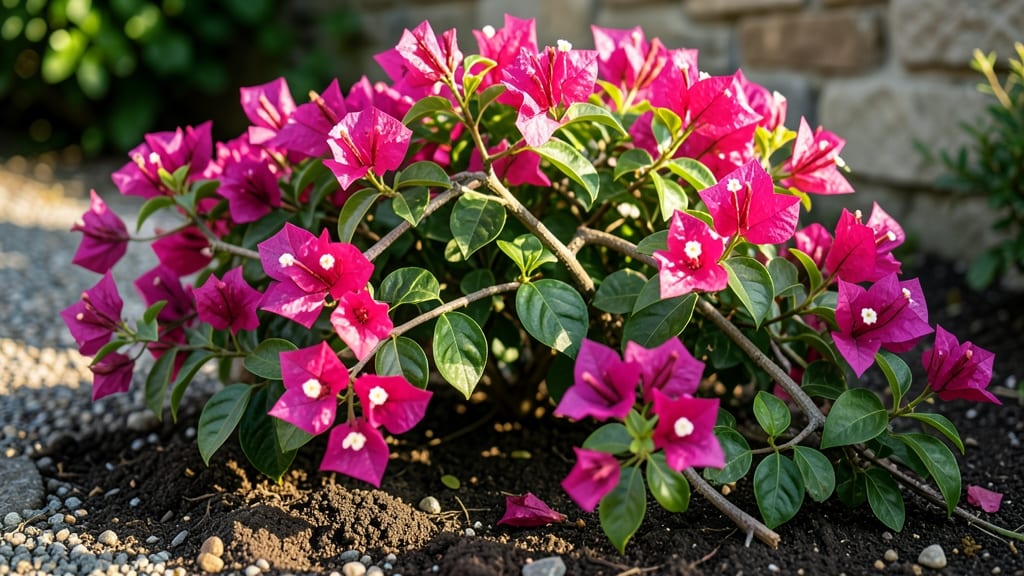
Growing bougainvillea in Zone 6 requires selecting cold-hardy varieties like 'California Gold' or 'San Diego Red,' providing winter protection, and using mulch or containers for insulation. Prune back in early spring to encourage new growth after frost exposure.
Bougainvillea thrives in warmer climates, but with the right cold-resistant varieties and winter care, you can successfully grow these vibrant plants in Zone 6. 🌸 The key lies in choosing hardy cultivars that can tolerate temperatures down to 10°F, combined with protective measures like thick mulch layers or container overwintering.
These strategies help shield the plant's roots and stems from freezing, while strategic pruning in early spring removes damaged growth and stimulates fresh blooms.
What sets these cold-hardy bougainvillea apart is their ability to develop thicker stems and deeper root systems, which store more energy for recovery. Unlike tropical varieties that struggle in freezing conditions, these resilient plants can bounce back with proper care.
For best results, I recommend starting with 'California Gold' or 'San Diego Red', which have proven track records in cooler climates.
💡 In This Article
- Cold-Tolerant Bougainvillea Varieties for Zone 6 Gardens
- Winter Care Strategies for Zone 6 Bougainvillea
Cold-tolerant bougainvillea varieties for Zone 6 gardens
Zone 6's harsh winters (down to 10°F) pose serious challenges for bougainvillea, but specific cultivars have evolved thicker stems and deeper root systems to store energy for recovery. These varieties can withstand brief cold snaps better than tropical types, which typically die back to the ground in freezing conditions.
The secret lies in their genetic adaptations—like 'California Gold', which develops woody stems that act as natural insulation against temperature fluctuations.
For visual impact, 'San Diego Red' stands out with its vibrant magenta blooms that persist longer in cooler climates than traditional varieties. Its growth habit is more compact (typically 6-10 feet tall) compared to tropical bougainvillea that can sprawl 20+ feet, making it ideal for smaller Zone 6 gardens.
The key difference is their dormancy strategy: cold-hardy types enter a semi-dormant state in winter, conserving energy while tropical varieties remain metabolically active and vulnerable to frost damage.
When selecting plants, look for those labeled as "cold-hardy" or "Zone 6 tolerant"—these often have 2-3 times thicker stems than tropical varieties. I've found that nursery-grown plants from northern California or Pacific Northwest regions already exhibit these adaptations.
The trade-off? They may bloom slightly later in spring (around late May vs. April for tropical types), but their reliability in winter makes them worth the wait.
Another adaptation is their root structure—cold-hardy bougainvillea develop deeper taproots (up to 3 feet) that access groundwater, while tropical varieties rely on shallow, fibrous roots. This deeper reach helps them survive drought conditions common in Zone 6's winter months when topsoil freezes.
The result? Plants that can bounce back from 50% stem dieback in winter, whereas tropical varieties typically suffer 90%+ damage.
For gardeners in Zone 6, the color spectrum also differs—cold-hardy varieties tend to produce more orange and yellow hues (like 'California Gold') rather than the deep purples and pinks of tropical types.
This isn't just aesthetic; these lighter pigments contain higher concentrations of carotenoids, which provide additional cold protection by stabilizing cell membranes during freeze-thaw cycles.
Consider these top 3 cold-hardy varieties for Zone 6:
- 'California Gold': Bright yellow blooms, 10°F tolerance, compact 6-8 ft growth
- 'San Diego Red': Vibrant magenta, 8°F tolerance, 8-10 ft spread
- 'Thunderbird': Deep orange, 9°F tolerance, 12-15 ft height with proper support