
Transplanting
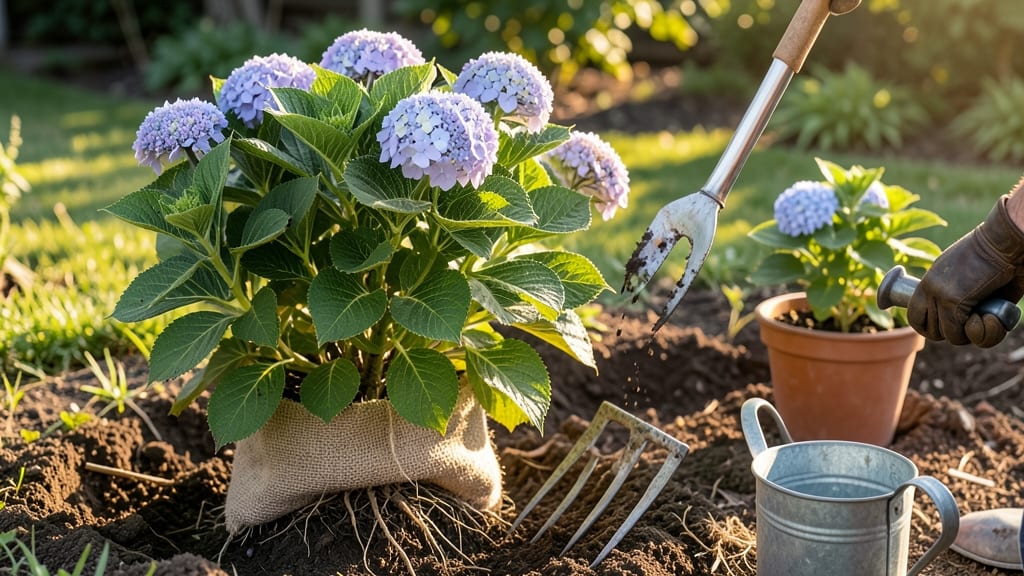
Yes, hydrangeas can be transplanted in the fall, ideally between late September and early November, when soil stays warm but before the first frost arrives. Trim dead blooms, prepare a hole twice as wide as the root ball, and water thoroughly afterward to help roots settle before winter dormancy.
Fall is actually the best time to move hydrangeas because the cooler air and soil help roots recover without the stress of summer heat. 🌿 The key is timing—soil temperatures should stay above 60°F to prevent shock, but you want to finish before hard frost sets in.
I’ve found that container-grown hydrangeas adapt even better than field-grown ones because their roots aren’t as deeply established. Just be sure to prune only the dead blooms (never the new growth) before transplanting, as this helps the plant focus energy on root development rather than flowering.
💡 In This Article
- Best Fall Transplanting Conditions for Hydrangeas
- Step-by-Step Fall Hydrangea Transplanting Guide
Best fall transplanting conditions for hydrangeas
Fall transplanting works best when soil temperatures hover between 60-70°F—warm enough to encourage root regrowth but cool enough to slow top growth. This ideal window typically falls between late September and early November, depending on your region.
The key is avoiding hard frost, which can damage tender new roots before they establish. In USDA zones 5-7, aim for early October; in warmer zones 8-10, you might extend until mid-November. The cooler air also reduces water loss through transpiration, giving roots a better chance to settle.
Hydrangeas enter dormancy naturally in fall, which makes this season perfect for moving them.
Their roots grow more slowly during this period, reducing transplant shock compared to summer's intense heat. 🌿 What most gardeners miss is that container-grown hydrangeas transplant more easily than field-grown ones because their root systems aren't as extensive.
For field-grown plants, dig a hole twice as wide as the root ball to minimize root disturbance. The goal is to create a stress-free environment where roots can focus on spreading rather than supporting foliage.
Soil preparation is critical—amend the new planting hole with compost or aged manure to improve drainage and fertility. Hydrangeas prefer slightly acidic soil (pH 5.5-6.2), so test your soil before transplanting. In cooler climates (zones 3-4), delay transplanting until late October to avoid early frosts.
The trade-off is that you'll have less time for roots to establish before winter, so consider using rooting hormone to give them a head start. Always water deeply after transplanting to help settle the soil and reduce air pockets around roots.
One common mistake is transplanting too early in fall. Early September can still be too warm, causing plants to continue vigorous growth that stresses their root systems. 🌱 Another pitfall is not accounting for your local microclimate—valleys stay cooler longer than hilltops, so adjust your timing accordingly.
For example, in Pacific Northwest regions, you might start transplanting in early October, while Midwestern gardeners should wait until late October. The rule of thumb is to finish transplanting at least 6-8 weeks before your area's first expected frost date.
After transplanting, monitor your hydrangea closely for signs of stress like yellowing leaves or wilting. This often indicates poor root contact with soil. If you notice these symptoms, gently loosen the soil around the base and water again.
Mulching with 2-3 inches of organic mulch (like shredded bark) helps insulate roots and retain moisture. In particularly cold climates, consider wrapping the base with burlap for extra protection. The goal is to give your hydrangea the best possible chance to establish strong roots before winter dormancy begins.
Here's what's actually happening underground: When you transplant in fall, the hydrangea's roots begin forming new feeder roots that will sustain it through winter. These new roots are more sensitive to temperature changes than established roots, which is why soil temperature matters so much.
The ideal 60-70°F range triggers cell division in root tips while keeping the plant's metabolic rate in check. This balance is what gives fall-transplanted hydrangeas their best chance at thriving in their new location. 💫