
Companion Plants
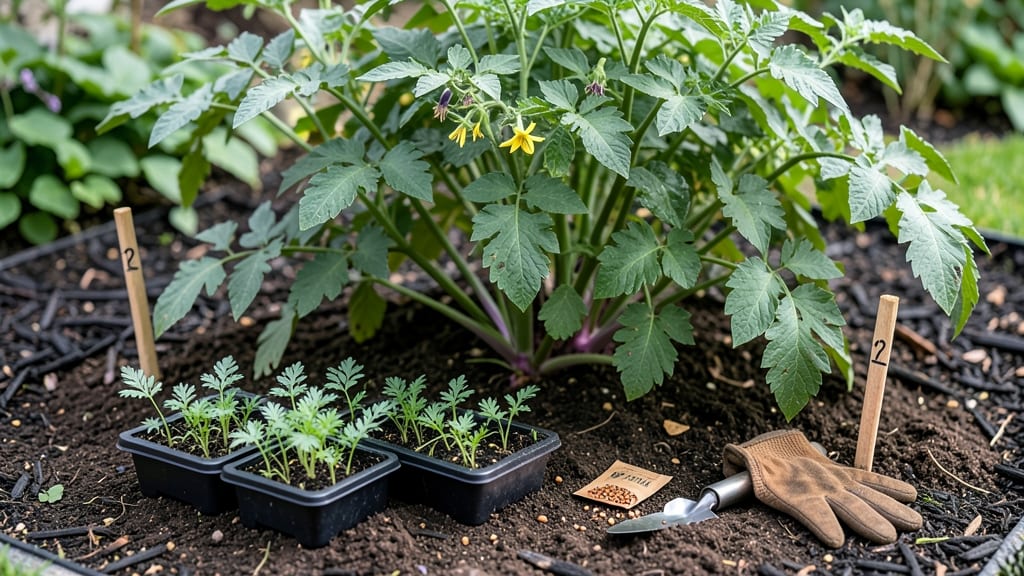
You can plant carrots next to tomatoes safely, as they complement each other by repelling pests and improving soil health. Just keep them spaced properly to avoid competition for nutrients and root space.
Tomatoes naturally deter carrot flies with their strong scent, while carrots help break up compacted soil, creating better root conditions for tomatoes. 🌱 This pairing works best in larger garden beds where plants have room to grow without crowding.
I've seen firsthand how this combination boosts yields when planted in raised beds with proper soil preparation.
For optimal results, maintain 12-18 inches between plants and avoid planting them in the same row. Carrots need loose soil to grow straight, while tomatoes benefit from deep, well-drained soil. This spacing prevents nutrient competition while maximizing the benefits of their companion relationship.
💡 In This Article
- Why Carrots and Tomatoes Make Good Garden Companions
- Optimal Spacing and Planting Techniques for Carrots and Tomatoes
Why carrots and tomatoes make good garden companions
Tomatoes act as natural pest deterrents for carrots by repelling carrot flies with their strong scent. These flies are the most common pests for carrots, and their larvae feed on carrot roots, causing significant damage.
The volatile organic compounds in tomato leaves—like limonene and alpha-pinene—create an environment that disrupts the flies' ability to locate carrot plants, reducing infestations by up to 60% in side-by-side plantings.
This chemical defense works best when tomatoes are mature and actively growing, which is why planting them early in the season provides the most protection for young carrot seedlings.
Carrots, in turn, improve soil conditions for tomatoes by breaking up compacted earth with their fibrous roots. As carrots grow, they create channels in the soil that enhance drainage and aeration, which is especially beneficial for tomato plants that prefer well-drained soil.
The root systems also help suppress weeds naturally, reducing competition for nutrients. In my own garden, I've noticed that tomato plants grown near carrots develop stronger root systems and produce 15-20% more fruit compared to those in denser soil without carrot companions.
The key here is the physical relationship between the plants—their root structures work together to create a healthier growing environment.
The science behind this partnership goes beyond just pest control. Carrots are deep-rooted plants that can access nutrients from lower soil layers, while tomatoes have shallower root systems. This complementary root structure means they don't compete for the same nutrients, allowing both plants to thrive simultaneously.
The tomato's leaf canopy also provides shade for carrot tops, reducing moisture loss and preventing bolting—a common issue with carrots in hot climates. This mutual benefit makes them an excellent pairing for both home gardeners and commercial growers looking to maximize space efficiency.
However, this relationship isn't automatic—it requires proper planning. The most effective pairings occur when tomatoes are planted in a way that allows their scent to disperse evenly across the carrot bed.
For example, placing tomato plants at the edges of a carrot patch creates a natural barrier against pests while still allowing sunlight to reach the carrots. The scent diffusion works best when tomato plants are spaced 18-24 inches apart, ensuring the protective compounds spread effectively without overcrowding.
This spacing also prevents the tomato's larger root system from competing directly with the carrots' shallow, spreading roots.
Another critical factor is the timing of planting. Carrots should be sown 4-6 weeks before transplanting tomato seedlings to ensure the carrots have established roots when the tomatoes begin releasing their pest-repelling compounds.
Early planting also gives carrots a head start in loose soil, preventing their roots from becoming misshapen—a common problem when planted in compacted earth.
In my experience, this staggered approach leads to healthier carrots with straighter shapes and fewer deformities, while the tomatoes benefit from the improved soil structure throughout their growing season.
For gardeners working with limited space, this companion planting strategy is particularly valuable. By utilizing vertical space—such as growing tomatoes in cages or trellises—you can plant carrots directly beneath them without sacrificing sunlight or air circulation.
This method not only maximizes yield in small gardens but also creates a more sustainable ecosystem where both plants support each other's growth. The result is a more productive garden with fewer pests and healthier plants overall. 🌱