
Planting
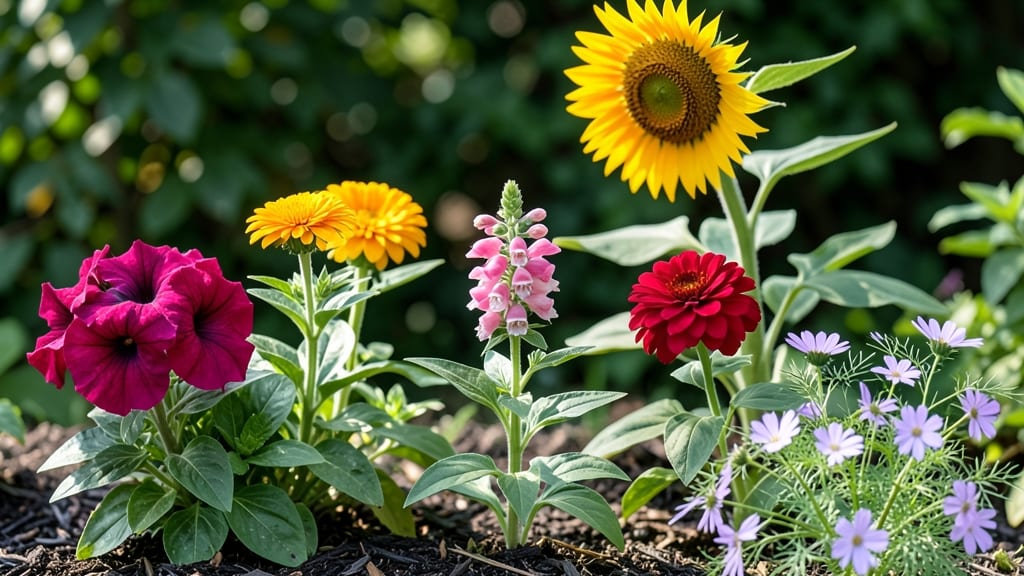
Mastering flower plant identification just got easier—no more guessing whether that pink bloom is a rose or a peony. 🌸 I’ve spent years sorting through garden varieties, and the key is focusing on three simple features: leaf shape, flower structure, and growth habit.
These details tell you everything you need to know about care, pruning, and even pest control.
Start with the leaves—are they lobed like a hosta’s or serrated like a rose’s? Then check the flower: is it layered like a tulip or single-petaled like a daisy? Most common garden flowers fall into one of these categories, and once you recognize the patterns, identification becomes second nature.
A quick reference chart or a plant ID app can speed this up even more.
Once you’ve nailed the basics, you’ll spot subtle differences that change how you care for the plant. A daylily and a peony might look similar at first glance, but their growth habits and bloom times reveal all the care secrets.
The right ID means better pruning, smarter watering, and fewer pests—because you’ll know exactly what the plant needs.
This guide covers the most common blooms you’ll find in gardens across the U.S., from sun-loving zinnias to shade-tolerant impatiens. Whether you’re troubleshooting a mystery plant or just curious about your neighbor’s yard, these visual cues will have you identifying flowers like a pro in no time.
The Hidden Triggers Behind Misidentification
Even the most experienced gardeners occasionally struggle to pinpoint the exact species of a flower—especially when subtle (or not-so-subtle) factors throw them off. Misidentification often stems from a mix of biological quirks, environmental influences, and human error.
Understanding these root causes can help you sharpen your eye and avoid costly mistakes when naming your garden stars. Let’s break down the science behind why flower identification can go awry.
Many garden flowers aren’t purebred—they’re hybrids, the result of cross-pollination between two (or more) parent plants. This genetic mixing can create flowers that blend traits from multiple species, making identification tricky.
- Why it happens: Hybridizers deliberately breed plants for traits like larger blooms, longer vase life, or disease resistance. For example, a Rhododendron hybrid might inherit the color of one parent and the leaf shape of another, leaving you scratching your head.
- Actionable tip: Check for cultivar names (e.g., Rosa ‘Knock Out’) in plant tags or databases like the Missouri Botanical Garden’s Plant Finder. These often reveal hybrid origins.
- Pro tip: 💡 Look for "×" in the scientific name (e.g., ×Fatshedera), which signals a hybrid. Pure species names never include this symbol.
Drought, extreme heat, or poor soil can force plants to alter their growth patterns as a survival tactic. A well-watered Petunia might look nothing like its parched cousin.
- Why it happens:
- Water stress: Leaves may curl, flowers shrink, or colors fade (e.g., a Hydrangea turning blue instead of pink due to acidic soil).
- Light deprivation: Shade-loving Impatiens stretched toward light will have elongated stems and sparse blooms, mimicking a different species.
- Nutrient deficiency: Yellowing leaves (chlorosis) can make a Coleus resemble a sickly Pothos if iron is lacking.
- Actionable fix: Compare your plant to reference photos from ideal growing conditions (e.g., Gardening Know How). Stress often creates "cheat codes" like unusual leaf spots or stunted growth.
- Pro tip: 🌡️ Take notes on your plant’s environment—soil pH, sunlight hours, and watering habits can reveal why a flower "doesn’t match" its ID guide.
Flowers aren’t static—they evolve through their lifecycle. A Daffodil in bloom looks nothing like its dormant bulb in winter, and a Peony’s foliage changes dramatically from spring to fall.
- Why it happens:
- Flowering stage: Some plants (like Lilies) only reveal their true identity when in bloom. Leaves alone might fool you into thinking it’s a Daylily.
- Dormancy: Deciduous plants (e.g., Clematis) shed leaves in winter, leaving only vines that could be mistaken for a Grapevine.
- Seed vs. mature plant: A Sunflower seedling’s first leaves are jagged and lobed—completely different from its adult foliage.
- Actionable tip: 📅 Track your plant’s lifecycle. Use apps like Gardenate to predict blooming times and avoid seasonal mix-ups.
- Pro tip: ✨ Focus on non-floral traits when blooms are absent, like bark texture (Dogwood vs. Magnolia) or bud shape.
Climate, altitude, and even microclimates within your garden can tweak a plant’s appearance. A Rose in Arizona might thrive with tiny, heat-resistant blooms, while the same variety in Maine produces larger, cooler-weather flowers.
- Why it happens:
- Genetic adaptation: Plants in harsher climates (e.g., Alpine Penstemon) often develop darker colors or thicker leaves to conserve moisture.
- Pollinator pressure: Flowers in areas with fewer bees might grow brighter colors or stronger scents to attract them.
- Soil differences: A Hosta in clay soil could have bluer leaves than one in sandy soil, thanks to mineral uptake.
- Actionable fix: 🌍 Compare local specimens to regional plant databases (e.g., iNaturalist) to account for geographic quirks.
- Pro tip: 🔥 Note your hardiness zone—some flowers (like Tulips) have zone-specific cultivars that look distinct.
Even with the best tools, misjudging details leads to misidentification. A quick glance at a Dahlia’s petal count might make you think it’s a Zinnia—until you count closer.
- Why it happens:
- Overgeneralizing: Assuming all white flowers are Lilies ignores Snowdrops, Moonflowers, or even some Orchids.
- Ignoring scent: Night-blooming Jasmine smells entirely different from Day-blooming Gardenia, yet both have white flowers.
- Relying on color alone: A Pink Begonia might look like a Pink Impatiens until you check the leaf veins or growth habit.
- Actionable tip: 🎯 Use a checklist for key traits:
Trait Example Leaf shape Heart-shaped (Hosta) vs. fern-like (Ferns) Growth habit Vining (Clematis) vs. bushy (Hydrangea) Flower arrangement Quick Fixes for Flower ID Confusion
Struggling to match your blooms to a name? Whether you’re staring at a leafy mystery or a vibrant but unidentified flower, these practical solutions will turn guesswork into confidence.
Below, we break down common challenges—from blurry photos to obscure species—and pair each with step-by-step fixes and prevention tips to keep your plant ID game sharp.
Cause: Lighting, angles, or seasonality distort details, making even familiar flowers unrecognizable.
Fix It: 🔥 1. Capture Better Shots
- 🌞 Lighting: Shoot in natural daylight (avoid shadows or harsh midday sun). Hold your phone near a window or use a ring light for even lighting.
- 📏 Angles: Include three key views:
- Close-up of the flower (focus on petals, stamens, and unique markings).
- Leaf details (shape, edges, veins—critical for ID!).
- Full plant structure (growth habit: bushy, climbing, or sprawling?).
- 🌸 Seasonal Clues: Note if buds, flowers, or seed pods are present. Some plants (like peonies) look drastically different across seasons.
👨🍳 2.
Use the Right Tools - Macro Mode: Enable your camera’s macro setting (or use a magnifying glass) to highlight tiny details like hairy stems or veined leaves. - Color Correction: Apps like Snapseed or Lightroom can adjust overexposed or washed-out colors. - Scale Reference: Place a coin or ruler next to the plant in the photo for size context (e.g., "petals are 1 inch wide").
💡 Prevention Tip:
- Bookmark a "Flower ID Cheat Sheet" with the 3 most important features for each plant family (e.g., for roses: thorn type, leaf serration, flower symmetry). Keep it handy when snapping pics!
Cause: Many plants have different flower and leaf stages (e.g., a bud might resemble a totally different species than the open bloom).
Fix It: 🍳 1. Compare Growth Stages
- 🌱 Early Stages: Check for bud shape (round, pointed, or spiky?). Some flowers (like lilies) start as tight buds that only reveal their true form when fully open.
- 🌼 Late Stages: Look for seed pods or dried flowers—these often hold diagnostic clues (e.g., a papery husk = likely a peony or iris).
🔪 2.
Reverse-Engineer by Leaf - Use a leaf identification app (like PictureThis or PlantNet) to confirm the plant’s genus, then cross-reference with flower databases. - Pro Tip: If the leaf matches a known plant but the flower doesn’t, the plant might be hybridized (e.g., a "spray rose" could be a cross between two species).
⏰ 3. Wait It Out
- Some flowers bloom only once a year (e.g., spring bulbs like daffodils). If you’re missing the bloom, check for bulbs or rhizomes underground.
💡 Prevention Tip:
- Label your plants with both leaf and flower descriptions when you first identify them. A simple note like "Rose ‘Knock Out’ – dark green, serrated leaves; pink pom-pom blooms" saves future headaches!
Cause: Hybrid varieties, regional natives, or invasive species might lack online references.
Fix It: 🌡️ 1. Narrow Down the Possibilities
- 🌍 Geography Matters: Search for "wildflowers in [your state/country]" or "native plants near me." Many databases (like iNaturalist) crowdsource regional IDs.
- 🌱 Plant Family Clues: If it’s a moss-like flower, it might be a heath or orchid. If it’s succulent-like, check cacti or sedum families.
🎯 2.
Ask the Experts - 📱 Local Facebook Groups: Post in gardening or plant swap groups (e.g., "Anyone know what this weird purple bloom is?"). - 🌿 Master Gardeners: Many states have free hotlines or forums where horticulturists help with IDs. - 🏫 University Extensions: Programs like Cornell’s Garden Hotline offer ID services for a small fee.
✨ 3. Dig Deeper (Literally)
- 🌱 Root Structure: Pull a small section of root (gently!) to check for tubers, bulbs, or runners—these can reveal the plant’s family.
- 🍃 Smell Test: Some flowers have distinct scents (e.g., night-blooming jasmine smells like gardenias). Describe the aroma in your search.
💡 Prevention Tip:
- Join a plant ID challenge (like #PlantID on Instagram) to train your eye on lesser-known species. The more you see, the easier it gets!
Cause: Over-reliance on one method (e.g., only using apps or books) leads to confirmation bias.
Fix It: 🔥 1. Use the "3-Source Rule"
- 📖 Book + 📱 App + 👩🔬 Expert = Higher accuracy. For example:
- Book: The Flower Garden by Margaret Coombes (classic for UK/Europe).
- App: Google Lens or PlantSnap (for instant matches).
- Expert: A local nursery owner or botanist.
👨🍳 2. Create a "Plant Journal" - 📅 Track changes monthly: Note when buds form, when flowers open, and when leaves change color.
Example: | Date | Stage | Details | |-----------|-----------------|--------------------------------------| | May 1 | Bud | Tight green spiral, 1 inch wide | | May 15 | Open Flower | Purple with yellow center, 3 inches | | June 10 | Seed Pod | Dry, papery, splits open |
💡 Prevention Tip:
- Test your skills with "mystery plant" challenges (e.g., r/whatsthisplant on Reddit). Post a photo and see if others agree with your ID!
Final Pro Tip: 🌟 If all else fails, send a sample to a herbarium (plant specimen library) or a botanical garden. Many offer free ID services for a small donation—plus, you’ll support conservation efforts!
P.S. Still stuck? Drop your photo in the comments—we’ll help you crack the case! 🌸🔍
Frequently asked questions about flower plant identification
1What are the 3 most important features to look for when identifying flowers?
Focus on leaf shape (serrated, lobed, or smooth edges), flower structure (petal arrangement, symmetry, and color patterns), and growth habit (bushy, climbing, or sprawling). These three traits narrow down possibilities faster than any app or book. For example, a rose has serrated leaves and thorns, while a dahlia features layered petals and a stout stem.
2How can I tell the difference between a peony and a daylily?
Check the leaves and flower structure: Peonies have large, glossy leaves with a bushy, woody base, while daylilies have arching, sword-like foliage. Peony blooms are full and layered, while daylilies have six petal-like tepals arranged in a trumpet shape. Also, peonies bloom in late spring, while daylilies bloom repeatedly through summer.
3Are there free apps that can help identify flowers?
Yes! Try PlantSnap, Google Lens, or PictureThis—they use AI to match your photos to a database of plants. For regional species, iNaturalist is a crowd-sourced community where experts verify IDs. Always double-check with a field guide, as apps can sometimes misidentify hybrids or stressed plants.
4What should I do if my flower doesn’t match any online results?
First, check for hybrids (look for a "×" in the scientific name) or regional natives by searching for "wildflowers in [your state]." If still stuck, post photos in gardening forums or contact a local botanical garden—they often offer free ID services. Bring notes on leaf shape, flower structure, and growth habit for faster help.
5Can I identify a flower just from a photo without seeing the plant in person?
It’s possible, but close-up shots of leaves, buds, and stems are critical. Avoid blurry or cropped photos—include a scale reference (like a coin) and natural lighting. Apps like PlantSnap work best with clear images of both flowers and foliage. If the photo is poor, try describing the plant’s texture, scent, and habitat for better matches.