
Planting
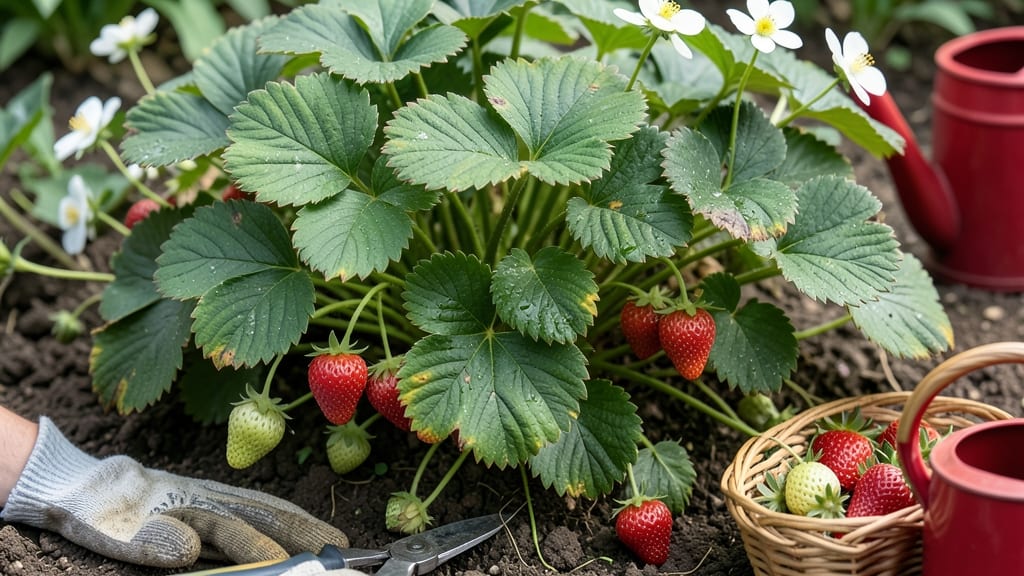
Strawberries are produced through a seasonal growth cycle that begins with planting crowns or runners, followed by leaf development, flowering, and fruit ripening. Commercial farms often use greenhouse techniques and controlled environments to extend harvests year-round.
Strawberry production starts with planting either crowns (the base of the plant) or runners (horizontal stems), which take root in well-draining soil enriched with organic matter. 🌱 The plants then enter a 4-6 week vegetative stage where leaves develop, storing energy for future fruit production.
Once temperatures stabilize—typically in spring—plants bloom, and each flower can develop into a strawberry over 3-5 weeks, depending on variety and climate. Commercial growers often use artificial lighting and temperature control to manipulate growth cycles, allowing for multiple harvests annually.
What sets commercial strawberry farming apart is its precision. Many operations use hydroponic systems or vertical farming to maximize space and yield, while others rely on seasonal rotation to prevent soil depletion.
Pest management plays a critical role—organic farms use beneficial insects, while conventional farms may apply targeted pesticides. The result? Year-round availability that might surprise you, given strawberries' natural seasonal origins.
💡 In This Article
- Strawberry Plant Life Cycle Explained
- Modern Commercial Strawberry Farming Techniques
Strawberry plant life cycle explained
Strawberries begin their journey underground, where the crown—a small, fleshy base—sprouts roots within 7-10 days of planting.
This early stage is critical because root development determines how well the plant can absorb water and nutrients. 🌱 The roots grow best in soil with a pH between 5.5 and 6.8, which prevents nutrient deficiencies like iron chlorosis (yellowing leaves).
During this phase, the plant focuses entirely on establishing its foundation, often at the expense of above-ground growth.
Once roots are established, the plant enters the vegetative stage, where it produces 3-5 sets of leaves over 4-6 weeks. These leaves are the plant's energy factories, performing photosynthesis to build sugars that will later fuel fruit development.
Strawberries thrive in full sunlight (6-8 hours daily), but too much heat can stress the plant—temperatures above 85°F may cause leaf burn. This stage is also when the plant begins forming flower buds, hidden among the leaves as tiny green structures.
The flowering phase marks the transition to fruit production, triggered by cooler temperatures and longer daylight. Each flower can develop into a strawberry, but only if pollinated—bees and other insects play a vital role here. 🐝 Commercial growers may introduce hives to ensure pollination, especially in greenhouses.
Once pollinated, the flower's petals fall off, and the receptacle (the part we eat) begins swelling. This growth takes 3-5 weeks, during which the fruit changes color from green to red as sugars accumulate.
Temperature and sunlight continue to influence fruit quality. Strawberries ripen best at 60-75°F—too hot, and the fruit becomes watery; too cold, and sugars don't develop properly. The red pigment, lycopene, intensifies in sunlight, giving ripe strawberries their vibrant hue.
This is why commercial farms often use shade cloth during peak summer to protect fruit from sunburn while still allowing photosynthesis.
After harvest, the plant may produce a second flush of fruit, especially in warmer climates. However, this often weakens the plant, so growers may remove old leaves or runners to redirect energy.
The cycle then repeats, though with less vigor. Understanding these stages helps explain why strawberries taste sweeter in spring—the cooler temperatures and longer daylight create ideal conditions for sugar development. 🍓
What most people don't realize is how sensitive strawberries are to day length. In regions with short winters, plants may enter dormancy, requiring chilling hours (300-1,000 hours below 45°F) to break dormancy and flower again.
This is why strawberries grown in California (mild winters) often need artificial chilling to mimic seasonal changes.