
How To
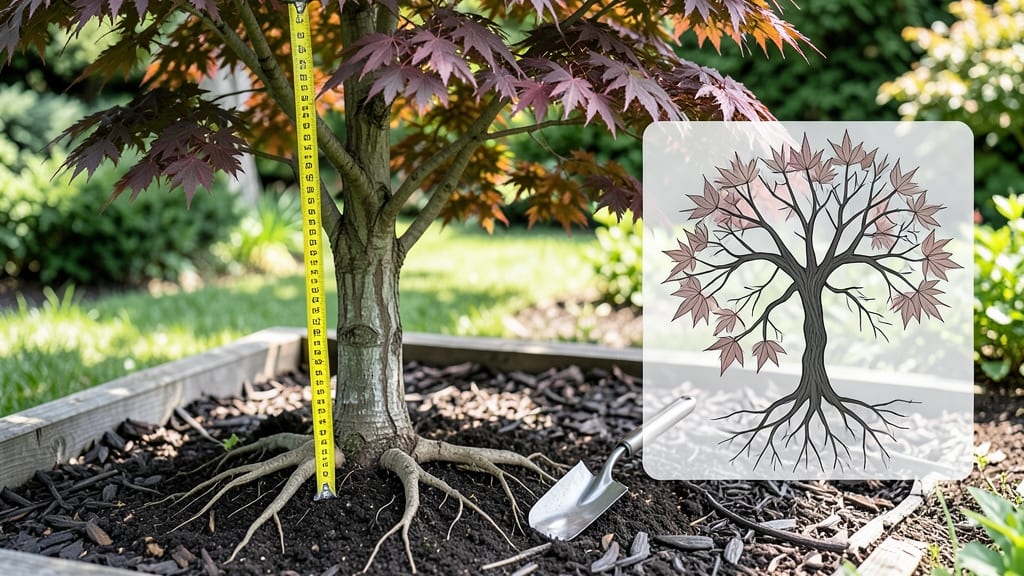
Japanese maple roots grow surprisingly shallow, typically reaching 12–24 inches deep in mature trees 🌳 — but what that means for your planting site is more nuanced than you might think.
Planting a Japanese maple is an investment in beauty—but if you don’t account for its root depth, your stunning tree could struggle or even fail. Understanding how far these roots spread underground is the key to giving your maple the stable foundation it needs to thrive for decades.
Most gardeners overlook the fact that shallow roots demand well-aerated soil and proper spacing, especially in containers or compacted ground. A root system that stays close to the surface also means mulching and watering techniques need to adjust to prevent stress.
In this guide, I’ll break down the science behind Japanese maple root depth, how to prepare your soil for planting, and the warning signs that your tree isn’t getting the root space it needs.

Japanese maple root depth: the science behind shallow vs. deep growth patterns
Japanese maples (Acer palmatum) are prized for their delicate foliage and stunning seasonal colors, but their root system is just as critical to their health as their above-ground beauty.
Unlike many trees, Japanese maples develop a shallow but expansive root structure, which means understanding their growth patterns is essential for long-term success. The primary taproot typically extends 12-18 inches deep, while lateral roots spread horizontally, often reaching 3-5 times the canopy width.
This unique growth pattern makes Japanese maples particularly sensitive to soil compaction and poor drainage. If the roots can’t spread freely, they’ll struggle to absorb water and nutrients, leading to stunted growth or even tree decline.
For example, a mature Japanese maple with a 10-foot canopy could have lateral roots extending 20-30 feet outward, while its primary root stays relatively shallow. This balance is why soil preparation and planting depth are non-negotiable.
Here’s the science: Japanese maples are mesophytes, meaning they thrive in moderately moist, well-aerated soils. Their shallow roots rely on a loose, organic-rich topsoil layer to prevent suffocation. In clay-heavy soils, roots may struggle to penetrate, while sandy soils can dry out too quickly.
The key is creating a 24-inch-deep planting zone with amended soil to support both depth and spread.
| Root Type | Depth (Inches) | Spread (Canopy Width Multiplier) | Soil Impact |
|---|---|---|---|
| Primary Taproot | 12-18 | N/A | Sensitive to compaction; needs loose soil |
| Lateral Roots | 6-12 (shallow) | 3-5x | Spreads horizontally; mulch helps |
| Mature Tree (20+ yrs) | 18-24 | 5-7x | Needs deeper soil; avoid root girdling |
| Young Tree (1-5 yrs) | 6-12 | 2-3x | Fast lateral growth; prune roots if needed |
| Container-Grown | Root-bound | Limited | Needs repotting every 2-3 years |
Young Japanese maples (1-5 years old) focus their energy on lateral root expansion, which is why they often show rapid canopy growth in their first few years. However, as they mature, the primary root deepens to 18-24 inches, especially in nutrient-rich, well-drained soils.
This shift explains why older trees can tolerate drought better—their deeper roots access moisture reserves, but they’re still vulnerable to soil compaction from foot traffic or heavy machinery.
Soil type plays a critical role in root development. In clay soils, roots may only penetrate 6-10 inches deep due to compaction, while loamy soils allow roots to reach their full 12-18 inch potential. Amending clay with compost or sand
How to prepare soil depth for Japanese maple planting: a step-by-step guide
Japanese maples have a delicate root system that needs careful preparation to thrive. While their roots typically grow 12–18 inches deep in mature trees, creating a 24-inch-deep planting hole gives them the room to establish strong roots.
Shallow planting is a common mistake that leads to poor stability and stunted growth—so let’s fix that.
The key to success lies in loose, well-draining soil with organic matter. Compacted soil restricts root growth, while sandy or clay-heavy soil can suffocate delicate roots. For container-grown bonsai varieties, the pot must be at least 12 inches deep to accommodate their shallow but wide-spreading roots.
🌱 Step-by-Step Soil Depth Prep for Japanese Maple
-
Step 1: Test Soil Depth
Use a trowel to dig a test hole 24 inches deep. If the soil is hardpan or compacted, amend it with compost or peat moss to improve drainage. -
Step 2: Loosen the Soil
Break up any clay or compacted layers with a garden fork. Focus on the bottom 12 inches where roots will first establish. -
Step 3: Amend with Organic Matter
Mix in 50% native soil and 50% compost or well-rotted manure to create a nutrient-rich base. Avoid fresh manure, which can burn roots. -
Step 4: Choose the Right Container (Bonsai)
For bonsai, select a pot with drainage holes and a minimum 12-inch depth. Use a well-draining bonsai mix (akadama, pumice, and lava rock). -
Step 5: Plant at the Correct Depth
Place the tree so the root flare (where roots meet the trunk) sits 1–2 inches above soil level. Burying too deep suffocates the trunk. -
Step 6: Water Thoroughly
After planting, water deeply to settle the soil and remove air pockets. Mulch with 2–3 inches of organic mulch to retain moisture.
Avoid the temptation to plant too shallow—this is a common mistake that leads to weak anchorage. If your soil is naturally heavy clay, consider planting in a raised bed or large container to prevent waterlogging, which can rot delicate roots.
For container-grown maples, repot every 2–3 years to refresh the soil and accommodate root growth. Use a slightly larger pot (only 1–2 inches wider) to avoid shocking the roots with too much space.
With the right soil depth and care, your Japanese maple will develop a strong, stable root system that supports its stunning foliage for decades. Happy planting! 🌿