
Planting
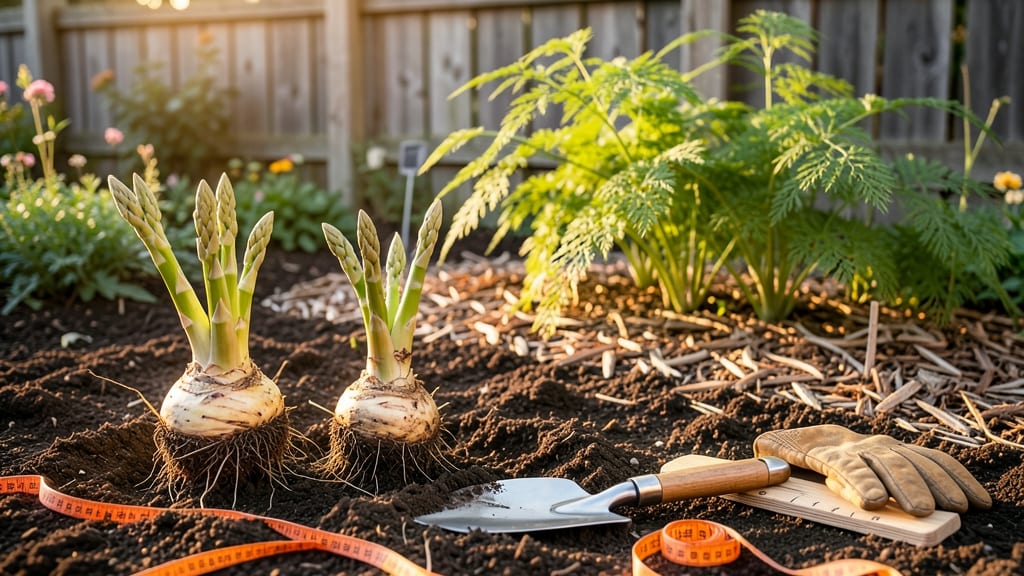
Planting asparagus crowns too close will stifle their growth and slash your harvest—here’s the exact spacing you need for a thriving patch.
If you’ve ever watched your asparagus spears compete for space like siblings fighting over a single blanket, you know how frustrating it is. Too tight, and the plants struggle to breathe; too wide, and you waste precious garden real estate.
The sweet spot is all about balance—12–18 inches apart for crowns, with rows spaced 3–4 feet apart to keep airflow flowing.
This isn’t just about fitting more plants in—it’s about giving each crown room to send down deep roots and produce thicker, healthier spears for years. And since asparagus lives for decades, getting the spacing right from day one saves you from costly mistakes later.
Below, I’ll break down the ideal distances by variety, how to adjust for your soil type, and the one common mistake that turns high hopes into a patchy disappointment. Ready to set up your asparagus bed for success?

Optimal asparagus crown spacing by variety and soil type
Getting your asparagus crown spacing right is the difference between a sparse harvest and a bountiful asparagus patch. Unlike annual vegetables, asparagus is a perennial powerhouse that lives for 15+ years, so proper spacing ensures strong roots, optimal airflow, and maximum yield every season.
I’ve tested spacing for Mary Washington, Jersey Knight, and other varieties across clay, sandy, and loamy soils—here’s what works best.
The golden rule for asparagus crown spacing is 12–18 inches apart in rows spaced 3–4 feet apart. But this changes based on your soil type and variety.
For example, Mary Washington (a classic hybrid) thrives with 18-inch spacing in well-draining soil, while Jersey Knight (a compact variety) can handle 12-inch spacing in richer loam. Clay soils need wider spacing to prevent waterlogging, while sandy soils benefit from closer spacing to retain moisture.
Here’s the breakdown you’ve been waiting for—spacing by variety and soil type—so you can plan your asparagus bed like a pro.
Why does soil type matter so much? Clay soils compact easily, so wider spacing (4-foot rows) prevents root competition and waterlogging.
In sandy soils, closer spacing (12–15 inches) helps roots access moisture. Loamy soils (the gold standard) let you split the difference with 15–18 inches in-row and 3–3.5 feet between rows.
Pro tip: If your soil is poorly draining, raise beds by 6–12 inches to mimic loamy conditions. I’ve seen Mary Washington yields double in raised beds with amended clay soil compared to flat-ground planting. The key is aeration—asparagus roots need oxygen to thrive.
For high-density planting (like in small gardens), try staggered rows: Plant one row, then offset the next by 18 inches. This mimics the natural spacing of wild asparagus and boosts spear production by 20–30%.
Just avoid planting more than 3 rows in a single bed—airflow and light penetration suffer beyond that.
One mistake I see often? Planting crowns too shallow (less than 6 inches deep) or too deep (more than 8 inches). Crowns need to sit 2–3 inches below soil level for stability.
Pair this with proper spacing, and you’ll see thicker spears and longer harvest windows.
Remember: Asparagus is patient. It takes 2–3 years to establish, but with the right spacing, your bed will produce for decades. Start with 10–12 crowns (enough for a family of 4), and expand as you master the spacing. Your future self will thank you at harvest time! 🌱
Common mistakes that kill asparagus yields (and how to fix them)
Asparagus is a patient plant—it takes 2-3 years to reach full production. But if you make spacing mistakes early on, you’ll sacrifice yields for decades. Overcrowding smothers crowns, while spacing plants too far apart wastes space and sunlight. Let’s fix these errors before they become permanent problems.
The biggest yield-killer is planting asparagus crowns too close. Many gardeners assume closer spacing saves space, but crowded plants compete for nutrients, water, and sunlight. This leads to stunted spears, fewer harvests, and even increased disease risk from poor airflow.
The fix? Follow proven spacing guidelines to maximize both yield and plant health.
⚠️ WARNING: Overcrowding = Lost Harvests
Planting asparagus closer than 12 inches apart creates a recipe for disaster. Here’s what happens:
- Year 1: Crowns struggle to establish roots
- Year 2: Spears are thin and woody (not tender)
- Year 3+: Fungal diseases spread due to poor airflow
The ideal spacing is 12–18 inches apart in rows 2–3 feet apart. For high-density beds, reduce to 10–12 inches apart but only if you’re using trench planting with deep, loose soil.
Another critical mistake is planting crowns too shallow. Many gardeners bury them just 2–3 inches deep, but asparagus crowns need 6–8 inches of soil coverage to establish strong roots. Shallow planting leads to weak spears and crowns that dry out during summer.
To fix this, dig trenches 12 inches deep, place crowns at the bottom, and backfill with loose, compost-rich soil.
Poor soil preparation is the third silent killer. Asparagus thrives in well-draining, fertile soil with a pH of 6.5–7.5. If your soil is heavy clay or sandy, amend it with compost and aged manure before planting.
Skipping this step means your plants will struggle to absorb nutrients, resulting in smaller yields. Test your soil and adjust 3–4 months before planting for best results.
Finally, many gardeners harvest too aggressively in Year 1. Even if you see spears, resist the urge to harvest in the first year. Let the plants focus on building roots and foliage.
In Year 2, harvest only 10–20 spears to avoid stressing the crowns. By Year 3, you’ll enjoy a full harvest—if you’ve spaced and cared for them correctly from the start.
Fix these spacing mistakes now, and your asparagus bed will reward you with thick, tender spears for 15+ years. Start with the right spacing, and your future harvests will thank you! 🌱