
Planting
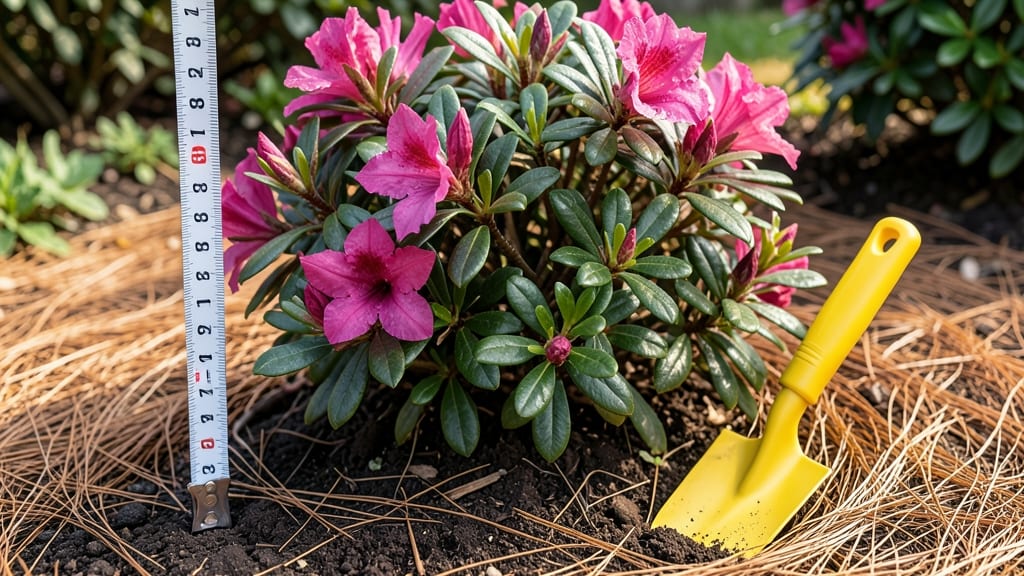
Azalea roots grow 12–18 inches deep but spread far wider than most gardeners expect, which explains why your 🌸 azaleas near fences or patios may struggle to thrive.
Picture this: You’ve just planted your azaleas with care, only to watch them wilt months later—even though you watered and fertilized properly. The issue? Their roots need room to breathe, and planting too close to structures or other plants can suffocate them before they even get a chance to establish.
Proper depth isn’t just about digging deep—it’s about creating the right conditions for healthy root development. Azaleas thrive in well-draining, acidic soil, and their roots spread horizontally more than they grow downward.
That means spacing them 2–3 feet apart and keeping them at least 2 feet from walls or hardscapes is key to avoiding competition for nutrients and water.
In this guide, I’ll break down why 12–18 inches is the ideal depth, how to amend your soil for optimal growth, and the common mistakes that lead to stunted azaleas—so you can give your plants the space they need to flourish.

Azalea root depth explained: why 12-18 inches matters for plant health
When planting azaleas, most gardeners focus on the stunning blooms above ground—but the real secret to their health lies 12-18 inches below. Azaleas develop a fibrous root system, meaning their roots spread horizontally while growing downward, not like a single taproot.
This unique structure explains why proper planting depth directly impacts their ability to absorb water and nutrients.
Unlike shallow-rooted annuals, azaleas need deep, well-aerated soil to support their root mass. Planting too shallow can lead to root suffocation, while burying the root flare (the swollen area at the base) can cause rot. Understanding this depth ensures your azaleas thrive for decades, not just a single season.
| Root Feature | Details | Why It Matters |
|---|---|---|
| Primary Root Depth | 12–18 inches | Allows access to deeper moisture and nutrients |
| Lateral Spread | 2–3 feet outward | Prevents overcrowding and competition for resources |
| Root Flare Depth | 1–2 inches above soil | Critical for preventing stem rot and ensuring proper airflow |
| Soil pH Range | 4.5–6.0 (acidic) | Enables nutrient uptake, especially iron and manganese |
| Root Zone Width | Equal to mature canopy | Supports structural stability and water absorption |
The 12-18 inch depth isn’t arbitrary—it reflects how azaleas naturally grow in their native woodland understories. In the wild, they thrive under canopy trees where soil is loose and rich from leaf litter.
Replicating this environment in your garden means digging planting holes twice as wide as the root ball and amending the soil with organic matter like pine bark or compost.
Clay-heavy soils pose the biggest challenge for azalea roots. If your garden soil is dense, mix in sand or perlite to improve drainage while maintaining acidity. A simple soil test before planting can save you from years of struggling with stunted growth.
I’ve seen azaleas in heavy clay gardens fail to bloom for years until the soil was properly amended.
Another common mistake? Overwatering after planting. While azaleas love moisture, their roots need time to establish in the lower soil layers. Water deeply but infrequently—aim for 1 inch of water per week—to encourage roots to grow downward.
Shallow watering creates a surface root system, which dries out quickly and stresses the plant.
For container-grown azaleas, the root ball is often pre-potted at the wrong depth. Always check the root flare location before planting. If it’s buried, gently loosen the soil around it and adjust the depth.
I’ve rescued many azaleas by simply replanting them at the correct level, and within a season, they bounced back with vibrant blooms.
Soil microorganisms also play a crucial role in azalea root health. Beneficial fungi like mycorrhizae form partnerships with azalea roots, helping them absorb nutrients more efficiently. To encourage these relationships, avoid chemical fertilizers early on and opt for slow-release organic options instead.
If you’re planting azaleas near structures like fences or patios, remember the 2-foot rule: Keep them at least 2 feet away to avoid root competition. I’ve seen azaleas near sidewalks struggle because their roots hit the compacted soil beneath, limiting growth.
Mulching with pine straw or wood chips helps maintain soil moisture and temperature while protecting roots from extreme fluctuations.
Finally, prune roots carefully if you’re dividing azaleas. Use a sharp, sterilized knife to make clean cuts, and avoid damaging the central root mass.
Healthy roots mean healthier blooms, and with the right depth and care, your azaleas can thrive for 20+ years—just like the ones in my grandmother’s garden.
How to space azaleas properly: 2-Foot rule and common mistakes to avoid
Proper spacing is the secret to lush, thriving azaleas. These shrubs need 2-3 feet between plants to develop strong root systems and prevent competition. Crowding leads to stunted growth and poor flowering, while too much space wastes garden real estate.
The 2-foot rule from structures (like fences or patios) ensures roots won't smother themselves against hard surfaces.
In urban gardens, space constraints make this trickier. I’ve seen azaleas planted just 1 foot apart in tight city plots, but they struggle with yellowing leaves and weak stems. Rural gardeners have more flexibility, but even there, overcrowding happens when planning for future growth.
Azaleas mature between 3-12 feet tall, so their root zones expand dramatically over time.
While azalea roots grow 12-18 inches deep, they spread 2-3 feet horizontally. Planting too close to structures (like fences or patios) restricts root expansion, leading to compacted soil and poor nutrient absorption. Always maintain a 2-foot clearance from walls or hardscapes to prevent root stress.
Start by sketching your garden layout. Use a string line or measuring tape to mark 3-foot centers for standard azaleas. For dwarf varieties (1-3 feet tall), reduce spacing to 2 feet apart.
In sloped areas, plant on contour lines to prevent erosion while maintaining proper spacing. I’ve found that grouping 3-5 plants together creates a natural, fuller look without overcrowding.
Common mistakes include planting near sidewalks or driveways, where roots can crack pavement as they expand. Another pitfall is ignoring the root flare—the swollen area at the base of the stem.
Burying this flare too deep suffocates the plant. Keep it just above soil level to encourage healthy root growth outward, not downward.
For urban gardens, consider container planting if spacing is impossible. Large pots (18+ inches wide) give roots room to spread without competing with neighbors. Just ensure containers have drainage holes and use acidic potting mix (pH 4.5-6.0).
In rural settings, mulch heavily around the 2-foot radius to retain moisture and suppress weeds, which compete for nutrients.
Remember, azaleas are long-term investments. Skimping on space now means years of struggling plants. Plan for their mature size, and your azaleas will reward you with vibrant blooms for decades. 🌸