
Planting
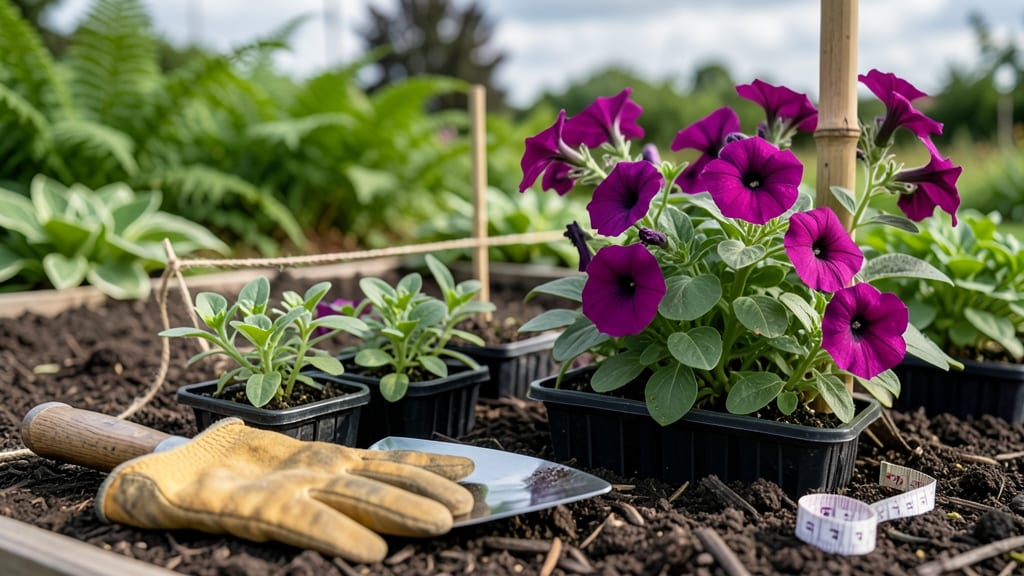
Petunias should be planted how far apart to thrive and bloom nonstop all season—10-12 inches between plants is the golden rule. 🌸 I learned this the hard way—my first year, I crammed them too close, and by July, they were fighting for sunlight, leaving me with leggy stems and sparse flowers instead of the lush display I wanted.
The right spacing depends on your petunia type: bush varieties stay compact, while trailing types need extra room to cascade. Planting too close leads to poor air circulation, which invites fungal diseases and weakens stems.
I now mark my planting spots with sticks to avoid crowding, and my petunias reward me with bold, vibrant blooms from spring until frost. For container gardening, use one plant per 6-inch pot—this keeps roots healthy and prevents competition.
In garden beds, mix in compost before planting to give roots a nutrient boost. The key is balance: enough space for air and light, but not so much that the plants look sparse. This simple adjustment transforms petunias from a pretty-but-fragile annual into a low-maintenance, high-impact garden staple.
Whether you're lining a border or filling containers, proper spacing is the secret to petunias that keep blooming until the first frost. Let's get those plants in the ground!
📚 In This Guide
- What you need
- Instructions
- Tips and common mistakes
- Wrapping up and next steps
What you need
- ● Petunia plants: Choose healthy, disease-free seedlings or transplants (12–24" tall, depending on variety). Pro tip: Opt for spreading types (12–18" apart) or bushier varieties (18–24" apart) for the right spacing!
- ● Garden soil or potting mix: Well-draining, nutrient-rich soil (1–2 bags, ~4–6 cubic feet). Mix in compost (1 part compost to 3 parts soil) for extra fertility.
- ● Garden gloves: A pair to protect your hands from thorns or rough soil.
- ● Watering can or hose with a gentle spray nozzle: For hydrating roots without disturbing the soil.
- ● Garden trowel or transplant spade: A small hand trowel (6–8" blade) for digging holes.
- ● Measuring tape or ruler: To ensure precise spacing (12–24" apart, depending on variety).
- ○ Mulch (optional but recommended): Organic mulch like straw or shredded bark (1–2 bags) to retain moisture and suppress weeds.
- ● Plant markers: Small stakes or labels to track varieties if planting multiple types.
- ● Slow-release fertilizer: A balanced, time-released formula (10-10-10 or 14-14-14) to boost early growth.
- ● Pruning shears: For trimming leggy stems or deadheading spent blooms later in the season.
- ● Knee pads or a small stool: For comfort during long planting sessions.
- ● Rain gauge or moisture meter: To monitor soil moisture levels for optimal petunia care.
How to space petunias for maximum blooms and healthy growth
Petunias thrive when planted just right—too close and they compete for nutrients, too far and they miss the full visual impact. Here's how to get that perfect balance.
🌱 Step 1: Understand Petunia Growth Habits
Petunias spread naturally, so spacing depends on whether you're planting trailing varieties like 'Wave' or bushier types like 'Grandiflora'. Trailing types need 12-18 inches apart to cascade beautifully, while bush types can handle 10-12 inches for a denser look. Check your seed packet or plant tag—it's your spacing guide.
Here's the thing: petunias grow wider than they do tall. If you plant them too close, they'll fight for sunlight and nutrients, leading to smaller blooms and leggy stems. You'll see healthy plants with strong stems and abundant flowers when spacing is correct.
☀️ Step 2: Plan Your Layout for Sun and Airflow
Petunias need 6-8 hours of full sun daily, so plan your spacing with sunlight in mind. Arrange them in a grid pattern with 12-18 inches between plants, depending on the variety. If planting in a container, leave 12-15 inches between plants around the edges to avoid overcrowding.
Don't forget airflow—petunias hate humidity trapped against their leaves, which can lead to powdery mildew. When you step back and look at your layout, you should see clear space between each plant for air to circulate. If you're planting in a row, stagger plants slightly to create a natural, open look.
🪴 Step 3: Prepare the Soil and Plant Correctly
Before planting, loosen the soil to a depth of 12 inches to encourage root growth. Mix in a 2-3 inch layer of compost to provide nutrients without overfeeding. Petunias prefer well-draining soil, so if your garden soil is heavy clay, amend it with sand or perlite.
Dig a hole just as deep as the root ball and twice as wide. Gently remove the plant from its container and place it in the hole, ensuring the top of the root ball is level with the soil surface. Press the soil lightly around the roots to remove air pockets, then water deeply to settle everything in place.
✂️ Step 4: Monitor and Adjust for Optimal Growth
After planting, watch your petunias closely for the first few weeks. If you notice leaves touching between plants, they're too close—thin them out immediately. You'll see healthy, bushy growth when plants have enough space to spread their roots and foliage.
Real talk: petunias grow over time, so if you planted them at the minimum spacing, you might need to thin them out as the season progresses. Use clean, sharp pruners to snip back overcrowded stems just above a leaf node. This encourages new growth and keeps your petunias looking their best.
💧 Step 5: Maintain Spacing for Continuous Blooms
Water petunias at the base, keeping the soil consistently moist but not soggy. Overhead watering can lead to fungal issues, especially in crowded plantings. You'll know your watering is right when the top inch of soil feels dry to the touch.
Deadhead spent blooms regularly to encourage more flowers. When you remove faded blooms, you're also improving airflow around the plant, which keeps the foliage healthy. If you notice any yellowing leaves or leggy growth, it's a sign your petunias need more space or light.
Tips & tricks for perfect petunia spacing
A few simple adjustments can transform your petunia garden from sparse to spectacular. Here's what I've learned after years of trial and error—because spacing isn't just about numbers, it's about creating the perfect environment for these vibrant bloomers.
Variety Matters: The 12-18 inch spacing for trailing varieties like 'Wave' isn't arbitrary—it accounts for their natural cascading habit. I've seen gardeners plant these too close, resulting in weak, leggy stems that can't support the weight of all those beautiful blooms. For bushier types, stick to the 10-12 inch range, but remember these will fill out more as the season progresses. The key is to visualize how they'll look at peak bloom, not when they're small seedlings.
Sunlight Strategy: Those 6-8 hours of full sun are non-negotiable, but how you arrange them matters just as much. I recommend planting in a staggered grid pattern rather than straight rows—this creates natural gaps for airflow while maximizing sunlight exposure. If you're planting in containers, leave that extra inch of space around the edges; petunias will spread toward available light, and edge plants often get less sun.
Soil Depth Insight: The 12 inches of loosened soil might seem excessive, but trust me on this—petunias develop strong root systems that need room to spread horizontally. I've noticed that plants in compacted soil struggle to establish, resulting in stunted growth. For heavy clay soils, that 2-3 inch layer of compost becomes even more critical—it's not just about nutrients, it's about creating the right texture for roots to thrive.
Growth Monitoring: Here's what nobody tells you—petunias keep growing throughout the season. What looks perfect at planting might become overcrowded by midsummer. I make it a habit to check my plantings every two weeks and thin out any stems that are touching neighbors. This simple step prevents the spread of disease and keeps your petunias producing those stunning blooms all season long.
Pro Tips for How Far Apart Should Petunias Be Planted
- A few simple adjustments can transform your petunia garden from sparse to spectacular.
- Variety Matters: The 12-18 inch spacing for trailing varieties like 'Wave' isn't arbitrary—it accounts for their natural cascading habit.
- Sunlight Strategy: Those 6-8 hours of full sun are non-negotiable, but how you arrange them matters just as much.
Frequently asked questions
Got questions about petunia spacing? You’re not alone! Here are answers to the most common queries to help you plant like a pro.
How close can I plant petunias if I’m using them as edging?
For edging or border plantings, you can space petunias closer together—about 6 to 8 inches apart. This creates a dense, lush look while still allowing airflow to prevent disease. Just avoid overcrowding, or you’ll risk competition for nutrients and weaker blooms.
Can I plant petunias too close together, and what happens if I do?
Yes! Overcrowding petunias leads to stunted growth, fewer flowers, and increased susceptibility to pests/diseases (like powdery mildew). You’ll also see more leggy stems and smaller blooms as plants fight for sunlight and water. Stick to the 12–18-inch rule for full, healthy plants.
What if my petunias are already planted too close together?
Don’t panic! Gently transplant some to new spots during the early growing season (spring or early fall). Water thoroughly after moving them to reduce shock. For severe overcrowding, consider thinning by removing the weakest plants and composting them to avoid nutrient loss.
Does petunia spacing change based on climate or growing zone?
Not drastically! Petunias thrive in zones 2–11, but warmer climates (zones 9–11) may need slightly more spacing (up to 20 inches) to prevent heat stress and wilting. In cooler zones, standard 12–18-inch spacing works well. Always check your local frost dates—petunias are annuals in most areas!
Are there petunia varieties that need different spacing?
Trailing or cascading petunias (like ‘Supertunia’ or ‘Wave’) need 18–24 inches apart to sprawl beautifully. Grandiflora varieties (large, showy blooms) can handle 12–15 inches, while multiflora (smaller flowers) do well at 8–12 inches. Always check the tag!
Wrapping up and next steps
Planting petunias with the right spacing—12 to 18 inches apart—sets the stage for a vibrant, long-lasting display of color. Whether you’re tucking them into containers or garden beds, proper spacing ensures airflow, reduces disease risk, and lets each plant shine.
With a little care, your petunias will reward you with nonstop blooms all season long!
Ready to transform your space? Grab your gloves, pick your spot, and get planting! 🌸 For extra tips, check out our guide on petunia care essentials to keep those flowers thriving.