
Planting
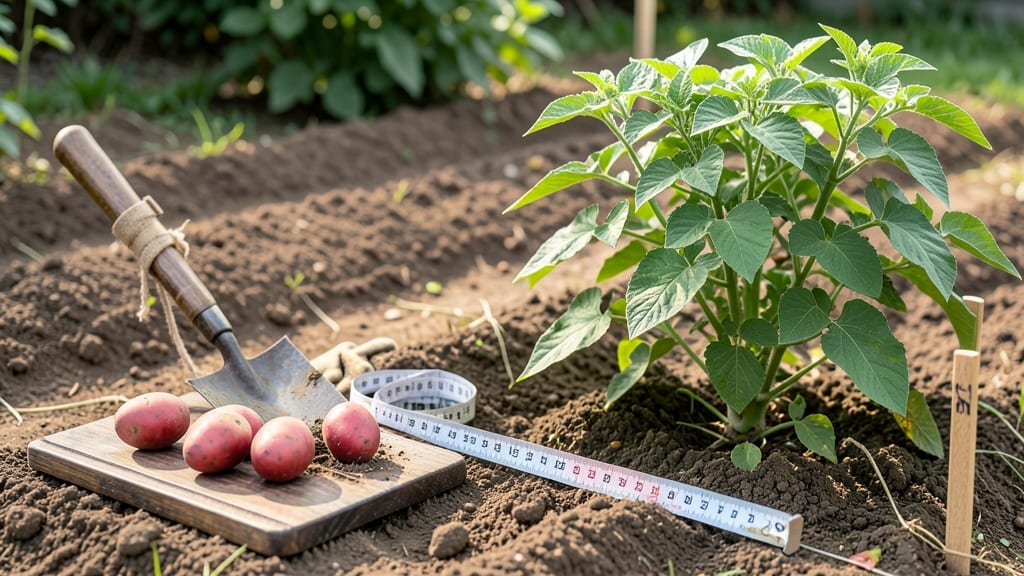
To plant red potatoes for a bushier harvest, space them 12 inches apart in rows 3 feet apart—this balance prevents overcrowding while maximizing yield.
Struggling to maximize your red potato harvest? The secret isn’t just in the soil—it’s in the spacing. Plant too close, and you’ll smother your tubers; too far, and you’ll waste garden space. Here’s the science-backed guide to spacing red potatoes for explosive yields.
Most gardeners overlook how variety size and soil type change spacing needs. Early-season red potatoes like ‘Red Norland’ thrive with tighter spacing, while larger varieties need extra room to avoid competition. We’ll break down the exact measurements for your garden setup.
You’ll also discover how to adjust spacing for small plots, high-yield goals, and even companion planting to keep pests at bay. Ready to grow more potatoes with less wasted space?

Optimal red potato spacing by variety and growth habits
Red potatoes thrive when planted with precision—spacing isn’t just about fitting more plants in your garden. It’s about maximizing tuber size and airflow to prevent disease. Early varieties like Red Norland need less space than late-season Kennebec potatoes, which develop larger tubers.
Understanding your variety’s growth habits lets you fine-tune spacing for a bountiful harvest.
Most gardeners default to a 12-inch spacing between plants and 30-inch rows, but this isn’t one-size-fits-all. Soil type, climate, and even your hilling method (more on that later!) influence the ideal distance.
For example, sandy soil drains faster, so plants can be spaced slightly closer, while clay soil benefits from wider gaps to prevent waterlogging.
Here’s the science-backed breakdown for red potato spacing by variety and growth habit, including row depth and plant depth adjustments:
| Variety Type | Plant Spacing (inches) | Row Spacing (inches) | Plant Depth (inches) | Hill Height (inches) | Soil Adjustment |
|---|---|---|---|---|---|
| Early (e.g., Red Pontiac) | 8–10 | 24–30 | 4 | 8–12 | Loose, well-draining |
| Mid-Season (e.g., Red LaSoda) | 10–12 | 30–36 | 4–5 | 10–14 | Add compost to rows |
| Late (e.g., Kennebec) | 12–15 | 36–42 | 5–6 | 12–16 | Avoid heavy clay |
| Container (5+ gallon) | 6–8 | N/A (single plant) | 4 | 6–8 (mound soil) | Fast-draining mix |
Notice how late-season varieties require wider spacing? That’s because their larger tubers need room to expand without competing. If you’re growing Kennebec potatoes in clay soil, consider planting them in raised beds with sandy loam to prevent tuber rot.
For containers, stick to dwarf varieties like Red Thumb and mound soil as the plants grow.
Hilling—piling soil around the stems—is another critical factor. Early in the season, keep hills low (4–6 inches) to encourage root growth. As plants reach 6–8 inches tall, build hills to 12–16 inches to protect new tubers from sunlight (which turns them green and toxic).
For flat planting (no hilling), increase plant spacing by 20–30% to compensate for reduced tuber protection.
Soil type dictates more than just spacing. In sandy soil, potatoes dry out faster, so reduce spacing slightly (8–10 inches) and water deeply every 3–4 days. In heavy clay, widen rows to 36–42 inches and amend with compost or peat moss to improve drainage.
Always test your soil’s pH—red potatoes prefer a range of 5.0–6.0 for optimal tuber development.
Pro tip: If you’re short on space, try the trench method. Dig a 12-inch-deep trench, place seed potatoes 12 inches apart, cover with 6 inches of soil, then hill as the plants grow.
This method works surprisingly well for early varieties and can double your yield in tight spaces.
One common mistake? Assuming all red potatoes are the same. Red LaSoda, for example, produces smaller tubers than Kennebec, so you can plant them 20% closer without sacrificing yield. Always check the seed packet for variety-specific spacing recommendations—it’s the fastest way to avoid overcrowding.
Finally, rotate your planting locations yearly to prevent disease buildup (like potato scab or blight). If you’re planting in the same spot, adjust spacing by 10–15% wider to reduce stress on the plants.
With the right spacing, your red potatoes will thrive, and you’ll enjoy a harvest of firm, disease-free tubers all season long.
How to adjust spacing for different garden conditions
Not all gardens are created equal, and your red potato spacing should adapt to your unique growing conditions. In small spaces like containers or raised beds, you’ll need a different approach than traditional in-ground planting.
Meanwhile, drought-prone areas require wider spacing to conserve moisture, while wet climates demand closer plants to prevent soil erosion. Let’s break down how to adjust spacing for maximum yields in any scenario.
For containers or raised beds, cut standard spacing by 30-50%. Instead of planting 12 inches apart, space red potatoes 6-8 inches apart in rows just 18-24 inches wide. This high-density method works because containers have limited space, and potatoes grow vertically.
Just be prepared to harvest smaller tubers. In 5-gallon buckets, you can fit 3-4 plants per container using this tight spacing.
When aiming for high-yield goals, consider modern high-density planting techniques like the "double-row" method. Plant two rows of potatoes 6 inches apart, with 12 inches between double rows.
Studies show this method can increase yields by 20-30% compared to traditional single-row planting. The trade-off? You’ll need to hill soil more frequently to prevent tuber exposure.
| Method | Row Spacing | Plant Spacing | Yield Impact | Best For |
|---|---|---|---|---|
| Traditional In-Ground | 36 inches | 12 inches | Standard (100%) | Large gardens, loose soil |
| High-Density Double Row | 24 inches (between double rows) | 6 inches (within rows) | +25-30% | Small gardens, high yield |
| Container/Raised Bed | 18-24 inches | 6-8 inches | -15% (smaller tubers) | Urban gardens, patios |
| Drought Conditions | 48 inches | 18 inches | +10% (water efficiency) | Arid climates, dry soil |
In drought-prone regions, increase spacing to 18 inches between plants and 48 inches between rows. This gives each plant more access to water and reduces competition. Pair this with deep mulching (4-6 inches of straw or wood chips) to lock in moisture.
For wet climates, tighten spacing to 10-12 inches apart in rows 30 inches wide to improve soil stability and prevent erosion.
Regional climate also affects hilling frequency. In cool, wet climates, hill soil every 2-3 weeks to prevent rot, while in hot, dry areas, hill every 4-6 weeks to conserve moisture.
Always use loose, well-draining soil—compacted soil reduces tuber growth regardless of spacing. For sandy soils, add compost or peat moss to improve moisture retention.
Pro tip: Use companion planting to optimize space. Pair red potatoes with bush beans or marigolds—beans fix nitrogen while marigolds deter pests. This allows you to interplant between rows, squeezing in extra crops without sacrificing potato yields. Just avoid planting potatoes near tomatoes or eggplants, which share diseases.
Experiment with these adjustments in a small test plot before committing to full-scale planting. Keep a harvest journal to track which spacing methods work best in your microclimate. With the right adjustments, you’ll turn even the trickiest garden conditions into a high-yield potato powerhouse! 🌱