
Planting
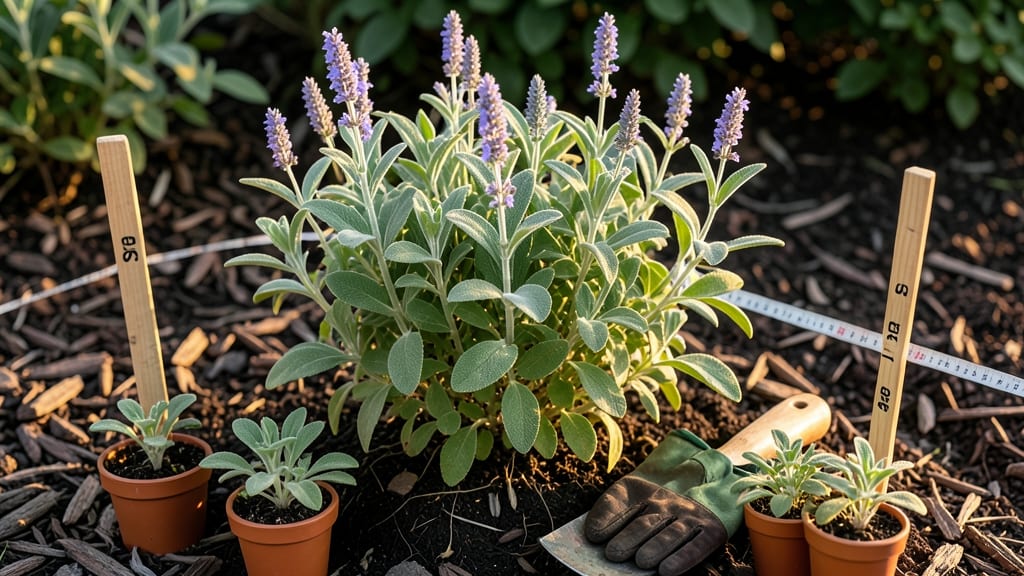
To plant sage, space plants 18 to 24 inches apart for full sun exposure and proper airflow, allowing mature bushes to spread 2 to 3 feet wide while preventing overcrowding or disease risk. Adjust spacing for container planting or dwarf varieties.
Proper spacing lets sage thrive by balancing its woody stems and upright growth habit, which can reach 2–3 feet wide at maturity. 🌿 Without enough room, branches crowd together, reducing airflow and inviting fungal issues like powdery mildew.
I’ve found that 10+ hours of sunlight daily is non-negotiable—sage’s aromatic leaves need that energy to develop their signature flavor. For container gardens, cut spacing to 12–18 inches between plants, but expect slower growth since roots compete for nutrients in limited soil.
Dwarf varieties (like 'Berggarten') can handle 12-inch spacing, but their compact size makes them perfect for edging garden beds or small pots.
When planting near other herbs, pair sage with rosemary or thyme—both share similar sunlight and water needs—while keeping it away from mint or oregano, which can overpower its growth. Always check the mature width of your specific sage type before planting to avoid future pruning headaches.
💡 In This Article
- Sage Plant Spacing Science: Growth Habits and Sunlight Needs
- Adjusting Sage Spacing for Containers, Dwarf Types, and Herb Gardens
Sage plant spacing science: growth habits and sunlight needs
Sage's spacing needs stem from its woody, semi-woody stems that develop over time, creating a dense, bushy structure. Unlike annual herbs that grow quickly and die back, sage forms permanent woody bases that expand horizontally as the plant matures.
This means the 18–24-inch spacing isn't just about immediate growth—it accounts for the plant's long-term habit of spreading 2–3 feet wide at the base. Without proper room, branches rub together, creating abrasions that invite fungal infections like powdery mildew, which thrives in crowded, humid conditions.
The sunlight requirement—10+ hours of direct sun daily—directly influences spacing because sage's aromatic oils develop best under full sun.
Each plant needs its own sunlight "territory" to prevent shading from neighbors, which weakens flavor and growth. 🌞 In my garden, I've noticed that sage planted too closely in partial shade grows leggy and loses its signature piney aroma.
The 24-inch maximum spacing ensures each plant gets unobstructed sunlight while allowing airflow to dry foliage quickly after morning dew—a critical defense against fungal spores.
Root systems also play a role. Sage develops a shallow but expansive root network that can spread up to 18 inches wide in well-drained soil. When plants are spaced too tightly, roots compete for nutrients and water, stressing the plants and reducing their resilience.
This competition is especially visible in clay-heavy soils, where roots struggle to expand laterally. The 18-inch minimum spacing gives roots room to establish without battling neighbors, ensuring healthier, more productive plants.
Another key factor is the plant's upright growth habit. While sage typically grows 1–2 feet tall, its branches spread outward, creating a semi-umbrella shape. This structure means vertical space matters less than horizontal room—unlike tall herbs like dill or fennel, which need vertical clearance.
The 24-inch spacing accounts for this lateral spread while preventing branches from touching, which can lead to disease transmission through physical contact.
For those in hotter climates (USDA zones 8–10), slightly wider spacing—up to 24 inches—helps prevent heat stress from crowded foliage. In cooler zones (5–7), the 18-inch minimum still works because the slower growth rate reduces competition.
The rule of thumb: measure the mature width of your sage variety (check plant tags) and space accordingly—most common types like 'Golden Sage' or 'Purple Sage' need the full 2–3 feet of width.
One common mistake is assuming "more space is always better." While overcrowding is harmful, excessive spacing (beyond 3 feet) wastes garden real estate without significant benefits. The sweet spot balances airflow, sunlight access, and root development—giving your sage the perfect conditions to thrive without competing with itself. 🌿