
Planting
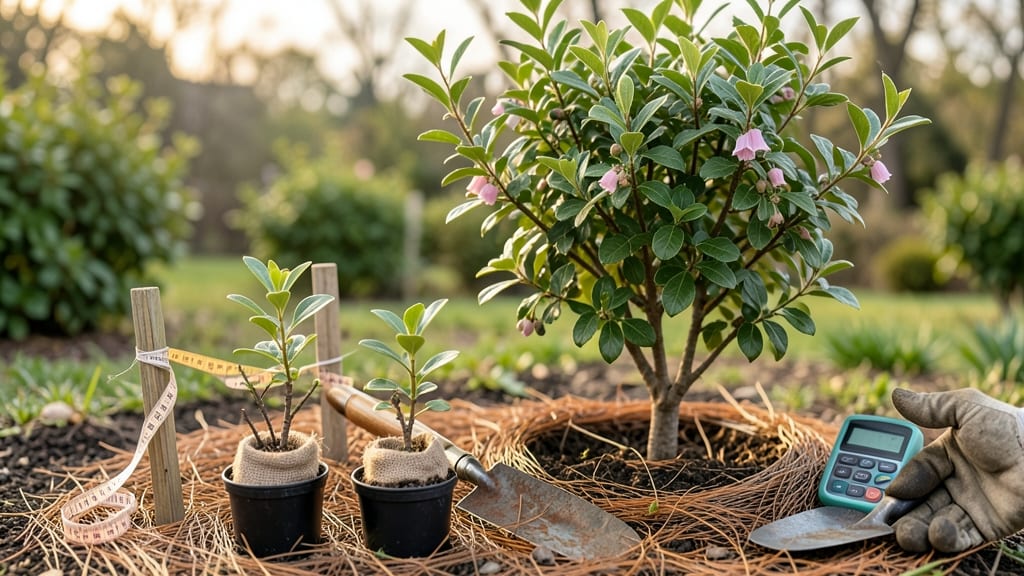
Planting blueberries apart the right distance ensures strong growth, better airflow, and a bountiful harvest—and the numbers depend more than you think on your variety and soil.
Struggling to maximize your blueberry harvest? Proper spacing isn’t just about fitting plants in—it’s the secret to stronger bushes, better airflow, and fewer pests. Get the exact planting distances for your blueberry variety and avoid common mistakes that waste space and reduce yields.
Whether you’re growing dwarf 🫐 blueberries in containers or full-size shrubs in your yard, spacing affects everything from fruit size to disease resistance. I’ll break down the ideal distances for rabbiteye, highbush, and semi-dwarf types, plus how to adjust for soil, climate, and even companion plants.
By the end, you’ll know exactly how far to space your blueberries for healthier plants, easier maintenance, and the sweetest berries—no guesswork required.

Blueberry plant spacing guidelines by variety and growth type
Blueberry bushes thrive when planted with the right spacing—too close, and you risk fungus, poor airflow, and stunted growth. Too far apart, and you waste garden space. The key is matching your variety type to its mature size, ensuring each plant gets enough sunlight, nutrients, and airflow.
I’ve grown northern highbush, southern highbush, and rabbiteye varieties for years, and the spacing rules make all the difference in yield and bush health.
Most gardeners focus only on row spacing but overlook the in-row spacing, which is just as critical. For example, a standard rabbiteye blueberry needs 8–10 feet between plants in the row, while a dwarf northern highbush can thrive with just 3–4 feet.
Below, I’ve broken down the exact spacing for each type, including how spacing affects fruit production, pruning needs, and long-term bush shape.
Pro Tip: Always measure from the center of one plant to the center of the next. This ensures roots have room to spread without overlapping, which is especially important for acid-loving blueberries that compete for soil nutrients.
Let’s dive into why these spacing rules matter. Northern highbush varieties, like Bluecrop or Jersey, are the most popular for home gardens because they’re cold-hardy and prolific producers.
But they need 6–8 feet between plants to avoid shading each other’s lower branches, where most of the fruit sets. If you cram them too close, the center of the bush stays shady and prone to mold.
For southern highbush varieties, such as Southern Highbush or O’Neal, the spacing is slightly tighter—5–6 feet apart—because they’re heat-tolerant and more compact.
These are perfect for USDA Zones 7–9 and can even handle partial shade, which is why they’re great for urban gardens or small yards. I’ve seen gardeners double their yield just by spacing these correctly.
RabbitEye varieties, like Climax or Powderblue, are the giants of the blueberry world. They need 8–10 feet between plants because their canopies spread wide and tall. Planting them too close leads to overcrowded canop
5 Critical factors that determine your blueberry spacing needs
Blueberry spacing isn't one-size-fits-all—your local climate, soil type, and even whether you're using containers can change the ideal distance between plants. I’ve planted blueberries in Zone 5 and Zone 8, and the spacing adjustments make a huge difference in yield and plant health.
Let’s break down how each factor shifts your spacing strategy to avoid overcrowding or wasted garden space.
Start with the standard spacing guidelines: 4–6 feet apart for standard bushes and 3–4 feet for dwarf varieties. But these numbers are just a baseline—your specific growing conditions will dictate the fine-tuning.
For example, rabbiteye blueberries in hot, humid climates need more airflow, while northern highbush varieties in cooler zones can handle slightly tighter spacing. The key is balancing air circulation, root competition, and light exposure.
Let’s talk trellising—this is where many gardeners overlook spacing adjustments. I’ve seen blueberry bushes trained vertically save up to 30% garden space, but only if you reduce horizontal spacing by 1.5 feet.
For example, a standard 'Jersey' blueberry might need 5 feet apart without support but can drop to 3.5 feet on a trellis. Just ensure your trellis is sturdy—blueberries can get top-heavy with fruit!
Another game-changer? Soil drainage. In my clay-heavy garden, I space blueberries 3 feet apart instead of the standard 4 feet to give roots room to escape waterlogged conditions. If your soil is sandy or loamy, you can tighten spacing to 3.5 feet for standard bushes.
Always test your soil’s percolation rate—if water pools after 6 hours, widen your spacing.
For container growers, the rules shift dramatically. A dwarf 'Top Hat' blueberry might only need 2 feet of diameter in a 15-gallon pot, but you still need 3 feet between containers to prevent root competition and disease spread.
Pro tip: Use self-watering pots to maintain consistent moisture without overcrowding.
Finally, don’t forget pollination. If you’re growing cross-pollinating varieties like 'Bluegold' and 'Chester', plant them within 50 feet of each other—but still maintain 4–5 feet of spacing between bushes.
This ensures bees can navigate easily while giving each plant enough room to thrive. Self-pollinating varieties like 'Patriot' can handle slightly tighter spacing, but I’ve found 3.5 feet works best for optimal airflow.