
Planting
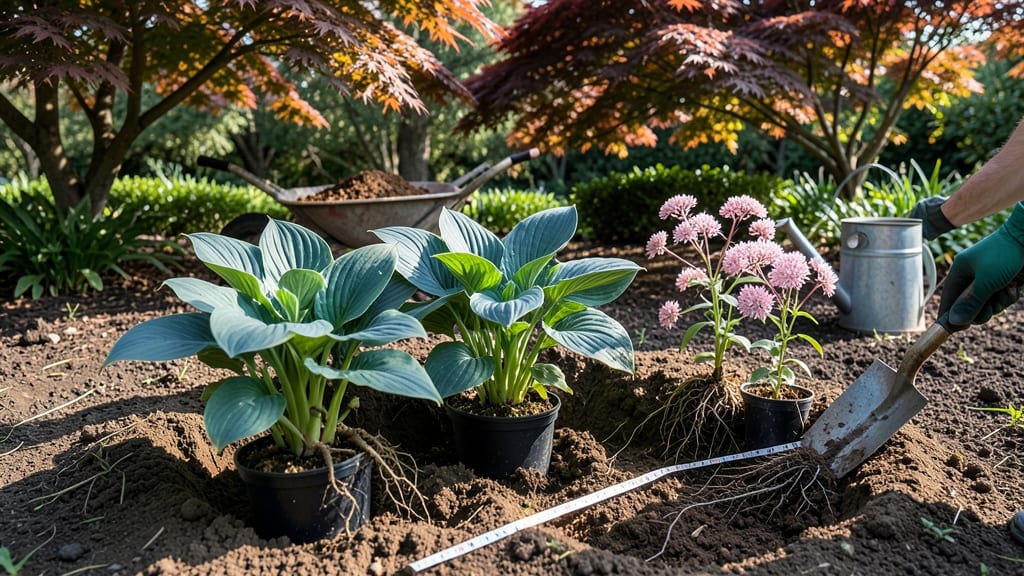
Planting hosta and astilbe together creates a shade-loving powerhouse that thrives where other plants struggle. 🌿 Their contrasting textures—hosta’s velvety leaves and astilbe’s feathery plumes—make them a designer’s dream duo, perfect for under trees or along north-facing walls where sunlight is scarce.
The secret to their harmony lies in layering heights: place hosta in the back (18–24 inches tall) and astilbe in front (12–36 inches, depending on variety). This creates depth while keeping both plants happy in moist, well-draining soil.
I’ve seen this combo outperform fussy perennials in my own shady garden beds. By summer, you’ll have a lush, low-maintenance display that blooms from early June through fall. Astilbe’s airy flowers soften hosta’s broad leaves, while hosta’s shade keeps astilbe’s roots cool—nature’s built-in teamwork.
Mulch with shredded bark to retain moisture and suppress weeds. Works in zones 3–9, whether you’re filling a 6-inch-deep border or a large woodland garden. The key? Plant them close enough to mingle but far enough to breathe—12–18 inches apart—and watch them thrive together for decades.
📚 In This Guide
- What you need
- Instructions
- Tips and common mistakes
- Wrapping up and next steps
What you need
- ● Hosta plants: 3–5 mature hostas (choose varieties with contrasting leaf shapes/textures, like 'Blue Angel' or 'Francee').
- ● Astilbe plants: 3–5 astilbes (pick colors that complement your hostas, such as 'Fanal' for deep red or 'Deutschland' for pink).
- ● Garden soil: Well-draining, rich in organic matter (amend with compost if your soil is heavy clay or sandy).
- ● Mulch: 2–3 inches of shredded bark or wood chips (helps retain moisture and suppress weeds).
- ● Slow-release fertilizer: 10-10-10 or balanced organic fertilizer (follow package rates).
- ● Garden gloves: A pair to protect your hands from soil and sharp plant edges.
- ● Trowel or hand shovel: For digging small holes (6–8 inches deep).
- ● Watering can or hose with a gentle spray nozzle: For post-planting hydration.
- ● Epsom salt: A handful mixed into planting holes for extra magnesium (boosts hosta health).
- ● Mulch rings or landscape fabric: To keep mulch in place and reduce weeds.
- ● Decorative rocks or edging: For a polished look around your garden bed.
- ● Pruning shears: For trimming astilbe stems after planting (if needed).
Step-by-Step instructions for planting hosta and astilbe together
This shade-loving pairing thrives when planted with precision—here's how to create a lush, textured combination.
🌱 Step 1: Prepare the Planting Site for Shade Tolerance
Choose a location that receives partial to full shade (2-6 hours of filtered sunlight daily). Hosta and astilbe both prefer moist, well-draining soil with a pH between 6.0 and 7.0. If your soil is heavy clay, amend it with 2-3 inches of compost and 1 inch of coarse sand to improve drainage. I like to work the amendments into the top 12 inches of soil—this ensures roots have access to nutrients and moisture without sitting in waterlogged conditions.
Test your soil's moisture retention by digging a 6-inch hole and filling it with water. If it drains within 30 minutes, your soil is ready. If water pools after an hour, you need more sand or organic matter. The goal is soil that holds moisture but doesn't stay soggy—hosta roots rot easily in waterlogged conditions, while astilbe thrives with consistent dampness.
🪴 Step 2: Plant Hosta First for Structural Foundation
Dig a hole twice as wide as the hosta's root ball but only as deep as the container it came in. Position the plant so the top of the root ball sits 1 inch below soil level—this prevents crown rot while keeping foliage above ground. Gently loosen the roots if they're circling and spread them outward in the hole. I always tap the sides of the hole lightly to settle the soil around the roots before adding more.
Fill the hole with amended soil, pressing firmly to eliminate air pockets. Water deeply until moisture reaches 6 inches down—this encourages roots to grow outward rather than staying shallow. Space hosta plants 2-3 feet apart to allow their broad leaves to fill the space without crowding. This spacing also gives astilbe room to grow upward without competing for light.
🌿 Step 3: Add Astilbe for Vertical Contrast and Seasonal Interest
Plant astilbe 2-3 weeks after the hosta to give it a head start. Dig a hole slightly shallower than the hosta's—astilbe prefers to sit just below soil level at the crown. The feathery plumes of astilbe will arch gracefully over hosta's mounded foliage, creating a dynamic visual contrast. Space astilbe plants 18-24 inches apart in clusters of 3-5 for a fuller look.
Backfill the hole with soil, firming gently around the roots. Water immediately to settle the soil and encourage root contact. Here's the thing—astilbe loves moisture but hates soggy roots. If your soil drains slowly, create a 2-inch deep mulch layer (using the 2-3 inches of compost you amended earlier) to retain moisture while preventing compaction. Keep mulch 2 inches away from plant stems to avoid rot.
☀️ Step 4: Mulch and Maintain for Long-Term Harmony
Spread a 2-3 inch layer of mulch over the entire planting area, keeping it 2 inches away from plant stems. Use a mix of shredded bark and leaves for texture and moisture retention. Mulch suppresses weeds, regulates soil temperature, and slowly releases nutrients as it breaks down. Replenish mulch annually in early spring to maintain its thickness.
Water the pair deeply once a week during the first growing season, aiming for 1 inch of water per week. You'll know you're doing it right when the top 2 inches of soil feel moist but not wet. Hostas and astilbes both signal thirst by drooping leaves—water immediately if you see this. In hotter months, increase watering to twice weekly unless your area receives consistent rainfall.
⏰ Step 5: Monitor and Adjust for Seasonal Changes
In early spring, fertilize with a balanced, slow-release fertilizer (10-10-10) to encourage lush foliage. Apply it 4-6 inches away from plant stems and water thoroughly to activate the granules. Astilbe will reward you with pink, white, or red plumes by mid-summer, while hosta leaves will develop their signature variegation and texture. This is the moment that matters—when both plants hit their peak, they create a stunning contrast of vertical and horizontal forms.
By late fall, cut back astilbe stems to 2 inches above the ground to prevent flopping in winter. Leave hosta leaves intact—they provide winter interest and protect the crown from freezing. In USDA zones 5-7, add a 3-inch layer of straw mulch over hosta crowns for extra winter protection. If you live in zones 8-10, no additional protection is needed—both plants handle mild winters beautifully.
Tips & tricks for planting hosta and astilbe together
Creating a stunning shade garden combo takes more than just throwing plants in the ground—here's how to ensure your hosta and astilbe thrive together for years.
Soil Testing Secret: While the instructions mention testing soil moisture retention, I've found that adding a pinch of lime (if your soil pH tests below 6.0) can make all the difference. Hosta particularly enjoys slightly acidic soil—just sprinkle a small amount around the planting hole and mix it into the top 6 inches of amended soil. This subtle adjustment prevents yellowing leaves that often plague hosta in alkaline conditions.
Root Ball Handling: When planting hosta in Step 2, don't just drop it in the hole—this is where most gardeners make their first mistake. After loosening circling roots, I like to soak the root ball in water for 10-15 minutes before planting. This pre-watering helps prevent transplant shock, especially important since hosta roots are sensitive to drying out. The 1-inch below soil level positioning becomes even more critical after this treatment.
Astilbe Planting Timing: The 2-3 week delay between planting hosta and astilbe isn't just about giving hosta a head start—it's about avoiding competition. Astilbe establishes faster in warmer soil. I've noticed that planting astilbe in clusters of 3-5 creates a natural fountain effect that cascades beautifully over the hosta's broad leaves, but only if you space them 18-24 inches apart as instructed. This spacing allows both plants to develop their signature textures without crowding.
Mulch Layer Strategy: While the instructions specify a 2-3 inch mulch layer, I've found that adding a thin layer of coarse horticultural grit (about ½ inch) right on top of the soil before the mulch makes a world of difference. This creates tiny air pockets that improve drainage while still retaining moisture—critical since astilbe roots need consistent dampness without becoming waterlogged. The grit also helps prevent soil compaction from watering.
Pro Tips for Plant Hosta And Astilbe Together
- Creating a stunning shade garden combo takes more than just throwing plants in the ground—here's how to ensure your hosta and astilbe thrive together for years.
- Soil Testing Secret: While the instructions mention testing soil moisture retention, I've found that adding a pinch of lime (if your soil pH tests below 6.0) can make all the difference.
- Root Ball Handling: When planting hosta in Step 2, don't just drop it in the hole—this is where most gardeners make their first mistake.
Frequently asked questions
Got questions about pairing hosta and astilbe? You’re not alone! Here are some of the most common concerns—and their solutions—to help you create the perfect shade garden combo.
What’s the best spacing for hosta and astilbe when planted together?
Give hostas 12–24 inches of space (depending on variety) and astilbes 12–18 inches. Plant them 6–12 inches apart to let their foliage blend beautifully without crowding. Smaller varieties can be closer (8–10 inches), while larger ones need more room to thrive.
When is the ideal time to plant hosta and astilbe together?
Spring or early fall are the best times—when soil is workable but not frozen. Avoid extreme heat or cold, which can stress plants. For hostas, early spring lets them establish roots before summer heat; astilbes prefer cooler temps to settle in smoothly.
Will astilbe outcompete hosta for nutrients or space?
Not if planted correctly! Both are shade-lovers, but astilbe’ feathery plumes add vertical interest without stealing sunlight. Mulch well (2–3 inches) to retain moisture and reduce competition. If overcrowding happens, thin out smaller hosta pups or divide clumps every 3–4 years.
Can I use other shade plants instead of astilbe with hosta?
Try heuchera (for colorful foliage), ferns (like Matteuccia struthiopteris), or coral bells (Heucherella). For height, Japanese painted fern (Athyrium) or foamflower (Tiarella) work well. Just match moisture and light preferences—both hosta and astilbe love consistent shade and damp soil.
How do I prevent pests (like slugs or deer) from damaging both plants?
Hosta and astilbe are slug/deer magnets! Use organic slug bait (copper tape or diatomaceous earth) and deer repellent sprays. Plant astilbe’s spiky plumes near hosta edges—they deter pests with their fuzzy texture. For extra protection, add alliums or garlic nearby (their scent confuses critters!).
Wrapping up and next steps
Planting hosta and astilbe together is a fantastic way to create a lush, low-maintenance shade garden with striking texture and color contrast. 🌿 By following the right spacing, soil prep, and sunlight balance, you’ll craft a thriving duo that blooms with confidence and elegance. Ready to transform your garden?
Your next step? Grab your gardening tools, pick out your favorite varieties, and get planting! Watch your shade garden flourish—you’ve got this! 🌱