
Planting
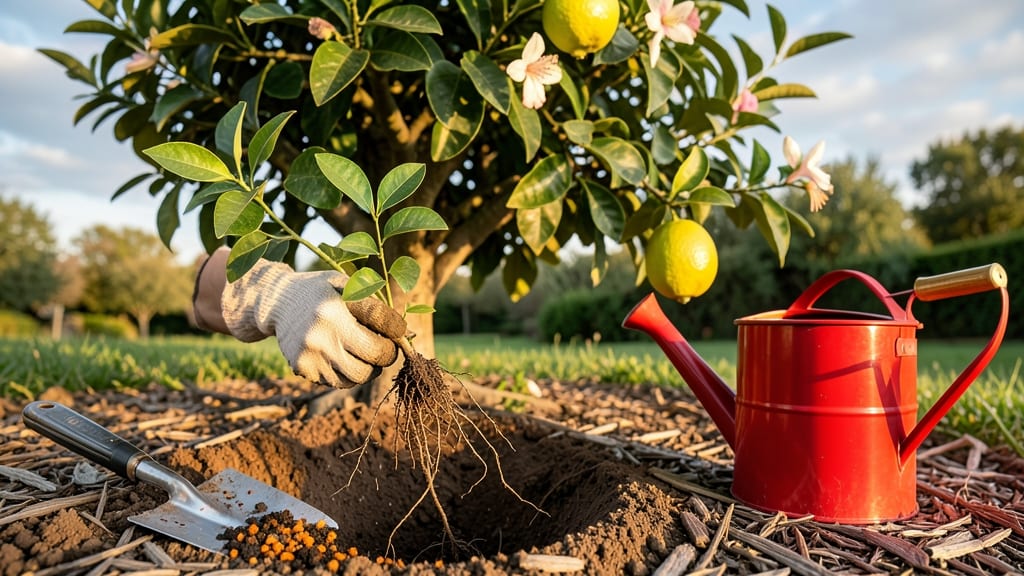
Planting a Meyer lemon tree means fresh citrus year-round, but sunlight is the secret ingredient. 🌞 I learned the hard way that partial shade turns my tree into a leafy bush with no fruit—so I moved it to full sun last spring, and now it's loaded with sweet lemons.
The key is matching your tree's needs to your space, whether that's a sunny patio or a sheltered corner of the yard.
You'll need a pot at least 15 gallons for containers or well-draining soil in the ground, plus a slow-release fertilizer to keep it thriving. Meyer lemons love warmth but hate soggy roots, so good drainage is non-negotiable.
Most nurseries sell them as bare-root plants in spring, but you can plant potted trees year-round in mild climates—just avoid frost. The first year is all about establishing roots, not harvests.
After planting, water deeply once a week (more in summer) and expect to see new growth within 4-6 weeks. The real magic happens in year two when you'll get your first blooms and tiny lemons.
With proper sunlight, your tree can produce 50-100 lemons annually—enough for fresh juice, marmalade, or gifts for neighbors who'll be jealous of your citrus stash.
For colder zones, move potted trees indoors near a sunny window in winter. Ground-planted trees need winter protection like mulch or burlap wraps. The payoff? Homegrown lemons that taste nothing like store-bought—and the pride of growing something this rewarding from seed or sapling.
📚 In This Guide
- What you need
- Instructions
- Tips and common mistakes
- Wrapping up and next steps
What you need
- ● Meyer lemon tree: A 1-3 gallon potted sapling (ensure it’s disease-free and healthy).
- ● Well-draining potting soil: 5-10 gallons (mix with perlite or sand for aeration).
- ● Container or planting hole: For containers: 15-20 gallon pot with drainage holes (diameter at least 12 inches).
- ● For in-ground planting: Hole twice as wide as the root ball, with loose soil.
- ● Organic fertilizer: Balanced 10-10-10 or citrus-specific blend (1 cup per tree).
- ○ Slow-release pellets: Optional but helpful (e.g., Osmocote for citrus).
- ● Watering can or hose: With a gentle spray nozzle.
- ● Garden trowel or shovel: For digging and transplanting.
- ● Pruning shears: To trim dead or overgrown branches.
- ● Gloves: Heavy-duty for handling soil and roots.
- ○ pH testing kit (optional): To check soil acidity (ideal: 6.0–7.0).
- ○ Mulch (optional): 2-3 inches of wood chips or straw to retain moisture.
- ● Sunlight: 6+ hours of direct sun daily (south-facing spot is ideal).
- ● Climate: USDA Zones 9-11 (or grow indoors with grow lights in colder zones).
- ● Water access: Consistent moisture (avoid soggy soil—Meyer lemons hate wet roots!).
- ● Patience: Trees take 2-3 years to bear fruit (but the wait is worth it!).
Step-by-Step guide to planting a Meyer lemon tree
Here’s how to establish a thriving Meyer lemon tree with proper sunlight and soil care.
🌱 Step 1: Select and Prepare the Planting Site
Meyer lemon trees thrive in full sun—at least 6-8 hours of direct sunlight daily—so choose a location that receives maximum exposure. If planting outdoors in cooler climates, position the tree near a south-facing wall or use a large container that can be moved indoors during winter months. The ideal temperature range for growth is 65-85°F, with protection from cold drafts below 50°F.
Dig a hole twice as wide as the root ball but no deeper. Amend the native soil with well-draining potting mix if your area has heavy clay, as Meyer lemons hate soggy roots. A slight mound of soil in the center of the hole prevents water pooling around the roots. Loosen the sides of the hole with a shovel to encourage root spread.
🪴 Step 2: Plant the Tree Properly
Remove the tree from its container and gently tease the roots outward if they’re circling. Place the root ball into the hole, ensuring the top of the root flare (where roots meet the trunk) sits 1-2 inches above soil level. This prevents water from suffocating the stem. Backfill with the amended soil, pressing lightly to eliminate air pockets but avoiding compaction.
Water deeply right after planting to settle the soil and eliminate gaps. The top 2-3 inches of soil should feel moist but not waterlogged. Mulch around the base with 2-3 inches of organic mulch (like wood chips or straw), keeping it 3 inches away from the trunk to prevent rot. This conserves moisture and regulates soil temperature.
☀️ Step 3: Establish a Watering and Light Routine
Water the tree 2-3 times per week during the first 4-6 weeks to help roots establish, then taper to once a week once mature. Check moisture by sticking your finger 2 inches into the soil—water when it feels dry. Overwatering is the fastest way to kill a Meyer lemon, so ensure the pot or soil has proper drainage.
If growing in a container, choose a pot at least 18-24 inches wide with drainage holes. Place the container in a sunny spot and rotate it quarter-turn weekly to prevent the tree from leaning toward the light. Yellowing leaves or slow growth usually mean the tree needs more sunlight or better drainage.
✂️ Step 4: Prune and Fertilize for Growth
Prune in late winter or early spring before new growth begins. Remove any dead, diseased, or crossing branches with clean, sharp pruners, cutting just above a leaf node. Avoid heavy pruning—Meyer lemons produce fruit on new growth, so limit cuts to 20-30% of the canopy. This encourages bushier, more productive growth.
Fertilize every 4-6 weeks during the growing season with a balanced citrus fertilizer (like 6-6-6 or 8-3-9). Follow package instructions, but reduce amounts by half for container-grown trees. In fall and winter, switch to a low-nitrogen fertilizer to promote dormancy and fruit development. Avoid fertilizing if the tree shows signs of stress, like yellowing leaves.
🌿 Step 5: Monitor and Protect Through Seasons
Watch for aphids, spider mites, or scale insects, which thrive on lemon trees. Treat infestations early with neem oil or insecticidal soap, applied in the early morning or evening to avoid harming beneficial insects. Remove heavily infested leaves by hand if possible. Proper airflow from pruning reduces humidity around the plant, deterring pests.
In winter, bring container-grown trees indoors if temperatures drop below 50°F. Place them near a south-facing window or under grow lights for 12-14 hours of light daily. Reduce watering to once every 2-3 weeks, as growth slows. If outdoors, wrap the trunk with burlap or frost cloth for extra protection from cold snaps.
Tips & tricks for planting a thriving Meyer lemon tree
These essential insights will help you avoid common pitfalls and maximize your lemon tree's potential.
Sunlight Strategy: The 6-8 hours of direct sunlight mentioned in Step 1 is non-negotiable for Meyer lemons. If your location gets less, consider using a reflective surface like white walls or mirrors to bounce extra light onto the tree. In urban areas, south-facing balconies or rooftops often provide the ideal exposure, but watch for afternoon shade that can reduce sunlight below the required threshold.
Soil Preparation Secret: When amending your native soil with well-draining potting mix in Step 1, I recommend adding a handful of perlite or coarse sand to the mix. This creates larger air pockets that prevent waterlogging, which is particularly important in heavy clay soils. The slight mound you create in the hole's center should be about 1-2 inches high—this helps with drainage while keeping roots properly elevated.
Root Care Technique: In Step 2, when teasing the roots outward, be gentle but thorough. Circling roots (called "root-bound") can strangle new growth if left intact. If you notice dense root clusters, use your fingers to carefully separate them. After planting, give the soil a gentle press with your hands rather than stomping—this eliminates air pockets without compacting the soil too much.
Winter Transition Hack: For container-grown trees moving indoors in winter, I've found that placing a small fan nearby helps prevent powdery mildew, which thrives in the dry indoor air. The 12-14 hours of light requirement can be met with standard LED grow lights placed 12-18 inches above the tree. Rotate the container weekly to prevent the tree from leaning toward the light source, just as you would outdoors.
Pro Tips for Plant Meyer Lemon Tree
- These essential insights will help you avoid common pitfalls and maximize your lemon tree's potential.
- Sunlight Strategy: The 6-8 hours of direct sunlight mentioned in Step 1 is non-negotiable for Meyer lemons.
- Soil Preparation Secret: When amending your native soil with well-draining potting mix in Step 1, I recommend adding a handful of perlite or coarse sand to the mix.
Frequently asked questions
Got questions about growing your Meyer lemon tree?
You’re not alone! Here are answers to the most common concerns—from timing to troubleshooting—so you can cultivate a thriving citrus plant with confidence.
When is the best time to plant a Meyer lemon tree?
For outdoor planting, aim for early spring or late fall (after the last frost and before summer heat). If planting in containers, you can do it year-round in warm climates (Zones 9-11). In cooler areas, wait until temperatures stay above 50°F (10°C) at night to avoid shock.
Can I plant a Meyer lemon tree in winter?
It depends! In USDA Zones 9-11, winter planting is fine if soil temps are above 50°F (10°C). In colder zones (<8), wait until spring—Meyer lemons are semi-tropical and won’t survive frost. If you must plant in winter, use a large container and move it indoors when temps drop.
How long does it take for a Meyer lemon tree to bear fruit?
Patience is key! With proper care, a container-grown Meyer lemon may produce fruit in 2–3 years, while outdoor trees can take 3–5 years. Ensure it gets 6–8 hours of sunlight daily and well-draining soil to speed up fruiting. Younger trees focus on growth first—don’t rush it!
Why are my Meyer lemon tree leaves turning yellow?
Yellow leaves usually signal overwatering, nutrient deficiency, or pests. Check the soil—it should be slightly moist but not soggy. Yellowing lower leaves often mean root rot (cut back on water). For upper leaves, lack of nitrogen or aphids/spider mites could be the culprit. Treat with neem oil or a balanced citrus fertilizer.
Can I grow a Meyer lemon tree indoors?
Use a 15–20 gallon pot with drainage holes and place near a south-facing window (or under grow lights for 12+ hours/day). Keep temps between 60–85°F (15–29°C) and humidity high (try a pebble tray). Prune regularly to control size, and fertilize monthly with citrus-specific food in spring/summer.
Wrapping up and next steps
Growing a Meyer lemon tree is a rewarding journey that brings vibrant foliage, fragrant blossoms, and—best of all—sweet, juicy lemons straight to your kitchen! With the right sunlight, soil, and care, you’ll enjoy year-round citrus in no time.
Don’t let challenges like frost or pests discourage you; every gardener starts somewhere, and your tree will thrive with patience and love.
Now that you’re armed with the how-to, why not take the next step? Share your progress with fellow plant enthusiasts, or explore advanced care tips to keep your Meyer lemon tree flourishing for decades. Happy planting—your future lemons are waiting! 🌱✨