
Planting
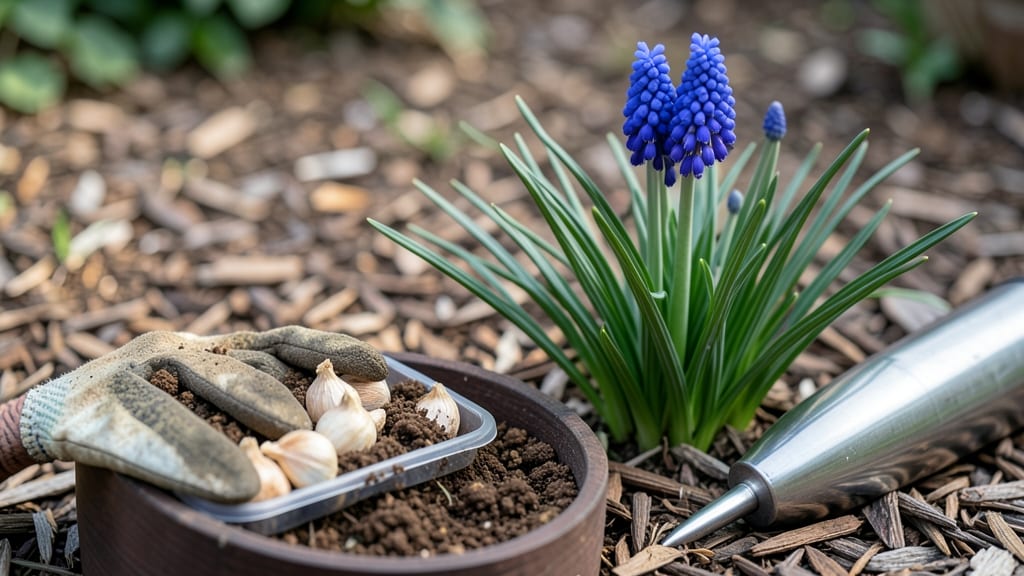
Planting muscari bulbs in the fall unlocks a stunning display of blue grape hyacinths 🌸 that naturalize beautifully over time.
Picture this: your garden exploding with vibrant blue clusters in early spring, year after year, with almost no effort on your part. The key? Getting the timing, soil, and spacing just right from the start.
Many gardeners assume these bulbs are fussy, but muscari thrive in well-draining soil and partial sun, making them perfect for borders, rock gardens, or even containers. I’ll walk you through the exact steps—from digging the trenches to spacing them for maximum impact—so you can enjoy their effortless charm.
By the end, you’ll know how deep to plant, when to water, and which companion plants bring out their best. Let’s get those bulbs in the ground the right way!

Optimal soil conditions and planting depth for Muscari bulbs
When planting Muscari bulbs, the right soil conditions and planting depth make all the difference between a few weak stems and a lush, vibrant blue carpet of blooms. These bulbs thrive in well-draining soil with a slightly sandy or loamy texture, mimicking their natural Mediterranean habitat.
If your soil is heavy clay, amending it with compost or coarse sand prevents root rot—a common issue for beginners.
For healthy root development, Muscari bulbs should be planted at a depth of 2-3 inches, with the pointy end facing upward. This shallow placement ensures they won’t rot in wet soil while still anchoring firmly.
Over-planting too deep can suffocate the bulb, while planting too shallow may expose it to temperature fluctuations or pests.
Here’s a quick reference for soil preparation before planting: - pH Level: Aim for 6.0–7.0 (neutral to slightly acidic). - Drainage: Ensure water drains within 1–2 hours—never let bulbs sit in soggy soil. - Organic Matter: Mix in 1–2 inches of compost to improve fertility without compacting the soil.
| Soil Requirement | Specification | Notes |
|---|---|---|
| Soil Type | Loamy or sandy | Avoid heavy clay; amend with compost or sand. |
| pH Level | 6.0–7.0 | Test soil; adjust with lime (raise) or sulfur (lower). |
| Drainage | Fast-draining | Water should drain within 1–2 hours; raise beds if needed. |
| Planting Depth | 2–3 inches | Pointy end up; cover with 1 inch of soil after pressing. |
| Organic Matter | 1–2 inches compost | Improves fertility without compacting; mix into top 6 inches. |
If your soil is too dense, consider planting Muscari in raised beds or container gardens filled with a mix of potting soil and perlite. This ensures optimal aeration and prevents bulb rot, especially in rainy climates.
I’ve found that container-grown Muscari often blooms even more vigorously because the roots aren’t competing with weeds or compacted soil.
Overwatering is the #1 mistake I see with Muscari bulbs. While they need consistent moisture during active growth (spring), they dormant in summer and require minimal water. Let the top 1–2 inches of soil dry out between waterings once blooming ends. Mulching with straw or pine needles helps retain moisture while keeping roots cool.
For troubleshooting, yellowing leaves often signal overwatering or poor drainage, while no blooms may indicate too much nitrogen (use a balanced 5-10-10 fertilizer sparingly). If bulbs rot, dig them up, let them dry, and replant in sandier soil.
With the right soil prep and depth, your Muscari will reward you with years of effortless blue blooms!
Pro tip: Plant Muscari in groups of 10+ bulbs for a dramatic effect. Their naturalizing habit means they’ll spread over time, creating a self-sustaining carpet of color. Pair them with daffodils or crocuses for a springtime pollinator magnet!
🌸
Best spacing and sunlight requirements for Muscari clusters
When planting Muscari bulbs, proper spacing and sunlight exposure are the keys to creating those stunning, dense clusters of blue blooms. I’ve found that spacing bulbs 3-4 inches apart allows each plant enough room to thrive without competing for nutrients, while also maximizing visual impact.
This spacing works beautifully in rock gardens, border edging, or even as a ground cover under trees where sunlight might be limited.
For sunlight requirements, Muscari thrives in partial to full sun, making it incredibly versatile. In full sun, you’ll get the most vibrant blooms, but even 3-4 hours of morning sun in shadier spots will still produce lovely flowers.
The secret is avoiding hot afternoon sun in extreme climates, which can stress the bulbs. I’ve seen my own Muscari clusters in dappled shade under deciduous trees still perform well, though with slightly fewer blooms.
Here’s how spacing and sunlight directly impact your garden’s success:
| Factor | Ideal Scenario | Overcrowded Scenario |
|---|---|---|
| Spacing | 3-4 inches apart | 1-2 inches apart |
| Sunlight | Partial to full sun | Less than 3 hours sun |
| Bloom Density | Vibrant, dense clusters | Sparse, leggy blooms |
| Growth Habit | Compact, healthy foliage | Crowded, weak stems |
| Companion Plants | Pairs well with tulips, daffodils, or lavender | Competes with aggressive plants |
For companion planting, I recommend pairing Muscari with low-growing perennials like lavender or creeping thyme to create a stunning, textured display. These plants share similar sunlight and water needs, making maintenance a breeze.
Avoid planting near aggressive spreaders like mint or creeping Charlie, which can smother your Muscari clusters over time. In my own garden, I’ve seen Muscari and alliums create a breathtaking purple-and-blue combination that lasts from early spring through summer.
If you’re planting in containers, stick to 3-4 bulbs per 6-inch pot to avoid overcrowding. This ensures each bulb gets the 3-4 inches of space it needs while still creating a dramatic display.
For large garden beds, aim for 9-12 bulbs per square foot to achieve that lush, naturalized look. The key is to mimic their natural habitat, where they grow in open meadows and woodlands with plenty of airflow.
One common mistake I see is planting Muscari too deeply or too shallowly. Ideal depth is 2-3 times the bulb’s height, which for most Muscari varieties means 4-6 inches deep. Pair this with proper spacing and sunlight, and you’ll enjoy years of effortless blooms with minimal upkeep.
Just remember: patience is key—these bulbs can take 2-3 years to reach their full potential, but the wait is worth it for that stunning sea of blue.
🌸