
Planting
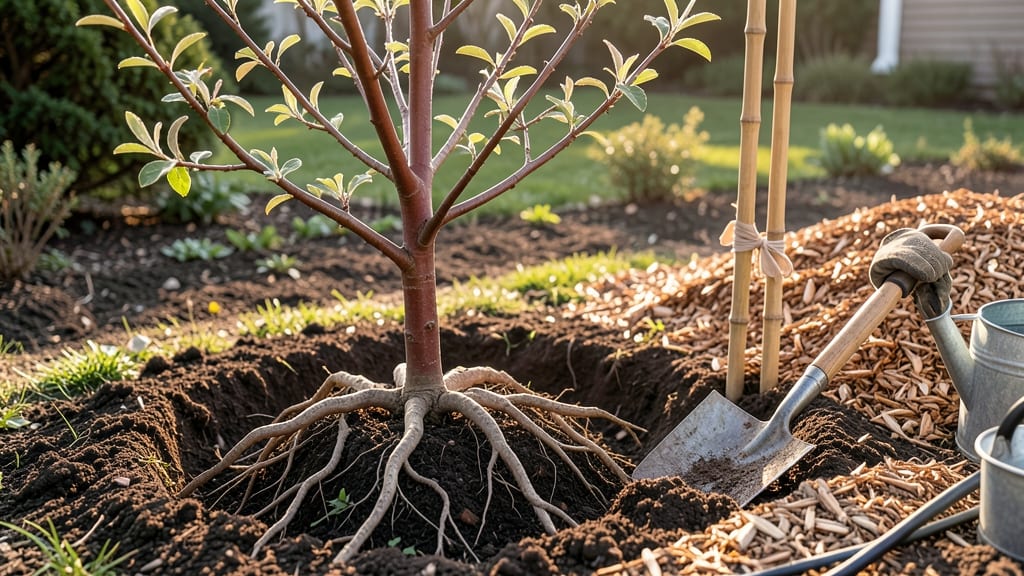
Planting nectarine trees starts with the right spot—full sun and well-draining soil are non-negotiable. 🌞 I’ve learned the hard way that soggy roots mean fewer fruits, so amending heavy clay with compost or sand makes all the difference.
The key isn’t just digging a hole; it’s creating a welcoming home for roots to spread. Nectarines thrive in zones 5-9, but timing matters too. Plant bare-root trees in early spring or dormant season, while container-grown trees can go in year-round.
Space them 15-20 feet apart—crowding leads to disease and poor airflow. Dig the hole twice as wide as the root ball but no deeper; the graft union should sit 2 inches above ground level.
Water deeply right after planting, then mulch to lock in moisture and keep roots cool. The first year is about establishing roots, not fruit—so resist the urge to harvest. A drip irrigation system saves time and prevents overwatering, which is my biggest nemesis.
For containers, use a large pot (at least 15 gallons) with drainage holes. Dwarf varieties work best, but expect smaller harvests. Avoid common pitfalls: planting too deep, skipping mulch, or ignoring pests like aphids. With patience, you’ll have sweet, juicy fruit in 3-5 years.
📚 In This Guide
- What you need
- Instructions
- Tips and common mistakes
- Wrapping up and next steps
What you need
- ● Nectarine tree: Choose a dwarf, semi-dwarf, or standard variety (check local climate suitability). 1-3 trees recommended for cross-pollination (if needed).
- ● Shovel or trowel: A garden shovel for digging holes (18–24" wide/deep) and a hand trowel for delicate root adjustments.
- ● Well-draining soil: Mix native soil with compost (50/50 ratio) or use a balanced fruit tree mix (pH 6.0–7.0).
- ● Organic mulch: 3–4 inches of wood chips, straw, or pine bark to retain moisture and suppress weeds.
- ● Watering can or hose: With a gentle spray nozzle for post-planting hydration.
- ● Fertilizer: Slow-release, balanced fertilizer (10-10-10 or 8-3-9) or organic options like composted manure.
- ○ Tree stakes & ties (optional but helpful): 2–3 stakes (4–6 ft tall) and soft fabric ties to support young trees.
- ● Root stimulator: A mycorrhizal fungi powder or seaweed extract to boost root growth.
- ● Drip irrigation kit: For automated watering (especially in hot climates).
- ● Fruit tree spray: Organic copper fungicide or neem oil to prevent pests/diseases.
- ● Pruning shears: Sharp, bypass-style for shaping the tree post-planting.
Step-by-Step instructions for planting nectarine trees
Planting nectarine trees the right way ensures strong roots, better fruit production, and fewer problems down the road.
🪴 Step 1: Choose the Right Location and Prepare the Soil
Nectarine trees thrive in full sun with at least 6-8 hours of direct sunlight daily. Pick a spot with good air circulation to prevent fungal diseases—this fruit tree hates damp, stagnant air. I always test the soil pH before planting; nectarines prefer a slightly acidic to neutral range (6.0-7.0). If your soil is heavy clay, amend it with 2-3 inches of compost mixed into the top 12 inches of soil.
Dig a hole twice as wide as the tree’s root ball but only as deep as the container it came in. Loosen the sides of the hole with a shovel to encourage root spread. If planting in fall, wait until 4-6 weeks before your first frost—this gives roots time to establish before winter. Spring planting should happen 2-3 weeks before the last frost date in your area.
🌱 Step 2: Remove the Tree from Its Container and Inspect Roots
Gently squeeze the sides of the container to loosen the root ball before lifting the tree out. If roots are circling tightly (a common issue with container-grown trees), use your fingers to tease them outward—this prevents girdling later on. Shake off any excess soil so you can see the root structure; healthy roots should look white or light tan and feel moist but not mushy.
Trim any broken or blackened roots with clean pruning shears. I also remove any suckers growing from the base of the trunk—these divert energy from fruit production. Place the tree in the hole so the top of the root ball sits 1-2 inches above ground level. This prevents water from pooling around the trunk, which can cause rot.
💧 Step 3: Backfill and Water Thoroughly
Fill the hole halfway with soil, then water it to settle. This removes air pockets that could strangle roots. Next, add a slow-release fertilizer (like 10-10-10) mixed into the remaining soil—about 1 cup per tree. Finish backfilling, pressing gently but not compacting the soil. Create a 2-inch-high berm around the base to direct water toward the roots during irrigation.
Water deeply until the soil 12 inches down is moist. You’ll know it’s enough when water runs out of the drainage holes if you were planting in a pot, or when the surface stops bubbling. Mulch with 2-3 inches of wood chips or straw, keeping it 3 inches away from the trunk to prevent moisture buildup. This helps retain soil moisture and keeps roots cool in summer.
☀️ Step 4: Stake and Prune for Strong Growth
If your tree is tall or top-heavy, install two stakes on opposite sides of the trunk and tie it loosely with soft fabric strips (never wire—it can cut into the bark). The goal is to support the tree without restricting movement, which strengthens the trunk. Prune any broken branches and remove 1/3 of the canopy to encourage outward growth. Cut just above a bud or outward-facing branch to promote healthy regrowth.
Here’s the thing—nectarine trees are sensitive to frost damage, especially when young. If you’re in a cold climate, wrap the trunk with tree guard or burlap in winter. In warmer areas, watch for aphids or scale insects on new growth. A strong spray of water can knock them off, but severe infestations may need neem oil treatment.
⏰ Step 5: Maintain Through the First Year
Water once a week during the first growing season unless rain provides 1 inch of moisture. Overwatering is a bigger risk than underwatering—nectarine roots need oxygen too. In the first year, focus on root development, not fruit production. If you see fruit forming, remove it to redirect the tree’s energy into establishing strong roots and branches.
Fertilize lightly in early spring with a balanced formula, then again in late summer after harvest. Avoid heavy nitrogen in fall—it encourages late-season growth that won’t harden off before winter. By the end of the first year, your tree should have a sturdy trunk and well-spaced branches, setting it up for years of sweet nectarines.
Tips & tricks for planting nectarine trees
These simple yet game-changing tricks will help your nectarine trees thrive from day one.
Soil Prep Secret: In Step 1, if your soil is sandy, mix in 1 part compost to 3 parts soil for the top 12 inches. Sandy soil drains too quickly, and nectarines need consistent moisture to establish roots. I've seen trees planted in unamended sandy soil struggle for years—don't make that mistake. The 2-3 inches of compost recommendation is perfect for most soil types, but sandy areas need that extra boost.
Root Ball Rescue: When removing the tree in Step 2, if roots are severely circling, make two vertical cuts around the root ball with a clean knife to break the girdling pattern. This is especially important for trees that have been container-grown for more than a year. I learned this the hard way after seeing a tree's roots strangle itself within months of planting. The goal is to create a loose, natural root structure that can spread outward immediately.
Watering Wisdom: In Step 3, that 12-inch deep watering is crucial but often misunderstood. Use a soil probe or long screwdriver to check moisture depth after watering. If it's dry at 12 inches, keep watering until you see moisture at that depth. Overwatering is just as harmful as underwatering—look for puddles or soggy soil, which can lead to root rot. The 2-inch berm you create helps direct water exactly where it needs to go.
Pruning Precision: When removing 1/3 of the canopy in Step 4, focus on branches that are crossing or growing inward. These compete for sunlight and nutrients. I always make cuts just above an outward-facing bud to encourage healthy growth in the right direction. Avoid cutting back more than 1/3—this can stress the young tree. Think of it as giving your tree a haircut that promotes its best shape for fruit production.
Pro Tips for Plant Nectarine
- These simple yet game-changing tricks will help your nectarine trees thrive from day one.
- Soil Prep Secret: In Step 1, if your soil is sandy, mix in 1 part compost to 3 parts soil for the top 12 inches.
- Root Ball Rescue: When removing the tree in Step 2, if roots are severely circling, make two vertical cuts around the root ball with a clean knife to break the girdling pattern.
Frequently asked questions
Got questions about planting nectarine trees? You’re not alone! Here are some of the most common concerns—plus quick, actionable answers to help you grow a thriving orchard.
When is the best time to plant a nectarine tree?
Plant nectarine trees in early spring (just before buds swell) or late fall (6–8 weeks before the first frost). Avoid planting in extreme heat or freezing temps—roots need time to establish without stress. If you’re in a mild climate, late winter is ideal!
How far apart should I space nectarine trees?
Space nectarine trees 15–20 feet apart for proper airflow and sunlight. If growing in a row, leave 20–25 feet between trees to prevent disease and make harvesting easier. Dwarf varieties? Reduce spacing to 10–12 feet for smaller orchards.
Why is my nectarine tree’s leaves curling or yellowing?
Curling or yellowing leaves often signal pests (like aphids or mites) or nutrient deficiencies (iron or nitrogen). Check the undersides of leaves for pests, and test soil pH (ideal: 6.0–7.0). Apply organic fertilizer or neem oil if needed. Overwatering can also cause stress—ensure well-draining soil!
Can I grow nectarines in containers?
Yes, but choose dwarf varieties (like ‘Fantasy’ or ‘Redhaven’) and a large container (at least 20 gallons). Use high-quality potting mix, ensure drainage holes, and move the pot to a sunny spot. Containers dry out faster—water deeply 2–3 times weekly in summer. Expect smaller yields than in-ground trees.
Do nectarine trees need winter protection?
Young trees (<3 years) or those in cold climates (
Wrapping up and next steps
Planting a nectarine tree is a rewarding journey that combines patience with the joy of nurturing life.
By choosing the right variety, preparing the soil, and spacing your trees properly, you’ll set the stage for a bountiful harvest. Remember: consistency in care—watering, pruning, and protecting from pests—will ensure your trees thrive year after year!
Now that you’re armed with the know-how, take the next step! Whether you’re planting a single tree or starting a small orchard, mark your calendar for the ideal season in your climate and get digging. Your future sweet, juicy nectarines are waiting—let’s grow them together! 🌱🍑