
Planting
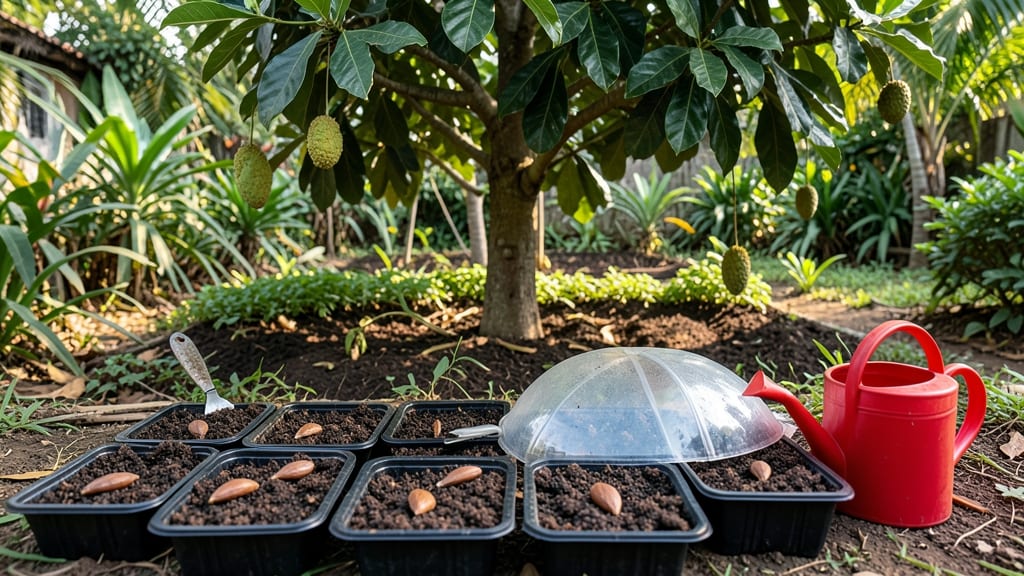
Planting sugar apple seeds unlocks a tropical fruit tree that thrives in warm climates. 🌿 The process starts with fresh seeds—never dried—and the right balance of warmth and moisture to coax germination in just 4-6 weeks.
I’ve watched these seeds sprout into sturdy seedlings ready for transplanting, and the key lies in mimicking their natural jungle environment at home.
You’ll need a well-draining potting mix, a shallow container, and a heat source—whether it’s a seedling heat mat or a sunny windowsill. Sugar apples crave warmth, so keep soil temperatures above 75°F and maintain high humidity with a plastic dome or regular misting.
The first signs of life appear as tiny roots breaking through the soil, followed by delicate green shoots within weeks.
Once sprouted, your seedlings will need bright, indirect light to prevent leggy growth. Thin weaker stems early to give the strongest plant room to grow, and avoid overwatering—soggy soil smothers roots.
By the time they’re 6 inches tall, they’ll be ready for their forever home in a larger pot or warm garden bed.
This method works for both indoor growers and outdoor gardeners in USDA Zones 10-11, though container gardening extends the range. If you’re in cooler climates, keep them as houseplants or overwinter them indoors.
The payoff? A fragrant, fast-growing tree that rewards patience with sweet, custard-like fruit in just a few years.
📚 In This Guide
- What you need
- Instructions
- Tips and common mistakes
- Wrapping up and next steps
What you need
- ● Fresh sugar apple seeds – Extract 3-5 seeds from a ripe, organic sugar apple (avoid store-bought fruit treated with preservatives).
- ● Well-draining potting mix – Use a seed-starting mix or blend 50% coconut coir, 30% perlite, and 20% compost (sterilized). Avoid garden soil—it’s too dense!
- ● Small seed trays or biodegradable pots – Choose 2-3 inch diameter containers with drainage holes (6-8 seeds max per tray).
- ● Spray bottle – For gentle watering (avoid over-saturating seeds).
- ● Plastic wrap or humidity dome – Keeps moisture high during germination (critical for tropical seeds!).
- ○ Heat mat (optional but helpful) – Maintains 75–85°F (24–29°C) soil temperature for faster sprouting.
- ● Grow lights or sunny windowsill – Sugar apple seedlings need 12–14 hours of bright light daily after sprouting.
- ● Fertilizer (balanced, water-soluble) – Use a 5-5-5 or 10-10-10 NPK ratio at half-strength once true leaves appear.
- ● Humidity tray – A shallow tray with pebbles and water to boost moisture levels in dry climates.
- ● Label markers – Track planting dates and seed varieties (sugar apples are slow growers!).
Step-by-Step guide for germinating sugar apple seeds
Here’s how I’ve successfully sprouted sugar apple seeds—tropical fruit germination doesn’t have to be tricky.
🌱 Step 1: Extract and Prepare the Seeds
Start by removing the seeds from a fresh, ripe sugar apple. The seeds are embedded in the fruit’s pulp, so scoop them out and rinse them thoroughly under cool water to remove any remaining fruit residue. Sugar apple seeds have a hard outer shell that slows germination, so I soak them in warm water for 24 hours—this softens the shell and kickstarts the process.
After soaking, place the seeds between two damp paper towels and fold them to create a cozy, humid environment. Store them in a sealed plastic bag and keep the bag in a warm spot, like on top of the fridge or near a sunny window. Check daily to ensure the towels stay moist—dryness will stall germination.
🌿 Step 2: Plant the Seeds in a Germination Medium
Once the seeds begin to sprout—usually within 5-7 days—transfer them to a small container filled with a light, well-draining potting mix. Sugar apple seedlings are delicate, so I use a mix designed for tropical plants, which stays airy and doesn’t compact easily. Plant each seed about ½ inch deep and space them 2 inches apart to avoid overcrowding as they grow.
Cover the container with a clear plastic dome or wrap it loosely in plastic wrap to retain warmth and humidity. Place it in a warm, bright spot—75-80°F is ideal—but avoid direct sunlight, which can overheat the soil. A seedling heat mat helps maintain consistent warmth if your home runs cooler.
💧 Step 3: Monitor Moisture and Light
Keep the soil evenly moist but never soggy—sugar apple seeds rot quickly if overwatered. Mist the soil lightly every 2-3 days or when the top inch feels dry. You’ll know you’ve got the moisture right when the soil looks damp but not waterlogged. Once the first true leaves appear—after about 4-6 weeks—remove the plastic cover to harden off the seedlings gradually.
At this stage, move the seedlings to a bright, indirect light spot. Sugar apple trees thrive in tropical conditions, so they need plenty of light but can scorch if exposed to harsh midday sun. If you notice the seedlings stretching toward the light (a sign of legginess), supplement with a grow light placed 6 inches above the plants for 12-14 hours daily.
⏰ Step 4: Transplant Seedlings into Individual Pots
When the seedlings reach 4-6 inches tall and have 4-5 true leaves, it’s time to transplant them into 4-inch pots filled with the same tropical potting mix. Handle the seedlings gently—sugar apple roots are fragile, and rough transplanting can stunt growth. Water them lightly after transplanting to help settle the soil around the roots.
Place the pots in a warm, humid environment, like a greenhouse or a shaded patio. Sugar apple trees love humidity, so I often mist the leaves daily or place a tray of water nearby to increase moisture in the air. Avoid cold drafts, as sugar apple seedlings are sensitive to temperature drops below 60°F.
☀️ Step 5: Acclimate and Prepare for Outdoor Growth
After 8-12 weeks, when the seedlings are sturdy and show signs of new growth, begin acclimating them to outdoor conditions. Start by placing them outside in a shaded, sheltered spot for 1-2 hours daily, gradually increasing their time outdoors over 2 weeks. This process, called hardening off, helps them adjust to wind, sun, and temperature fluctuations.
Once the seedlings tolerate full outdoor exposure without wilting, you can plant them in the ground or larger containers. Sugar apple trees need full sun and well-draining soil to thrive, so choose a spot with partial shade if you’re in a hot climate. With patience and care, your seedlings will grow into a lush tropical tree—ready to bear fruit in 3-5 years!
Tips & tricks for germinating sugar apple seeds
Here’s what I’ve learned from years of growing tropical fruit trees—these small details make all the difference with sugar apple seeds.
Soaking Strategy: The 24-hour warm water soak in Step 1 isn’t just about softening the shell—it also helps break the seed’s natural dormancy. Use water that’s warm to the touch (around 80°F) rather than boiling, as extreme heat can damage the seed’s delicate inner layers. I like to place the seeds in a jar with a loose lid to allow some air circulation during soaking, which prevents mold from developing.
Lighting Secrets: When you’re ready to supplement with grow lights in Step 3, position them just 6 inches above the seedlings for optimal light penetration. Sugar apple seedlings need bright, indirect light to prevent legginess, but direct sunlight can scorch their tender leaves. I’ve found that a simple LED grow light on a timer works perfectly—just make sure it’s not too hot to the touch, as heat can stress the seedlings.
Transplanting Technique: In Step 4, when transplanting to 4-inch pots, I recommend using a small spoon or your fingers to gently loosen the soil around the roots before transferring. Sugar apple roots are particularly sensitive, and compacted soil can stunt growth. After transplanting, give the pots a light tap on the counter to help settle the soil around the roots and eliminate air pockets.
Hardening Off: The gradual 2-week hardening process in Step 5 is crucial for survival once you move seedlings outdoors. Start with just 1-2 hours of shade exposure and increase by 30 minutes each day. I’ve seen seedlings wilt dramatically when moved too quickly to full sun—this method ensures they develop the resilience needed for outdoor conditions. Keep an eye on leaves for any signs of stress, like yellowing or curling, which indicate they’re not ready for more exposure.
Pro Tips for Plant Sugar Apple Seeds
- Here’s what I’ve learned from years of growing tropical fruit trees—these small details make all the difference with sugar apple seeds.
- Soaking Strategy: The 24-hour warm water soak in Step 1 isn’t just about softening the shell—it also helps break the seed’s natural dormancy.
- Lighting Secrets: When you’re ready to supplement with grow lights in Step 3, position them just 6 inches above the seedlings for optimal light penetration.
Frequently asked questions
Got questions about growing sugar apples from seeds?
Here are answers to the most common ones to help you succeed!
How long does it take for sugar apple seeds to germinate?
Sugar apple seeds typically germinate in 4–6 weeks under ideal conditions (warmth, moisture, and indirect light). Patience is key—keep the soil consistently moist and maintain temperatures around 70–80°F (21–27°C) for the best results. If germination takes longer, check for rot or poor drainage.
Can I plant sugar apple seeds directly in the ground?
Direct outdoor planting is not recommended for seeds, as sugar apples thrive in tropical climates and need protection from cold. Start seeds indoors in biodegradable pots or seed trays with well-draining soil. Once seedlings are 6–12 inches tall and the weather is warm (75°F/24°C+), transplant them outdoors.
What if my sugar apple seed doesn’t sprout?
If your seed hasn’t sprouted after 6–8 weeks, it may be non-viable. Try these troubleshooting steps:
- Check for rot—overwatering or compacted soil can suffocate seeds.
- Ensure the seed is fresh (old seeds lose viability quickly).
- Try scarifying the seed (lightly sanding the hard outer shell) to help water penetrate.
- Consider layering seeds in moist paper towels near a warm window for faster germination.
How big should my sugar apple seedling be before transplanting?
Wait until your seedling has 3–5 true leaves (not the initial seed leaves) and is at least 6 inches tall before transplanting. Harden it off gradually by placing it outdoors for 2–3 hours daily over 1–2 weeks. Choose a permanent spot with full sun and rich, well-draining soil.
Can I grow sugar apples from seeds in a container?
Yes! Sugar apples adapt well to large containers (15+ gallons) if you live in a cooler climate. Use a fast-draining potting mix with added compost, and ensure the pot has drainage holes. Place it in a sunny spot (6+ hours of light daily) and fertilize lightly every 2–3 months. Just be aware that container-grown trees may produce smaller fruit.
Wrapping up and next steps
Growing sugar apple from seeds is a rewarding journey that connects you to nature’s sweet surprises! 🌱 With patience, the right conditions, and a little care, you’ll soon enjoy the tropical joy of nurturing this unique fruit tree.
Once your seedlings sprout, consider transplanting them into larger pots or your garden—where they’ll thrive and grow into a lush, productive plant.
Ready to take the next step? Share your progress with fellow plant enthusiasts or explore advanced care tips to keep your sugar apple tree flourishing. Happy planting! 🌟