
Planting
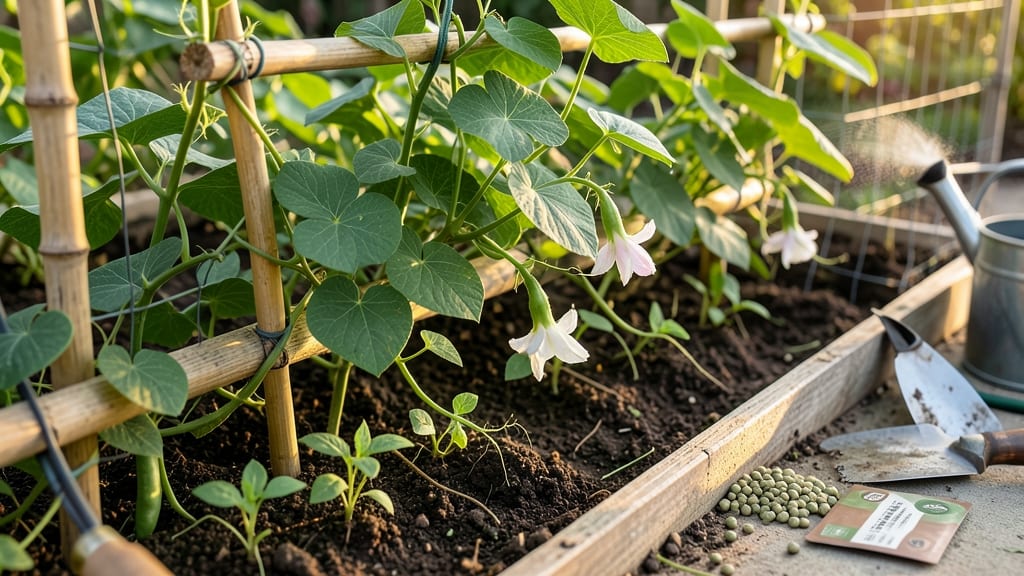
Planting sugar snap peas in a raised bed turns a small space into a sugar-sweet harvest factory—I’ve grown enough to share with neighbors using just a 4x8-foot bed and a simple trellis. The secret?
Raised beds give those vining peas the perfect head start with deep, well-draining soil and room to climb without competing with weeds or soil compaction.
Start by filling your raised bed with a mix of compost and lightweight garden soil—6-8 inches deep is ideal for snap peas, and they’ll reward you with tender pods in just 60-70 days.
Plant seeds 1 inch deep and 2 inches apart along the bed’s edge, leaving space for a trellis or sturdy stakes. The vertical growth habit means you’ll maximize every square foot while keeping the garden tidy.
What you’ll end up with is a lush, waist-high wall of peas that produces more than flat-ground planting ever could. The pods stay crisp and sweet when picked young, and the plants self-support with minimal fuss.
Plus, raised beds keep the soil warm longer in spring, giving you an earlier harvest than in-ground planting. Avoid overcrowding (thin seedlings to 3-4 inches apart) and watch for aphids—spray with soapy water if you spot them.
With proper support, your peas will climb 6-8 feet high, turning your raised bed into a vertical feast. Ready to grow?
📚 In This Guide
- What you need
- Instructions
- Tips and common mistakes
- Wrapping up and next steps
What you need
- ● Sugar snap pea seeds – Choose a variety like 'Sugar Ann' or 'Super Sugar Snap' (1–2 lbs, depending on bed size).
- ● Raised bed (minimum 12" deep) – At least 4' x 8' for optimal yield.
- ● High-quality potting soil or compost mix – Well-draining, rich in organic matter (avoid fresh manure).
- ● Vertical trellis or netting – 6–8 ft tall; options include bamboo stakes, wire mesh, or pre-made pea trellises.
- ● Garden twine or zip ties – For securing trellis to bed frame.
- ● Watering can or hose with gentle spray nozzle – Snap peas need consistent moisture.
- ○ Fertilizer (optional but helpful) – Balanced 10-10-10 or compost tea for a nutrient boost.
- ● Row covers or frost cloth – Protects young plants from pests and cold snaps.
- ● Mulch (straw or grass clippings) – Retains soil moisture and suppresses weeds.
- ● Plant markers or labels – Helps track varieties if testing multiple seeds.
- ● Hand pruners – For trimming overgrown vines (if needed).
- ● Garden journal – Log planting dates, growth progress, and harvest tips!.
Step-by-Step instructions for planting sugar snap peas in a raised bed
Here’s how I grow sweet, abundant sugar snap peas using a simple vertical trellis—no fancy equipment needed.
Prepare the Raised Bed for Peas
Start by clearing any weeds or debris from your raised bed. Sugar snap peas thrive in well-draining soil with a pH between 6.0 and 7.0, so mix in 2-3 inches of compost (like the 2 cubic feet you’ve prepped) into the top 6 inches of soil. Work it in gently—you don’t want to compact the bed, as peas have delicate roots that need room to spread.
Peas also benefit from a light application of 10-10-10 fertilizer (about 1/2 cup per 4-foot section) mixed into the soil. This gives them a nutrient boost without overwhelming them. If your bed is new, add a handful of bone meal (about 1/4 cup per 4-foot section) to encourage strong root development. Water the bed thoroughly after mixing to settle the soil and eliminate air pockets.
Install a Vertical Trellis for Support
Sugar snap peas grow best when they climb, which saves space and keeps pods off the ground. Use 4-foot tall bamboo stakes or a simple A-frame trellis (made from two stakes tied at the top with twine). Space stakes 18-24 inches apart along the length of the bed. If you’re using twine, stretch it horizontally between stakes every 6-8 inches to create a ladder-like structure for the vines to grip.
Here’s the trick: Peas don’t need heavy-duty supports. Even flexible garden twine works—just make sure it’s taut enough to hold the vines as they grow. If you’re planting in early spring, wait until the soil warms to 50°F before installing the trellis, as cold soil can slow root establishment.
Plant Seeds at the Right Depth and Spacing
Sugar snap peas should be planted 1 inch deep and 2 inches apart in rows that are 12-18 inches apart. For a 4-foot raised bed, you’ll fit about 2 rows of seeds if you space them 18 inches apart. Drop seeds into the soil, then cover lightly with a sprinkle of soil—don’t bury them too deep, or they’ll struggle to emerge.
Water gently after planting to settle the soil around the seeds. Peas need consistent moisture to germinate, so keep the soil damp (not soggy) until sprouts appear in 7-14 days. If your bed is in a windy area, consider adding row covers until the plants are 4 inches tall—this protects young seedlings from drying out.
Train Vines and Maintain Growth
Once seedlings emerge, wait until they’re 4-5 inches tall before gently weaving the vines onto the trellis. Don’t force them—let the plants climb naturally. Water at the base of the plants (not overhead) to prevent fungal diseases like powdery mildew. Aim for 1 inch of water per week, adjusting for rain.
Fertilize lightly 3 weeks after planting with a low-nitrogen, high-phosphorus fertilizer (like 5-10-10) to encourage flowering and pod production. Avoid over-fertilizing—peas fix their own nitrogen, so too much can harm the plants. Watch for yellowing leaves, which can signal overwatering or nutrient imbalance, and adjust accordingly.
Harvest for Continuous Yield
Sugar snap peas are ready to harvest when pods are 3-5 inches long and crisp but still tender. Pick them every 2-3 days to encourage more production. Use sharp scissors or pinch pods at the stem to avoid damaging the plant. The more you harvest, the longer your plants will keep producing—some varieties continue yielding for 6-8 weeks!
If pods start to bulge or turn woody, they’ve passed their prime. Remove them to redirect the plant’s energy into new growth. Mulch the base with straw or grass clippings (about 1 inch deep) to retain moisture and keep weeds at bay. With proper care, your vertical trellis will maximize space and give you a bountiful harvest without taking over your garden.
Tips & tricks for perfect vertical sugar snap pea growth
These simple tricks will help you maximize your harvest and avoid common pitfalls when growing sugar snap peas in raised beds.
Soil Preparation Secret: When mixing in compost and fertilizer in Step 1, focus on the top 6 inches of soil—this is where most of pea roots will grow. I like to use a garden fork to loosen the soil gently without compacting it, creating small air pockets that encourage root expansion. For new beds, add a thin layer of wood ash (about 1/4 cup per section) to help balance the pH naturally if your soil tests slightly acidic.
Trellis Installation Tip: In Step 2, make your trellis stakes slightly taller than the 4-foot recommendation if you have tall varieties like 'Sugar Sprint.' The extra height gives vines room to grow without tangling. For a more permanent solution, use sturdy metal T-posts instead of bamboo—these won't rot over multiple seasons and provide better support for heavy yields. Just pound them in before planting so they don't disturb roots later.
Seed Planting Strategy: For Step 3, consider planting your seeds in small furrows (about 1/2 inch deep) rather than scattering them. This makes it easier to maintain consistent spacing and depth. I like to use a stick or small trowel to create these furrows—it's faster than planting individually and gives you more control. After planting, gently press the soil around seeds with your fingers to ensure good seed-to-soil contact, which helps with germination.
Harvesting Technique: When harvesting in Step 5, always pick pods in the morning when they're crispest. Use clean, sharp scissors to snip pods at the stem rather than pulling them—this prevents damage to the vine and encourages more production. I also recommend harvesting every 2-3 days during peak production to maintain plant health and flavor. If you notice pods starting to bulge or turn yellow, remove them immediately to redirect the plant's energy to new growth.
Pro Tips for Plant Sugar Snap Peas In A Raised Bed
- These simple tricks will help you maximize your harvest and avoid common pitfalls when growing sugar snap peas in raised beds.
- Soil Preparation Secret: When mixing in compost and fertilizer in Step 1, focus on the top 6 inches of soil—this is where most of pea roots will grow.
- Trellis Installation Tip: In Step 2, make your trellis stakes slightly taller than the 4-foot recommendation if you have tall varieties like 'Sugar Sprint.'
Frequently asked questions
Got questions about growing sugar snap peas in a raised bed?
You’re not alone! Here are some of the most common queries—and quick, actionable answers to help you grow like a pro.
When is the best time to plant sugar snap peas in a raised bed?
Sugar snap peas thrive in cool weather, so aim to plant them 4–6 weeks before your last expected frost in spring. For a fall harvest, sow seeds 8–10 weeks before the first frost. Avoid planting when soil temps exceed 80°F (27°C)—they’ll bolt (flower too fast) and produce bitter pods.
How long does it take for sugar snap peas to grow in a raised bed?
From seed to harvest, sugar snap peas typically take 60–70 days, depending on the variety. With a trellis, they’ll grow faster and straighter, producing pods in as little as 50 days under ideal conditions. Check seed packets for specific maturity times—some varieties are quicker than others!
What should I do if my sugar snap peas get pests like aphids or powdery mildew?
Start with prevention: Space plants properly (2–3 inches apart) for airflow, and use row covers early on to deter pests. For aphids, blast them off with water or introduce ladybugs. Powdery mildew? Avoid overhead watering and treat with a baking soda spray (1 tsp baking soda + 1 quart water + a drop of dish soap).
Can I grow sugar snap peas without a trellis in a raised bed?
Yes, but yields will be smaller and messier. Peas sprawl naturally, so without support, they’ll sprawl across the bed, competing for sunlight and making harvests harder. If you skip the trellis, opt for bush varieties (like ‘Sugar Sprint’) or grow them in a wide, shallow trench with a low wire frame.
What can I plant after sugar snap peas in a raised bed?
Sugar snap peas are light feeders, so they leave nutrients in the soil. Follow them with heavy feeders like tomatoes, peppers, or squash, or nitrogen-lovers such as corn or beans. Avoid planting other legumes (like peas or beans) in the same spot next year to prevent soil-borne diseases.
Wrapping up and next steps
Planting sugar snap peas in a raised bed is a rewarding way to grow a sweet, productive crop with minimal space!
By following these steps—from soil prep to trellising—you’ll enjoy a bountiful harvest in just 60-70 days. 🌱✨ Whether you’re a beginner or a seasoned gardener, this vertical trick maximizes yield while keeping your garden tidy and organized.
Now that you’re ready to plant, take the next step: mark your calendar for harvest time and start planning delicious recipes—think fresh salads, stir-fries, or even homemade hummus! Happy gardening! 🥕💚