
Planting
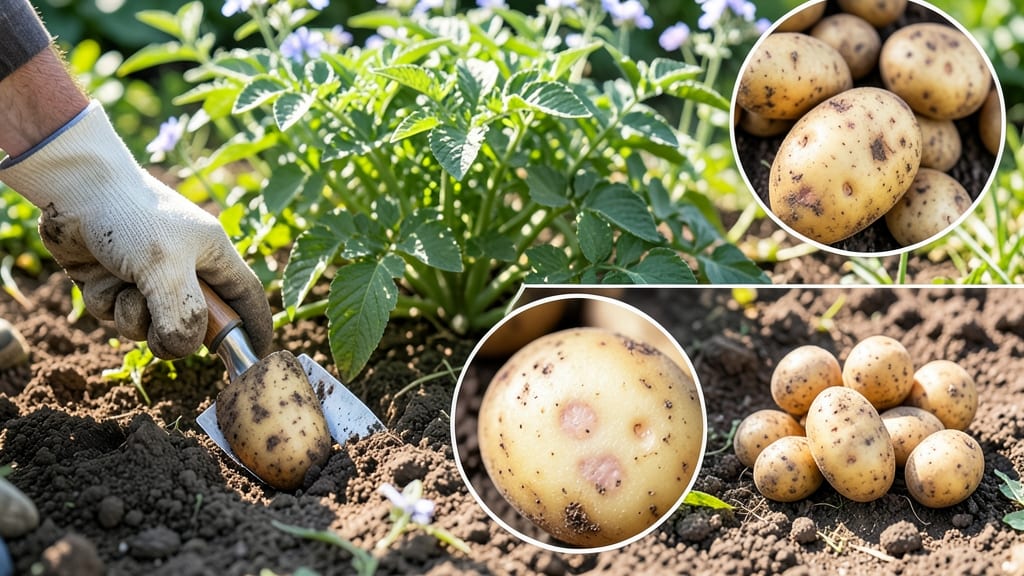
Lenticels on potatoes are those tiny raised bumps on the skin that help the tuber breathe, letting air and moisture pass through. While completely safe to eat, they can turn bitter when cooked improperly, especially during frying or slow roasting.
These tiny pores are actually clusters of cork cells that form during the potato's growth to regulate gas exchange. 🌱 Their size and color—ranging from pale yellow to brown—vary by variety (like Russets having more pronounced ones) and growing conditions.
The key to avoiding bitterness is proper prep: scrubbing instead of peeling preserves texture while removing surface dirt that might intensify flavors during cooking.
For deep-frying or crisping, I recommend parboiling potatoes first to soften them before frying—this helps prevent the lenticels from absorbing too much oil and developing that unwanted bitter edge.
Roasting at 400°F with olive oil and a sprinkle of salt works wonders too, as the high heat caramelizes the natural sugars while keeping the lenticels from overcooking.
💡 In This Article
- What Are Potato Lenticels and Their Growth Process
- Cooking Potatoes with Lenticels: Best Practices to Avoid Bitterness
What are potato lenticels and their growth process
Potato lenticels form during the tuber's development as specialized clusters of cork cells that break through the skin. These tiny pores, typically 0.5-2 millimeters wide, serve as the potato's respiratory system, allowing oxygen and carbon dioxide to pass through while regulating moisture loss.
The process begins when the potato's epidermis (outer skin layer) encounters environmental stress, triggering cork cell formation to create these breathing spots.
The appearance of lenticels varies dramatically based on potato variety and growing conditions. Russet potatoes, for example, develop larger, more pronounced lenticels due to their thicker skins and slower growth rates, while red potatoes have smaller, less noticeable ones.
Color differences—ranging from pale yellow to deep brown—stem from melanin production, which increases with sun exposure during growth. 🌱 In organic farming, lenticels may appear more developed due to the plant's natural stress responses to varying moisture levels.
What's fascinating is how these lenticels function like microscopic valves. When potatoes are stored in humid environments, the lenticels swell to retain moisture, while dry conditions cause them to shrink.
This dynamic process explains why potatoes stored in cool, dark places with 85-90% humidity maintain their freshness longer—the lenticels stay closed, minimizing moisture loss. The trade-off? In dry conditions, the lenticels open wider, which is why potatoes left out too long develop shriveling or wrinkled skin.
Scientifically, lenticels contain higher concentrations of phenolic compounds than the surrounding skin tissue. These compounds are natural defense mechanisms against pathogens, but they also contribute to that bitter taste when overcooked. During frying or roasting, the heat breaks down these compounds, releasing bitter-tasting byproducts.
This is why high-heat cooking methods require extra care—especially with varieties like Yukon Golds, which have higher phenolic content in their lenticels.
Consider this comparison: A Russet potato's lenticels might cover 10-15% of its surface area, while a fingerling potato's lenticels are sparse and tiny. This structural difference explains why Russets develop more pronounced bitterness when fried compared to fingerlings.
The larger surface area means more phenolic compounds are exposed to heat during cooking. 🔥
Interestingly, lenticels also play a role in potato sprouting. As a potato begins to sprout, the lenticels become the primary sites for new growth, often appearing as tiny green shoots emerging from these breathing pores.
This is nature's way of ensuring the plant can continue its life cycle even from a stored tuber.