
Planting
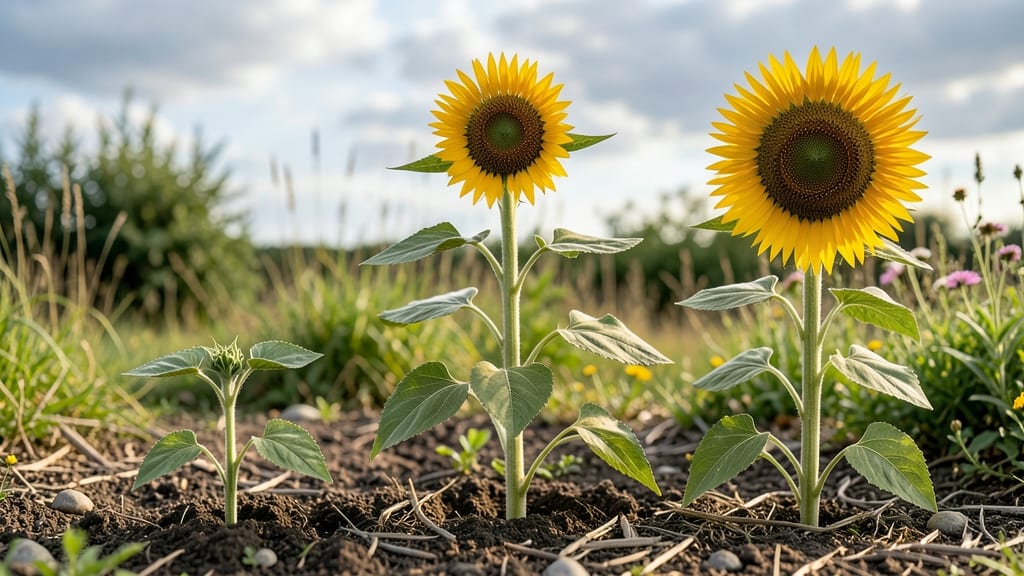
The life of a sunflower plant spans 80–120 days, progressing from germination to seed production, with key stages including seedling sprouting, vegetative growth, bud formation, flowering, and eventual seed maturation before natural decline. Proper sunlight and soil support each phase.
Sunflowers are one of nature's fastest growers, transforming from tiny seeds into towering giants in just a few months. 🌻 The magic happens in their rapid growth cycle—starting with a sprout that emerges within 7–14 days, followed by a stem that can grow up to 4 inches per day during peak season.
Each stage depends heavily on sunlight exposure, with at least 6–8 hours of direct sun daily being critical for healthy development. What's fascinating is how the plant's energy shifts: early growth focuses on building the stem and leaves, while later stages divert all resources to flower and seed production.
While the average lifespan is 80–120 days, factors like soil quality, water consistency, and temperature variations can accelerate or slow this timeline. For example, plants in warmer climates often mature faster, while cooler conditions may extend the flowering period.
The key to maximizing their potential lies in understanding these growth patterns—whether you're growing them for their striking blooms or harvesting seeds for next year's crop.
💡 In This Article
- Sunflower Growth Stages: Developmental Timeline Explained
- Optimizing Sunflower Plant Lifespan Through Gardening
Sunflower growth stages: developmental timeline explained
The sunflower's journey begins with germination, where the seed absorbs moisture and swells within 24–48 hours before breaking through the soil. During this phase, the seedling emerges with two cotyledons (seed leaves) that unfold to capture sunlight for photosynthesis.
What's remarkable is how quickly this stage progresses—under ideal conditions (warm 70–75°F soil and consistent moisture), the first true leaves appear in just 7–14 days. These early leaves are crucial as they establish the plant's energy reserves for future growth.
Next comes vegetative growth, where the plant focuses on building its structural framework. This stage lasts 3–4 weeks and is marked by rapid stem elongation that can reach 4 inches per day during peak growth.
The plant develops its characteristic rosette pattern of leaves arranged spirally around the stem, following the Fibonacci sequence for optimal sunlight exposure. This phase demands 6–8 hours of direct sunlight daily—any less and the stem becomes weak and leggy, unable to support the eventual flower head.
The transition to bud formation occurs when the plant diverts energy from leaf production to flower development. You'll notice the stem thicken and a 1–2 inch bud appear at the top, protected by bracts that resemble small leaves.
This stage typically lasts 2–3 weeks and is when the plant's height stabilizes—most varieties reach their maximum height of 6–12 feet during this period. The bud's rapid expansion requires increased water and nutrient intake, particularly potassium and phosphorus for flower development.
Flowering represents the sunflower's most dramatic transformation, with the bud opening fully in 1–2 days to reveal the iconic yellow petals surrounding the dark central disk. This reproductive phase lasts 10–14 days and is when the plant's energy shifts entirely to seed production.
The disk flowers at the center begin pollinating within hours of opening, with bees and other pollinators playing a crucial role in transferring pollen. What's fascinating is how the outer petals track the sun (heliotropism) during this phase, maximizing energy absorption for seed development.
Finally, the seed maturation stage begins when the petals wilt and fall away, leaving the seed head to dry. This process takes 4–6 weeks, during which the seeds develop their characteristic striped patterns and hard outer shells.
The plant's leaves begin yellowing as nutrients are redirected to the seeds, a natural decline known as senescence. At this point, the plant has fulfilled its lifecycle, though the seeds remain viable for future planting if harvested and stored properly in cool, dry conditions.
Understanding these stages helps explain why sunflowers grow so rapidly—they've evolved to maximize their reproductive cycle during short growing seasons. Each phase requires specific environmental conditions, from the warm soil needed for germination to the full sunlight required for flowering.
When these factors align, you'll witness nature's incredible growth engine in action. 🌟