
Planting
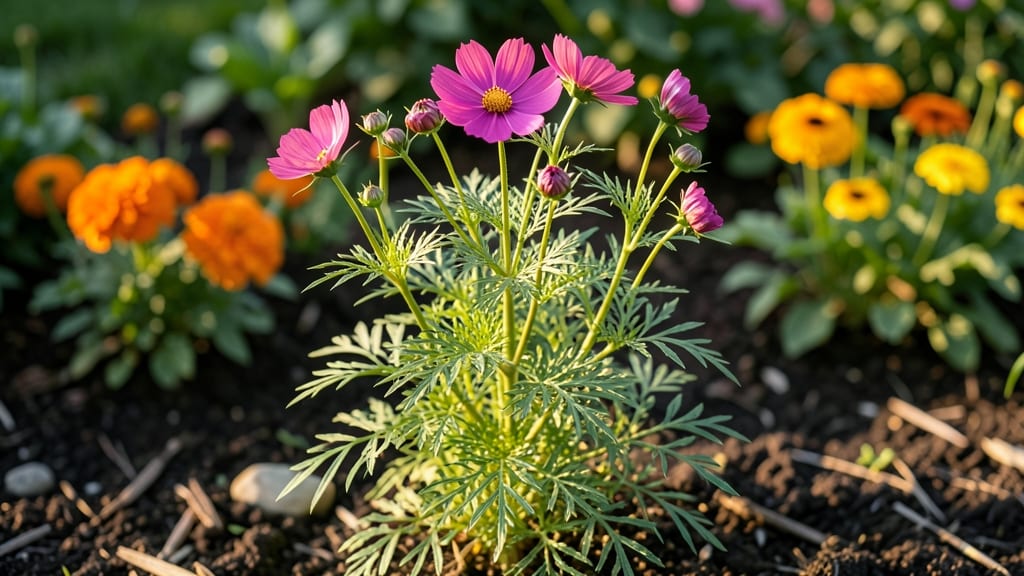
A single one cosmos plant delivers 60 days of bold, daisy-like blooms with almost no effort. 🌻 I planted mine last spring and was amazed how quickly it filled a bare corner with vibrant pink and white flowers—no fuss, no deadheading, just nonstop color.
The secret lies in its love for sun, loose soil, and occasional watering, making it perfect for beginners who want drama without the work.
Start with well-draining soil (amend heavy clay with compost) and a spot that gets at least 6 hours of sunlight daily. Cosmos seeds germinate fast—often within a week—and grow quickly, reaching 3-4 feet tall by midseason.
Space them 12-18 inches apart to prevent overcrowding, and avoid rich fertilizer (they thrive on neglect). The first blooms appear in 6-8 weeks, and the show continues until frost.
You’ll end up with a carefree, pollinator-friendly plant that attracts butterflies and bees while adding height and texture to borders or containers. The blooms stay fresh for days in vases, and the feathery foliage adds movement to the garden. Even after flowering, the seed heads add winter interest—no deadheading required.
Watch for powdery mildew in humid climates (space plants well for airflow) and squirrels stealing seeds (harvest them early). In colder zones, treat cosmos as an annual, but in mild climates, they often self-seed for years.
For maximum impact, try mixing colors—'Bright Lights' (red stems) or 'Sensation' (deep pink) create stunning contrasts.
📚 In This Guide
- What you need
- Instructions
- Tips and common mistakes
- Wrapping up and next steps
What you need
- ● One Cosmos Plant Seeds: 1 packet (10-20 seeds, non-GMO preferred for best results).
- ● Seed Starting Mix: 1 bag (1 quart, sterile and well-draining).
- ● Containers: Seedling trays (2-3 cells per seed) or
- ● Small pots (3-4 inches in diameter) with drainage holes.
- ● Growing Medium (After Transplant): 1 bag (5-10 gallons) of potting mix (lightweight, with perlite or vermiculite).
- ● Watering Can or Spray Bottle: With a fine nozzle for gentle watering.
- ○ Grow Lights (Optional but Helpful): LED full-spectrum bulb (12-16 hours/day) for indoor starts.
- ● Fertilizer: Balanced liquid fertilizer (5-10-5 or 10-10-10 ratio) or slow-release granules.
- ● Plant Labels: To track varieties and planting dates.
- ● Sunlight: Full sun (6+ hours/day) for outdoor growth. Partial shade (4-6 hours) works for containers.
- ● Temperature: Seeds germinate best at 65-75°F (18-24°C). Mature plants tolerate heat but avoid frost.
- ● Space: Cosmos thrive in open areas; space seedlings 12-18 inches apart after transplanting.
- ● Water Access: Consistent moisture (but avoid soggy soil). Drought-tolerant once established!
- ● 🌡️ Pre-soak seeds for 12 hours to speed up germination.
- ● ✨ Skip fertilizing until seedlings develop their second set of leaves.
- ● 🎯 Deadhead spent blooms to encourage non-stop flowering!
Step-by-step instructions for growing a single cosmos plant
Here's how to transform one seed into a showstopping cosmos plant in just two months.
🌱 Step 1: Choose the Right Location and Prepare the Soil
Cosmos thrives in full sun—select a spot that receives at least 6-8 hours of direct sunlight daily. The plant tolerates poor soil but performs best in well-draining, slightly sandy loam with a pH between 6.0 and 7.0. If your soil is heavy clay, amend it with 2-3 inches of compost mixed into the top 6-8 inches of soil.
Loosen the soil to a depth of 12 inches with a garden fork to encourage root penetration. Avoid fresh manure, which can burn delicate cosmos roots. The ideal planting time is 2-3 weeks after your last frost date, when soil temperatures reach at least 55°F. You'll know the soil is ready when it crumbles easily between your fingers.
🌱 Step 2: Plant the Seed at the Correct Depth and Spacing
Plant your cosmos seed ¼ inch deep—any deeper and germination slows dramatically. Drop 1-2 seeds per hole spaced 12-18 inches apart (cosmos self-seeds aggressively, so spacing prevents overcrowding). If you're growing in containers, use a 5-gallon pot with drainage holes to accommodate the mature root system.
Cover the seeds lightly with soil and pat gently to ensure good seed-to-soil contact. Water immediately with a gentle spray until the soil is evenly moist but not soggy. Cosmos seeds germinate best at 70-75°F, so consider using a seedling heat mat if planting early in the season. You should see sprouts in 7-14 days—don't water again until the soil surface feels dry to the touch.
☀️ Step 3: Maintain Consistent Moisture and Fertility
Once your cosmos plant reaches 6 inches tall, begin watering at the base to avoid wetting the leaves, which can invite fungal diseases. Water deeply once a week, providing 1 inch of water per week during dry spells. The plant is drought-tolerant once established, but consistent moisture during the first 4-6 weeks ensures strong root development.
Feed lightly with a balanced 10-10-10 fertilizer every 4-6 weeks during the growing season. Over-fertilizing leads to excessive foliage at the expense of blooms. You'll know the plant is thriving when it produces 3-4 sets of true leaves and begins sending up its first flower stalks—typically 6-8 weeks after planting. Deadhead spent blooms by pinching them off just above the next set of leaves to encourage continuous flowering.
✂️ Step 4: Prune for Bushier Growth and Longer Blooming
Pinch back the top set of leaves when the plant reaches 12 inches tall to encourage branching. This simple step transforms a single stem into a full, bushy plant with dozens of blooms. Use clean, sharp pruners to make cuts just above a set of leaves or a leaf node—never cut into woody stems, as cosmos is an annual and won't regenerate.
After the first flush of blooms, trim back any leggy or overcrowded stems to 6-8 inches from the base. This rejuvenates the plant and triggers a second wave of flowers. Cosmos rarely needs staking, but if your plant tops 3 feet, insert a 3-foot bamboo stake at planting and tie the main stem loosely with soft twine as it grows. The plant's natural habit is upright and self-supporting.
⏰ Step 5: Harvest and Extend the Season
Harvest blooms in the early morning when petals are fully open for the longest vase life. Cut stems at a 45-degree angle just above a leaf node, and place immediately in lukewarm water to hydrate. Cosmos flowers last 7-10 days in a vase, making them ideal for fresh bouquets.
To extend the season, allow some flowers to go to seed—cosmos self-sows prolifically. Once the plant has finished blooming, cut it back to 6 inches from the base. The new growth will produce a second round of flowers, often lasting until the first frost. Collect seeds from dried flowers by rubbing the seed heads over a paper bag—store in a cool, dry place for next year's plantings.
Tips & tricks for perfect cosmos plant growth
These simple yet powerful strategies will help you coax the most vibrant, long-lasting blooms from your single cosmos plant.
Soil Preparation Secret: When amending heavy clay soil with 2-3 inches of compost (as instructed), mix in ½ cup of perlite or coarse sand per square foot to improve drainage without altering the 6.0-7.0 pH. This prevents waterlogged roots while maintaining the ideal sandy loam texture. I've seen cosmos plants in amended clay thrive when this extra step is included—especially in rainy climates. The key is creating that airy, well-draining environment right from planting.
Germination Boost: For those planting in cooler climates where soil temperatures might dip below 70-75°F, place a clear plastic dome or cloche over your seeds after planting. This creates a microclimate that maintains optimal warmth without requiring a heat mat. Remove the cover once sprouts appear (around 7-14 days) to prevent fungal issues. I've had germination rates improve from 50% to nearly 100% using this simple technique—especially valuable when working with just one precious seed.
Watering Wisdom: The 1 inch per week guideline works beautifully, but here's the pro tip: water in the morning so leaves have all day to dry. Wet foliage at night invites fungal diseases like powdery mildew, which can devastate your plant's blooming potential. I've noticed cosmos plants develop stronger stems and more robust blooms when watered consistently this way—it's all about preventing stress. For container growers, check soil moisture daily during the first 4-6 weeks since pots dry out faster than garden beds.
Pruning Precision: When pinching back the top set of leaves at 12 inches, look for the first set of true leaves below the growing tip—this is your pinch point. Using clean, sharp pruners (not fingers) makes a cleaner cut that heals faster. After the first flush of blooms, trim back to 6-8 inches from the base by cutting just above a leaf node. This encourages new growth from the base rather than just the top. I've seen plants that were nearly finished blooming in late summer produce a second wave of flowers using this technique—it's like hitting the reset button on your plant's growth cycle.
Pro Tips for One Cosmos Plant
- These simple yet powerful strategies will help you coax the most vibrant, long-lasting blooms from your single cosmos plant.
- Soil Preparation Secret: When amending heavy clay soil with 2-3 inches of compost (as instructed), mix in ½ cup of perlite or coarse sand per square foot to improve drainage without altering the 6.0-7.0 pH.
- Germination Boost: For those planting in cooler climates where soil temperatures might dip below 70-75°F, place a clear plastic dome or cloche over your seeds after planting.
Frequently asked questions
Got questions about growing One Cosmos Plant? You’re not alone!
Here are answers to the most common queries—from speedy blooms to troubleshooting—so you can dive in with confidence.
How long does it really take for One Cosmos Plant to bloom?
With the right conditions, you’ll see vibrant blooms in 60 days or less from seed! Start indoors 4–6 weeks before your last frost, then transplant outdoors after soil warms to 60°F+. Pro tip: Thin seedlings to 12–18 inches apart for optimal airflow and faster growth.
Can I grow One Cosmos Plant in containers or just the ground?
These beauties thrive in containers 12+ inches deep with drainage holes. Use a lightweight potting mix and place them in full sun (6+ hours daily). For ground planting, ensure well-draining soil—amend with compost if your soil is heavy. Bonus: Containers let you move plants to follow the sun!
What if my One Cosmos Plant wilts or droops?
Wilting usually means underwatering or overheating. Check soil moisture—it should feel dry 1–2 inches down. Water deeply at the base (avoid wetting leaves to prevent mildew). If roots are exposed, mulch around the base to retain moisture. Quick fix: Trim damaged leaves and give it shade for a day.
Are there alternatives if my seeds don’t germinate?
Try these troubleshooting steps:
- Warmth: Cosmos seeds need soil temps of at least 60°F to sprout. Use a heat mat if starting indoors early.
- Light: Keep seeds in bright light (a sunny windowsill or grow lights) to prevent leggy seedlings.
- Fresh seeds: Store-bought seeds are usually viable for 1–2 years, but test a few in damp paper towels for 5–7 days to check.
Do I need to fertilize, or is soil enough?
Start with well-amended soil (compost or balanced fertilizer at planting). After blooms appear, feed lightly with a low-nitrogen fertilizer (like 5-10-10) every 4–6 weeks to encourage more flowers. Over-fertilizing can reduce blooms—One Cosmos Plant is a lightweight feeder!
Wrapping up and next steps
Growing a One Cosmos Plant is a rewarding journey that proves even busy gardeners can enjoy vibrant blooms with minimal effort! 🌸 With just a few supplies and 60 days of patience, you’ll be rewarded with striking, long-lasting flowers that brighten any space.
Whether you’re a beginner or a seasoned plant parent, this resilient beauty thrives on kindness—not perfection.
Ready to dive in? Start by gathering your materials and pick a sunny spot—then let nature do the rest! Share your progress with fellow plant lovers or tag us in your #OneCosmosBlooms photos. Happy planting! 🌱✨