
Planting
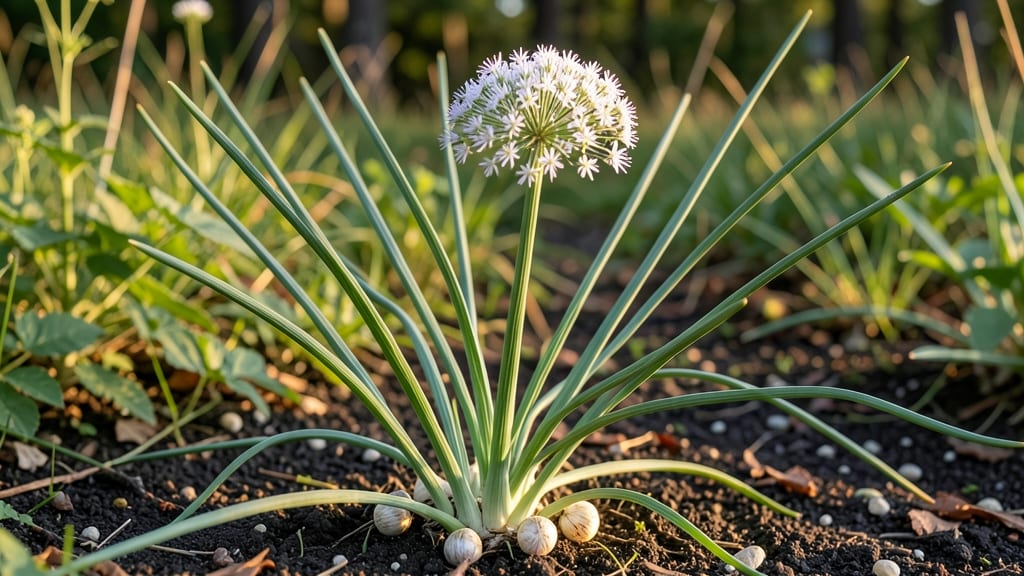
That onion-looking weed could be stealing nutrients from your actual onions. 🌱 I’ve spent years pulling these sneaky lookalikes from my garden—some smell like onions, others don’t—and the difference isn’t always obvious.
The key is learning their secrets: the shape of their leaves, their growth pattern, and whether they’ve already sent up those telltale flower stalks.
Wild onions and garlic mustard are the usual culprits, but there are others too. The first clue? Real onions grow in clusters, while weeds often pop up alone or in scattered patches. Crush a leaf between your fingers—if it smells strongly of onions or garlic, you’ve got a weed.
If it’s mild or absent, it’s likely a true onion. This trick saves hours of digging up the wrong plants.
Once you spot them, removal is simple but must be thorough. Pull weeds when the soil is moist, and dig deep to get the entire root system—those bulblets can regrow if even a sliver remains.
For stubborn patches, smother with cardboard or mulch to block sunlight. Within weeks, your garden will look cleaner, and your onions will thrive without competition.
Prevention starts with testing soil pH—weeds often love the same conditions as your crops. Plant onions in well-drained soil with plenty of compost, and consider companion planting with chives or leeks to naturally deter lookalikes. A quick weekly check keeps these impostors from taking over before they even start.
Root Causes Of Bulbous Growth
If your cannabis plants are sprouting thick, layered stems that resemble onions, you’re not alone—this is a common issue for growers. Understanding the why behind this deformity is the first step to preventing it. Below, we break down the science-backed reasons your plants might be developing that telltale onion-like structure.
Nitrogen is the building block of lush foliage, but when it’s overapplied—especially in vegetative growth—your plant may overproduce stems and leaves at the expense of proper branching. This leads to thick, layered stems that resemble an onion bulb.
Why it happens:
- Excess nitrogen promotes rapid cell division in stems, causing them to swell and layer.
- Plants may also starve for phosphorus and potassium, which are critical for root and flower development, further skewing growth patterns.
- If your nutrient solution is too strong (especially in early growth stages), the plant prioritizes vertical expansion over healthy branching.
Actionable fix: Flush your soil with pH-balanced water (6.0–7.0) and switch to a balanced nutrient ratio (e.g., 5-5-5 or 3-4-6) for the next two weeks. Monitor leaf color—dark green with purple stems? You’re likely overfeeding nitrogen.
When roots sit in soggy soil, they struggle to absorb nutrients efficiently. As a survival mechanism, your plant may redirect energy into producing thick, water-storing stems—mimicking the way onions store nutrients in their layers.
Why it happens:
- Waterlogged roots can’t uptake nutrients properly, forcing the plant to compensate by thickening stems to store reserves.
- Compacted or non-porous soil traps excess moisture, creating anaerobic conditions that stunt root growth.
- Overhead watering can also cause stems to swell as they absorb excess water, leading to that bulbous appearance.
Actionable fix:
- Let the top 1–2 inches of soil dry out between waterings (stick your finger in to test).
- Amend heavy clay soil with perlite or coco coir to improve drainage.
- Use a moisture meter or bottom-watering technique to avoid soggy roots.
Extreme heat or inconsistent light cycles can disrupt a plant’s natural growth hormones, leading to abnormal stem thickening. Think of it like a plant trying to "bulk up" to survive stress—similar to how onions develop protective layers in harsh conditions.
Why it happens:
- High daytime temps (above 85°F) or nighttime temps (below 60°F) can cause hormonal imbalances, triggering excessive stem growth.
- Inconsistent light (e.g., long vegetative cycles or weak grow lights) confuses the plant, leading to compensatory thickening.
- Heat stress also reduces chlorophyll production, making leaves smaller and stems thicker as the plant focuses on survival.
Actionable fix:
- Keep temps between 70–85°F (day) and 60–70°F (night) with fans or AC units.
- Ensure your grow lights are 18–24 inches from plants and run on a 18/6 light cycle (vegetative) or 12/12 (flowering).
- Use reflective surfaces (like Mylar) to distribute light evenly and prevent hot spots.
Some cannabis strains are naturally prone to thick stems, while others develop onion-like growth due to aggressive pruning or topping techniques. If you’ve noticed this trait in multiple plants from the same seeds, genetics might be to blame.
Why it happens:
- Certain sativa-dominant or hybrid strains (e.g., some Afghani or Northern Lights crosses) are bred for dense, layered growth, which can resemble onions.
- Over-pruning or topping too early forces the plant to produce multiple thick stems in an attempt to maximize canopy size.
- Severing the main cola too aggressively can trigger apical dominance loss, leading to bushy, bulbous growth patterns.
Actionable fix:
- If genetics are the issue, consider low-stress training (LST) to guide growth rather than forcing thick stems.
- Avoid topping before the 5th–7th node—wait until the plant is established.
- Use FIMing (fuck, I missed) or super cropping to control stem thickness without causing stress.
💡 Pro Tip: Keep a grow journal to track nutrient doses, watering schedules, and pruning techniques. If onion-like growth recurs, you’ll quickly spot the pattern!
Fixing Onion-Looking Weed Fast
Now that you’ve identified the culprit behind your onion-like weed (likely crowding, poor soil, or overwatering), it’s time to take action! The good news? Most fixes are simple, cost-effective, and can restore your garden’s health in no time.
Below, we’ve broken down solutions by root cause—plus prevention tips to keep your plants thriving.
If your garden looks like a weed jungle because plants are competing for space, it’s time to thin out the chaos.
🔥 Step 1: Identify & Remove Weak Plants
- 👨🍳 Pull by hand (best for small weeds or seedlings). Grip the base and tug gently—avoid yanking, which can damage roots.
- ✂️ Use pruners or shears for stubborn weeds with deep roots.
Cut at the soil line to prevent regrowth. - 🗑️ Dispose properly: Don’t compost weeds if they’re diseased (like onion-looking allium mildew or fungus). Toss them in the trash instead.
🌡️ Step 2: Space Remaining Plants Correctly
Refer to seed packet guidelines or plant tags for ideal spacing. For example:
- Onions/garlic: 4–6 inches apart
- Herbs (like chives or cilantro): 6–12 inches apart
- Vegetables (tomatoes, peppers): 18–24 inches apart
✨ Pro Tip: Mulch to Prevent Regrowth
Apply 2–3 inches of organic mulch (straw, shredded leaves, or grass clippings) to block sunlight from weed seeds. This also retains moisture and suppresses future sprouts!
If your soil is compacted, lacking nutrients, or too acidic, your plants will struggle—and weeds will take over.
🔥 Step 1: Test Your Soil
- DIY test: Grab a handful of damp soil and squeeze. If it forms a hard clump, it’s too compacted.
If it crumbles easily, it’s likely dry. - 📊 Buy a soil test kit (or send a sample to a local extension office) for pH and nutrient levels. Ideal pH for most veggies: 6.0–7.0.
🍳 Step 2: Amend the Soil
| Problem | Solution |
|---|---|
| Compacted soil | Mix in compost or aged manure (2–3 inches deep). Loosen with a garden fork. |
| Low nitrogen | Add blood meal, fish emulsion, or coffee grounds (rich in nitrogen). |
| Too acidic | Sprinkle lime (calcium carbonate) to raise pH. |
| Too alkaline | Work in sulfur or peat moss to lower pH. |
🌱 Step 3: Plant Deep-Rooted Cover Crops
Before replanting, sow clover, vetch, or winter rye to:
- Break up compacted soil with their roots.
- Add organic matter when tilled back into the soil.
- Suppress weeds naturally.
If your plants look mushy, yellow, or have a foul smell, overwatering (or poor drainage) is likely the issue.
🔥 Step 1: Check Drainage
- Dig a small hole (6 inches deep) and fill it with water. If it drains in under 4 hours, your soil is fine.
If water pools after 6+ hours, amend with: - Sand or perlite (for sandy soil). - Compost or coconut coir (for clay-heavy soil).
👨🍳 Step 2: Adjust Watering Habits
- Water deeply but less often: Aim for 1 inch per week (including rain).
Use a soaker hose or drip irrigation to target roots. - Water in the morning to reduce fungal growth (like onion-looking downy mildew). - Avoid wetting foliage—use a watering wand for precision.
🔪 Step 3: Remove Affected Plants
If roots are black, mushy, or smelly, the plant is likely beyond saving. Pull it out and:
- Disinfect tools with rubbing alcohol between plants.
- Replace soil in the hole with fresh, amended mix before replanting.
Once you’ve fixed the problem, keep it from happening again with these low-effort strategies:
💡 Start with Healthy Soil
- Add compost every season (even a thin layer helps).
- Rotate crops yearly to prevent nutrient depletion and disease buildup.
🌡️ Use Natural Weed Barriers
- Cardboard or newspaper: Lay down 2–3 layers under mulch to block weed seeds.
- Landscape fabric: Poke holes for plants, but remove fabric after 1–2 years to avoid soil smothering.
🎯 Plant Competitive Ground Covers
- Clover or creeping thyme between rows to outcompete weeds for sunlight.
- Living mulches like buckwheat (fast-growing and edible!).
✨ Stay Vigilant (But Not Obsessive!)
- Weed for 10 minutes daily—it’s easier than a weekly hour-long session.
- Hand-pull weeds when soil is moist (they come out cleaner).
- Boil water (not vinegar—it can harm plants) on stubborn weeds like onion-looking grass or chickweed.
Onion-looking weeds are usually a quick fix—whether it’s thinning plants, amending soil, or adjusting water. Act fast, and your garden will bounce back stronger.
And remember: Prevention is your best tool! With the right habits, you’ll spend less time pulling weeds and more time enjoying your harvest. 🌿💪
Frequently asked questions
How do I tell if my onion-looking weed is actually a wild onion or garlic?
Crush a leaf between your fingers—if it smells strongly of onions or garlic, it’s likely a wild variety. Real onions grow in clusters, while weeds often appear alone or in scattered patches. Also check the base: wild onions have small bulblets, while garlic has a single, larger bulb.
Are onion-looking weeds harmful to my garden?
Most are harmless, but some (like garlic mustard) can spread aggressively and outcompete your plants for nutrients. If they’re taking over, remove them promptly—especially before they flower and seed. Always wear gloves, as some wild onions can irritate skin.
What’s the best way to remove onion-looking weeds permanently?
Pull them when the soil is moist to avoid breaking roots, then dig deep to remove any bulblets. For stubborn patches, smother with 2–3 inches of mulch (straw or cardboard) to block sunlight. Repeat weekly until no new shoots appear.
Will vinegar or boiling water kill onion-looking weeds?
Yes! Vinegar (with 10–20% acetic acid) or boiling water works well, but be cautious—it can also harm nearby plants. For spot treatment, apply vinegar directly to weeds on a dry, sunny day. Boiling water is gentler but requires more frequent reapplication.
Can I compost onion-looking weeds?
Only if they’re disease-free and haven’t seeded. Bag them first to prevent spread, then add to your compost pile. If they’re diseased (like with fungal spots), toss them in the trash instead—composting can spread pathogens back to your garden.