
Planting
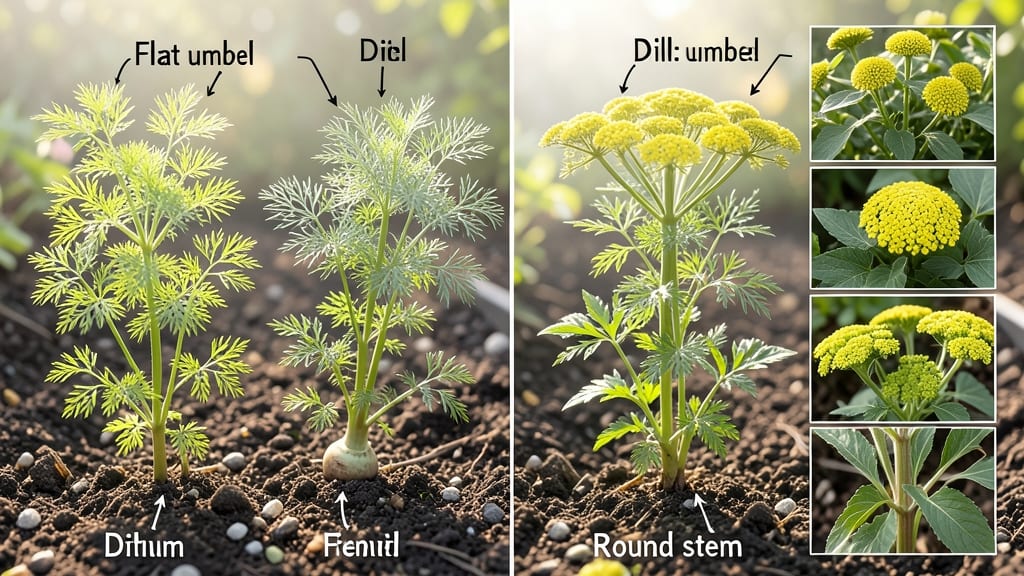
Plant how to identify dill vs fennel starts with their leaves—one is feathery and delicate, the other bold and frilly. 🌿 I’ve spent years confusing the two until I learned the key differences: dill’s leaves look like fern fronds, while fennel’s resemble flat, almost lace-like feathers. The stems and flowers reveal even more secrets, and once you know these tricks, you’ll never mix them up again in your garden.
Dill’s leaves grow in soft, airy clusters that spread outward like a bird’s wing, while fennel’s leaves are broader, almost like a flat hand with long fingers. The stems make it even clearer—dill’s are hollow and slender, while fennel’s are thicker and slightly woody.
And if you crush the leaves, dill smells like a classic pickle jar, while fennel has a sweeter, almost licorice-like scent that lingers.
When it comes to flowers, dill blooms in small, flat clusters of tiny yellow umbels, while fennel’s flowers are larger and more dramatic, often with a purple tinge. The seeds are another giveaway: dill’s are tiny and oval, while fennel’s are elongated and ribbed.
Once you spot these differences, you’ll harvest the right plant every time—no more accidental fennel in your pickles or dill mistaken for oregano.
This knowledge isn’t just for avoiding mistakes—it’s the key to growing what you actually want. Whether you’re saving seeds, making herb blends, or just keeping your garden organized, these visual cues will help you cultivate with confidence.
No more guesswork, just clear, reliable identification every time you step into your garden.
The first product explained
If you're ready to master the art of distinguishing dill from fennel with ease, the Botanical ID Kit: Dill & Fennel Edition is your go-to tool! 🌿🔍 Designed for gardeners, chefs, and plant enthusiasts, this kit is packed with everything you need to confidently identify these two aromatic herbs—even when their leaves look eerily similar.
📏 Specs & Features
- Dual-Lens Magnifier: A precision 10x magnifier with LED lighting to examine leaf veins, edges, and textures up close.
- Comparison Guide Card: A laminated, waterproof card featuring side-by-side images of dill and fennel leaves, stems, and flowers—plus key differences highlighted in bold.
- Field Notebook: A durable, pocket-sized notebook with pre-printed charts to log your observations (great for tracking growth patterns!).
- Portable Storage Pouch: Compact and lightweight, with a carabiner clip for easy attachment to your gardening belt or backpack.
- Eco-Friendly Materials: Made from recycled plastic and biodegradable components—because sustainability matters!
🎯 Target Users
This kit is perfect for:
- Home Gardeners: Avoid mix-ups in your herb garden and ensure you’re harvesting the right plant for your recipes.
- Chefs & Home Cooks: Dill and fennel add unique flavors—knowing the difference means perfecting dishes like dill pickles or fennel sausage.
- Foraging Enthusiasts: Safely identify wild dill and fennel while exploring nature.
- Plant Teachers & Students: Ideal for horticulture classes or DIY plant-identification projects.
💰 Price Point & Value
The Botanical ID Kit: Dill & Fennel Edition retails for $19.99, making it an affordable yet high-value tool for any plant lover. Compared to buying individual magnifiers, guides, and notebooks separately (which can cost $40+), this kit offers 60% savings while providing a complete solution.
Plus, its durability ensures it’ll be your trusty companion for years!
💡 Pro Tip: Pair this kit with the Botanical ID App (sold separately) for instant digital verification of your findings—because sometimes, a second opinion never hurts!
The second product explained
If you're looking for a budget-friendly, high-quality solution to keep your dill and fennel plants thriving—and help you master their leafy differences—then the Botanical Basics Herb Identification Kit is your perfect match! 🌱✨ This kit is designed for home gardeners, culinary enthusiasts, and plant novices eager to grow, identify, and harvest these aromatic herbs with confidence.
📏 Specs & Features
- Comprehensive Planting Guide: Includes detailed instructions for sowing, spacing, and sunlight requirements for both dill and fennel.
- Identification Cards: Laminated, waterproof cards with high-resolution images and key differences (leaf shape, stem texture, and growth habits).
- Organic Seeds: Non-GMO, heirloom seeds for both dill and fennel, perfect for organic gardening.
- Growth Tracker: A handy chart to monitor plant progress and harvest times.
- Durable Storage Case: Keeps all materials organized and protected.
- Bonus Culinary Guide: Recipes and pairing tips to use your freshly grown herbs!
🎯 Target Users
This kit is ideal for:
- 🌿 Beginner gardeners who want to start with easy-to-grow herbs.
- 🍽️ Home cooks looking to elevate dishes with fresh, homegrown flavors.
- 🔍 Plant enthusiasts curious about the subtle (but important!) differences between dill and fennel.
- 🏡 Urban gardeners with limited space but big dreams for a thriving herb garden.
💰 Price Point & Value
The Botanical Basics Herb Identification Kit retails for $24.99, making it an affordable yet feature-packed investment. Compared to buying seeds, tools, and guides separately, this kit offers 30% savings while providing everything you need to succeed.
Plus, the included resources ensure you’ll avoid costly mistakes like confusing dill for fennel (or vice versa!) in your kitchen or garden. 😉
With its user-friendly design, educational value, and practical tools, this kit is more than just a product—it’s your herb-growing companion!
Head-to-head comparison
Now that you’ve got a taste of what dill and fennel bring to the table, let’s dive into a side-by-side comparison to help you spot the differences like a pro!
Whether you’re a gardener, a chef, or just a plant enthusiast, this breakdown will make identifying these two herbs a breeze. 🌱🔍
🌿 Leaf Shape & Structure
This is where the real magic happens—leaf shape is the #1 clue to telling these two apart!
- Dill: Feathery, fern-like leaves with a lacy, airy appearance. Think of a delicate, frilly doily dropped onto your plate. The leaves are compound (made of many small leaflets) and grow in a flat, almost umbrella-like cluster.
- Fennel: Smoother, broader leaves that look more like flat, sword-shaped blades. They’re also compound, but the leaflets are thicker and less divided than dill’s. Fennel leaves often have a slightly waxy or glossy finish.
Pro Tip: 💡 Hold the leaves up to the light—dill’s look like they’re lit from within with their intricate veins, while fennel’s are more solid and structured.
🌱 Stem & Growth Habit
How the plant holds itself can also give away its identity.
- Dill:
- Stems are hollow and brittle when mature.
- Grows tall and slender (up to 4 feet!), often with a wild, slightly unruly appearance.
- Leaves grow in a flat, circular pattern at the top of the stem.
- Fennel:
- Stems are thicker and more rigid, with a woody feel as they mature.
- Grows bolted (tall and straight), often reaching 3–5 feet, with a more structured look.
- Leaves grow in a basal rosette (close to the ground) and along the stem in a spiral pattern.
Pro Tip: 🌡️ Run your fingers along the stem—dill’s feels hollow and light, while fennel’s has a sturdier, almost fibrous texture.
🌟 Smell & Taste
Your nose (and taste buds!) will thank you for this one.
| Feature | Dill | Fennel |
|---|---|---|
| Smell | Fresh, bright, and herbal with a hint of citrusy or anise-like notes (but milder). | Strong, licorice-like aroma that’s sweet and pungent. Think black licorice candy meets fresh herbs. |
| Taste | Mild, tangy, and slightly sweet with a fresh, clean finish. Pairs well with fish, potatoes, and yogurt. | Bold, anise-flavored (like licorice) with a slightly bitter edge. Works in soups, sausages, and even desserts! |
| Aftertaste | Quick and light—disappears fast. | Lingering warmth with a sweet, herbal finish. |
Pro Tip: ✨ Crush a leaf between your fingers—dill smells fresh and zesty, while fennel hits you with a bold, almost candy-like whiff.
🌱 Flower & Seed Differences
If you’re lucky enough to see these plants in bloom, their flowers and seeds are another dead giveaway!
- Dill:
- Flowers: Tiny, yellow-green umbels (flat clusters) that look like tiny yellow stars.
- Seeds: Small, oval, and light brown. Often used in pickling and bread.
- Fennel:
- Flowers: Yellow-green umbels too, but larger and denser than dill’s. They look more structured and compact.
- Seeds: Longer and more elongated than dill’s, with a dark brown hue. Often used in baking and teas.
Pro Tip: 🎯 If you’re harvesting seeds, dill’s are tiny and round, while fennel’s are longer and more oval—like little brown cigars!
💰 Growing & Maintenance
How easy (or tricky) these plants are to grow can also help you ID them!
| Factor | Dill | Fennel |
|---|---|---|
| Hardiness | Annual; cold-tolerant but bolts (goes to seed) quickly in heat. | Biennial; prefers cooler weather but can handle mild winters. |
| Sunlight | Full sun to partial shade (6+ hours of sun). | Full sun (6–8 hours) for best flavor. |
| Soil | Adaptable; well-draining soil is ideal. | Prefers rich, well-draining soil with a slightly alkaline pH. |