
Planting
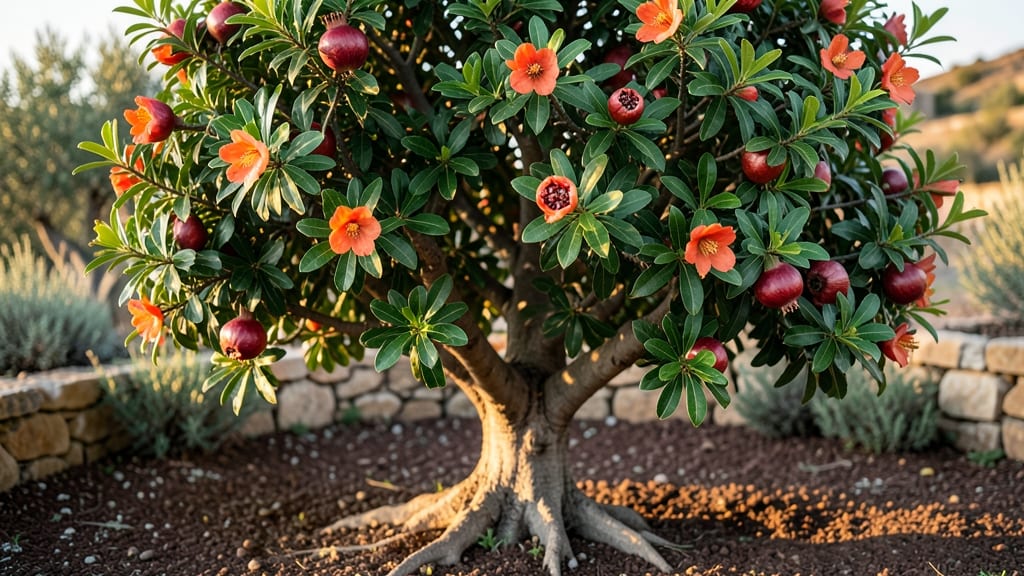
Proper pomegranate tree spacing determines whether your 🍇 orchard thrives or struggles—too tight, and your trees compete for sunlight and nutrients; too wide, and you lose yield to wasted space.
Picture this: a sun-drenched garden where every pomegranate tree stretches its branches freely, basking in full sun while roots spread without crowding. That’s the goal, but getting there means knowing the right distance for your variety and climate.
Standard pomegranate trees need 10 to 15 feet between them, while dwarf varieties can squeeze into 6 to 8 feet. But here’s the catch: soil type, sunlight, and even wind patterns can tweak those numbers—so we’ll break down the science behind spacing for bigger, sweeter fruit.
From row layouts that maximize sunlight to pruning tricks that keep trees healthy, this guide gives you the exact spacing rules (and fixes for common mistakes) to turn your pomegranate patch into a high-yielding powerhouse.
Optimal pomegranate tree spacing by variety and climate
Pomegranate trees thrive when given the right space to grow—too crowded, and they compete for nutrients; too spread out, and you lose efficiency in your orchard. The spacing needs vary dramatically between dwarf varieties and standard trees, as well as based on your USDA hardiness zone.
In warm climates like Zones 8-11, trees grow faster, while cold-hardy varieties in Zones 6-7 need extra room for winter protection.
For dwarf pomegranates (like 'Wonderful' or 'Eversweet'), you can plant trees just 6-8 feet apart in rows spaced 8-10 feet apart. These compact varieties are perfect for containers or small gardens, but even they need room for airflow to prevent fungal diseases.
In cooler climates, like Zone 7, add an extra 2 feet of space to account for slower growth and potential winter damage.
Standard pomegranate trees, like 'Granada' or 'Sweetheart,' reach 15-25 feet tall at maturity and require 15-20 feet apart in rows spaced 20-25 feet apart. This spacing ensures full sunlight penetration to the center of the tree, which is critical for fruit ripening and yield.
In warm climates, like California or Arizona, you can reduce spacing slightly to 12-15 feet apart because trees grow more aggressively.
Cold-hardy varieties, such as 'Russian' or 'Cold Hardy,' need extra space—20-25 feet apart—because they develop larger root systems to survive harsh winters. In Zone 6 or colder, plant them on south-facing slopes or near windbreaks to protect against late frosts.
Row spacing should be 25-30 feet to allow for deep root penetration and reduce competition.
| Variety Type | Tree Spacing (ft) | Row Spacing (ft) | Climate Adjustments | Soil Considerations |
|---|---|---|---|---|
| Dwarf (e.g., 'Wonderful') | 6-8 ft | 8-10 ft | +2 ft in Zones 6-7 | Well-draining, slightly acidic (pH 6.0-7.0) |
| Standard (e.g., 'Granada') | 15-20 ft | 20-25 ft | -3 ft in Zones 8-11 | Loamy, fertile soil with good drainage |
| Cold-Hardy (e.g., 'Russian') | 20-25 ft | 25-30 ft | +5 ft in Zones 5-6 | Deep, well-drained soil with mulch |
| Container-Grown | 3-5 ft (per pot) | N/A (individual pots) | Use large pots (20+ gallons) | Fast-draining mix with perlite |
Soil type plays a critical role in spacing adjustments. Pomegranates hate waterlogged soil, so in heavy clay areas, increase spacing by 20-30% to allow roots to spread deeper. Amend soil with compost or sand to improve drainage, especially in cooler climates where water pools during winter.
For container-grown pomegranates, use pots at least 20 gallons and space them 3-5 feet apart to mimic outdoor conditions.
In windy regions, like coastal areas or open orchards, reduce spacing slightly to 10-15 feet apart for dwarf varieties and 15-20 feet apart for standards. The windbreak effect of closely planted trees can protect blossoms and young fruit from damage.
However, avoid overcrowding—poor airflow increases the risk of pomegranate blight and powdery mildew, which thrive in humid conditions.
When planning your orchard, consider future growth. A standard pomegranate can grow 3-4 feet per year in ideal conditions, so account for that when marking your rows. Use wooden stakes or landscape paint
How tree spacing affects sunlight, pollination, and fruit size
Proper pomegranate tree spacing isn’t just about fitting more trees in your garden—it’s the foundation for bigger fruit, better pollination, and healthier growth. When trees are too close, they compete for sunlight and nutrients, leading to smaller, less flavorful pomegranates.
But spacing them too far apart wastes space and reduces yields. Let’s break down how spacing directly impacts your harvest.
Sunlight is the #1 factor in fruit quality. Pomegranates need 6-8 hours of direct sun daily, but crowded trees create shade competition. When branches block sunlight, fruits ripen unevenly, stay tart, and develop poor color.
Proper spacing ensures every fruit gets full exposure, leading to sweeter, juicier results. Think of it like a sunbathing contest—every tree deserves its own spot in the spotlight!
🌱
🌞 Sunlight Science for Pomegranates
Ideal spacing: 10-15 ft between trees for full sunlight penetration. Trees spaced this far apart receive uniform light on all sides, ensuring even ripening. Row spacing: 15-20 ft between rows prevents branch overlap and allows airflow.
Overcrowding effect: Fruits near the center of crowded trees get only 30-50% of full sun, leading to smaller, underripe pomegranates with less vibrant color.
Pro tip: Use a string line and stakes to visualize sunlight patterns before planting. Walk through your orchard at solar noon to spot shaded areas.
Pollination is another critical piece of the puzzle. Pomegranate flowers rely on bees and wind to transfer pollen, but crowded trees create physical barriers that limit pollinators’ access. When flowers aren’t properly pollinated, you’ll end up with misshapen or seedless fruit.
Proper spacing improves airflow, allowing bees to move freely between trees and ensuring better fruit set.
Overcrowding also stresses trees, forcing them to divert energy toward survival rather than fruit production. In tight spaces, trees produce more vegetative growth (leaves and branches) and fewer flower buds. This leads to smaller harvests and fruits that are less sweet and lower in juice content.
For example, a well-spaced pomegranate tree can yield 50-100 fruits per season, while a crowded one might produce only 20-30—and those will be noticeably smaller.
To maximize fruit size, aim for 10-15 feet between trees in warm climates and 12-18 feet in cooler regions. This spacing gives roots room to spread while keeping the canopy open.
If you’re growing dwarf varieties, reduce spacing to 8-10 feet, but still prioritize airflow. For container-grown pomegranates, ensure pots are at least 2 feet apart to prevent root competition.
🌿