
Planting
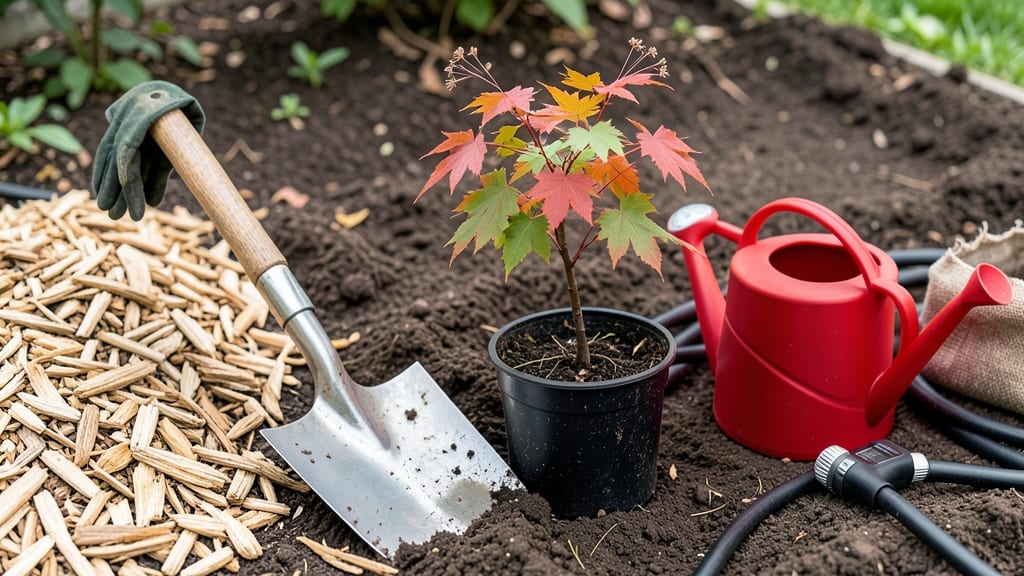
A red maple planting guide is one of the most rewarding ways to add year-round color to your landscape. 🌳 The secret to success starts with knowing exactly where, when, and how to plant—because these trees grow 30-50 feet tall and live for decades. My first red maple thrived because I followed these five simple steps, and yours can too. The right spot makes all the difference: red maples love full sun to partial shade and well-draining soil, whether that’s native clay or amended garden soil. Avoid low-lying areas where water pools after rain. Dig a hole twice as wide as the root ball but only as deep—planting too deep suffocates the roots and causes stress. After planting, mulch around the base (but not touching the trunk) to retain moisture and regulate soil temperature. Water deeply 2-3 times per week for the first year, then taper off as roots establish. The first autumn, you’ll see vibrant red foliage that signals your tree is off to a strong start. For urban gardens or small yards, consider a dwarf cultivar like ‘Autumn Flame’—it stays compact while delivering the same stunning fall colors. Just remember: patience is key, and proper planting now means decades of shade and beauty with almost no maintenance.
📚 In This Guide
- What you need
- Instructions
- Tips and common mistakes
- Wrapping up and next steps
What you need
- ● Red maple tree (Acer rubrum): 1-3 saplings (size depends on desired maturity speed—3-5 ft tall for faster establishment or bare-root for budget-friendly options).
- ● Choose container-grown or bare-root based on planting season (spring/fall).
- ● Shovel or spade: 1 round-point shovel (for digging holes) or 1 digging spade (for tougher soil).
- ● Size: 18–24" blade for mature trees; 12–16" for smaller saplings.
- ● Garden gloves: 1 pair heavy-duty, waterproof gloves (to protect hands from thorns or rough bark).
- ● Mulch: 3–4 cubic feet of organic mulch (e.g., shredded bark, wood chips, or pine straw).
- ● Avoid: Fresh wood chips (can steal nitrogen) or mulch piled against the trunk.
- ● Watering can or hose with nozzle: 1 5-gallon capacity watering can or a hose with a gentle rain shower attachment.
- ● Soil amendments (if soil is poor): 1 50-lb bag of compost or peat moss (for sandy/rocky soil).
- ● 1 20-lb bag of sulfur (if soil is too alkaline; red maples prefer pH 4.5–6.0).
- ● Tree stake & ties (for young saplings in windy areas): 1 6–8 ft wooden stake + 3–4 soft tree ties.
- ● Post-hole digger (if planting in clay or compacted soil): 1 manual or powered post-hole digger (for wider planting holes).
- ● Pruning shears: 1 pair bypass pruners (for shaping or removing damaged branches post-planting).
- ○ Soil pH test kit: 1 kit (to check soil acidity before planting; optional but recommended).
Step-by-Step red maple planting guide for cold-hardy success
Even beginner gardeners can plant a red maple that thrives for decades—here's the straightforward method I've used in zones 3-7.
🌱 Step 1: Choose the Right Plant and Timing
Select a 3-5 gallon container-grown red maple (Acer rubrum) with a healthy root system—look for plants with vibrant green leaves and no yellowing or browning. Spring or early fall are ideal planting times: spring lets roots establish before summer heat, while fall gives them time to root before winter dormancy.
I always check the root flare—the point where roots meet the trunk—should sit 1-2 inches above the finished soil line. If your nursery plant has a buried flare, gently loosen the soil with your fingers until it's exposed. This prevents girdling as the tree matures.
🪴 Step 2: Prepare the Planting Site
Red maples tolerate a wide range of soils but thrive in moist, well-draining loam with a slightly acidic pH (5.0-7.0). Dig a hole twice as wide as the root ball but no deeper—this encourages outward root growth rather than downward, which strengthens the tree against wind.
Amend the native soil with 2-3 inches of compost mixed into the bottom and sides of the hole. Avoid heavy amendments like peat moss unless your soil is extremely sandy, as red maples prefer natural soil structure. Place a stake only if needed (for young trees in windy areas) and loosely tie it with tree tie material—never wire, which can cut into the trunk as it grows.
☀️ Step 3: Plant and Water Deeply
Position the tree so the root flare sits at the correct height, then backfill with the amended soil, tamping gently every 6 inches to remove air pockets. Water deeply until the soil is saturated 12 inches down—you'll know it's right when water pools on the surface for a few seconds before draining.
Create a 2-3 inch deep watering basin around the base by mounding soil outward. This directs water straight to the roots during the critical first year. Mulch with 3-4 inches of wood chips, keeping it 6 inches away from the trunk to prevent rot. Real talk: I've seen gardeners smother the base with mulch, which suffocates the roots—don't make that mistake.
🌿 Step 4: Establish Care Routines
Water once weekly during the first growing season unless rainfall provides 1 inch total. Check moisture by pushing a 6-inch screwdriver into the soil—if it goes in easily, roots have enough water. In zones 3-5, young trees need winter watering (every 3-4 weeks) if snow cover is minimal.
Fertilize only in the second spring with a balanced 10-10-10 formula at half strength. Over-fertilizing new plantings burns tender roots. Prune only to remove dead or crossing branches—never "thin" a young red maple for shape, as this stresses the tree. You'll see new growth in 3-4 weeks if conditions are right.
⏰ Step 5: Monitor and Protect Long-Term
After the first year, red maples are drought-tolerant but still need deep watering every 2-3 weeks during dry spells. Watch for aphids or scale insects—wipe them off with soapy water if you spot them early. These pests rarely kill mature trees but can weaken young ones.
Here's the thing—red maples develop strong cold hardiness after 3-5 years, but young trees need winter protection in exposed areas. Wrap the trunk with tree guard in zones 3-4 to prevent rodent damage. By year 5, your tree should have 10-12 feet of height and be self-sufficient with minimal care.
Tips & tricks for perfect red maple planting
Took me a while to figure these out, so here are the game-changers that'll help your red maple thrive from day one.
Root Flare Check: In Step 1, don't just eyeball the root flare—use a pencil to mark the correct height on the tree's trunk before planting. The 1-2 inch clearance above soil level is critical. I've seen too many trees planted too deep, which strangles the roots over time. If your nursery plant has a buried flare, gently tease the soil away with your fingers until it's exposed—no need for tools that might damage roots.
Soil Testing Tip: Before amending your planting hole in Step 2, grab a simple soil pH test kit from your garden center. Red maples prefer that slightly acidic range (5.0-7.0), but many soils run neutral or alkaline. If your test shows pH above 7.5, mix in some peat moss or sulfur to adjust—just don't overdo it. I once planted in soil testing 8.2 without amending, and my tree struggled for years with yellowing leaves.
Watering Technique: When creating your 2-3 inch watering basin in Step 3, use a garden hose with a slow, steady flow rather than a watering can. This ensures even saturation down to 12 inches. Here's what nobody tells you—after watering, press your finger into the soil. If it springs back slowly, you've got perfect moisture. If it stays dented, you need more water; if it bounces back instantly, you need to water again in 24 hours.
Winter Protection Hack: For zones 3-4 in Step 5, I've found that wrapping tree guards around the trunk actually works better if you add a layer of reflective bubble wrap underneath. The double protection confuses rodents looking for winter snacks while keeping the trunk warmer. Just make sure to remove everything by late winter—circulation is key when growth starts again.
Pro Tips for Red Maple Planting Guide
- Took me a while to figure these out, so here are the game-changers that'll help your red maple thrive from day one.
- Root Flare Check: In Step 1, don't just eyeball the root flare—use a pencil to mark the correct height on the tree's ...
- Soil Testing Tip: Before amending your planting hole in Step 2, grab a simple soil pH test kit from your garden cente...
Frequently asked questions
Got questions about planting red maples? You’re not alone! Here are some of the most common concerns—plus quick, practical answers to help you grow a thriving tree.
When is the best time to plant a red maple?
The ideal window is early spring (as soon as the ground thaws) or early fall (4–6 weeks before frost). Planting in spring gives roots time to establish before summer heat, while fall planting avoids drought stress. Avoid extreme heat or cold—your tree will thank you!
How close can I plant a red maple to my house or driveway?
Keep red maples at least 20–30 feet from structures, sidewalks, or driveways. Their roots spread widely, and mature trees can reach 40–60 feet tall with a similar canopy. Pro tip: Check local codes—some areas require setback rules to avoid root damage or foundation issues.
Do red maples need a lot of water after planting?
Yes! Water deeply 2–3 times per week for the first year (about 1–2 gallons per inch of trunk diameter). After that, they’re drought-tolerant but perform best with 1 inch of water weekly during dry spells. Mulch helps retain moisture—just keep it 3 inches deep and away from the trunk.
Can I grow a red maple in a container or small yard?
Red maples thrive in open spaces but can adapt to containers temporarily (3–5 years max). Choose a 50+ gallon pot with drainage and upgrade to the ground ASAP. For small yards, opt for dwarf cultivars like ‘Autumn Flame’ (20–25 ft tall) or ‘Armstrong’ (compact growth).
Why are the leaves on my red maple turning yellow or brown?
Yellowing leaves often signal overwatering or nutrient deficiency. Brown edges? Likely drought stress or salt buildup (if near roads). Check soil moisture and fertilize in early spring with a balanced 10-10-10 formula. Pests like aphids can also cause discoloration—spray with water or insecticidal soap if needed.
How cold-hardy are red maples, really?
Red maples are zoned 3–9, meaning they handle down to -40°F! However, young trees (under 3 years) may need winter protection in harsh climates: wrap the trunk with burlap or use tree guards to shield from rodents and salt spray. Established trees rarely need extra help—just mulch well before frost.
Wrapping up and next steps
Planting a red maple is a rewarding way to add vibrant color and resilience to your landscape—whether you're a seasoned gardener or just starting out!
With the right location, soil prep, and care, these cold-hardy trees will thrive for decades, gracing your yard with stunning fall foliage and year-round beauty. Now’s your chance to take action: grab your gloves, mark that sunny spot, and get growing! 🌱
Ready to watch your red maple flourish? Start planting today!