
Planting
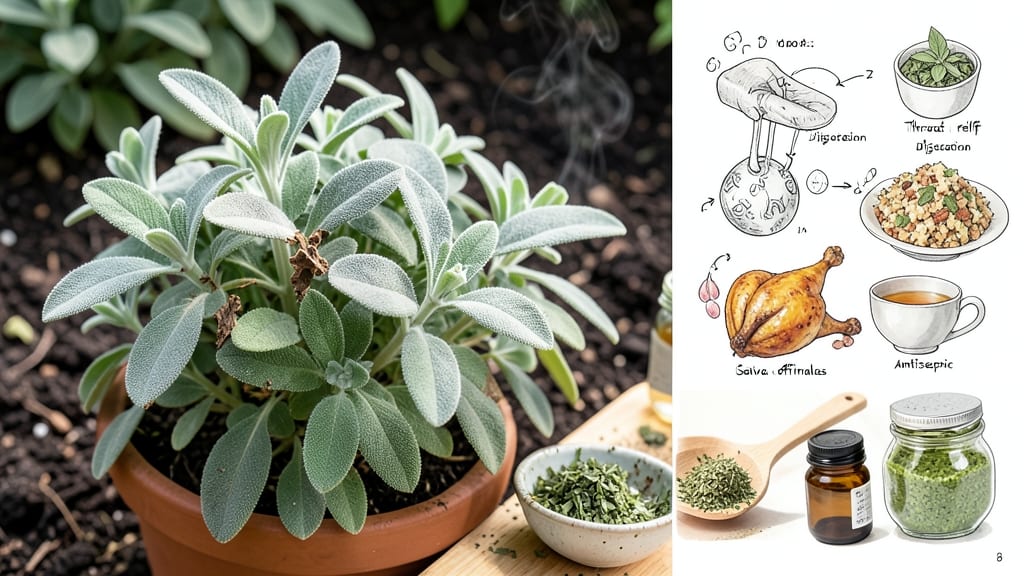
Sage plants provide versatile uses and benefits, including rich culinary flavors for stuffing and poultry dishes, natural medicinal support for digestion and inflammation, and hardy ornamental appeal for gardens and drought-resistant landscaping.
Sage isn't just a kitchen staple—it's a powerhouse plant with surprising versatility. 🌿 The aromatic leaves pack antioxidants that support digestion and may help reduce inflammation, making them a go-to for everything from herbal teas to homemade remedies.
In the garden, varieties like purple sage attract pollinators while thriving in poor soil, perfect for low-maintenance landscapes. I've found that even a small pot on my windowsill yields enough leaves for cooking and medicinal infusions year-round.
What sets sage apart is its dual role as both a culinary and medicinal plant. The same compounds that give it that earthy flavor also contribute to its health benefits, like easing sore throats when steeped in hot water.
Plus, its drought tolerance makes it ideal for xeriscaping projects—just be mindful of over-pruning, as sage prefers to grow bushy rather than tall.
💡 In This Article
- Culinary and Medicinal Properties of Sage Plants
- Best Sage Varieties for Gardens and Practical Landscaping
Culinary and medicinal properties of sage plants
The culinary magic of sage lies in its unique chemical profile, particularly thujone and camphor compounds that create its signature earthy, slightly peppery aroma. These volatile oils aren't just flavorful—they're what give sage its medicinal properties too.
When you crush fresh sage leaves, you're releasing these compounds, which explains why the aroma intensifies dramatically during cooking. 🌿 The leaves contain 1-2.5% essential oils, with common sage containing more thujone than its golden or purple varieties, which is why it has a stronger flavor profile.
In cooking, sage's flavor works wonders in fatty dishes because its earthiness cuts through richness. Think of how perfectly it complements butter-basted turkey or crispy pork chops—those compounds bind with the fat molecules, creating a harmonious balance.
The ideal cooking method depends on the dish: low-and-slow roasting at 325°F for stuffings preserves its delicate flavor, while quick searing at 400°F enhances its caramelization for grilled meats. What most home cooks miss is that sage's flavor actually improves when cooked—unlike many herbs that lose potency with heat.
The medicinal benefits come from those same compounds working in your body. Sage contains rosmarinic acid, a potent antioxidant that helps reduce inflammation, and flavonoids that support digestive health by stimulating bile production.
This is why traditional remedies like sage tea have been used for centuries to soothe sore throats—the compounds create a mild numbing effect while reducing irritation.
For digestion, studies show that consuming 1-2 teaspoons of dried sage daily can help with mild indigestion, though it's important to use it in moderation due to thujone's potential effects at high doses.
Regional variations show how adaptable sage can be. In Italian cuisine, fresh sage leaves are often fried in olive oil until crispy to top bruschetta, while in British traditions, sage and onion stuffing becomes the star of holiday meals.
The French use it in their famous sauce aux herbes, where it pairs beautifully with parsley and tarragon. What's fascinating is how these regional uses reflect the local climate—drier regions tend to use more dried sage, while coastal areas prefer fresh leaves for their brighter flavor profile.
For medicinal applications beyond cooking, sage's antimicrobial properties make it excellent for wound care when made into an infused oil. The traditional practice of burning sage bundles for purification ceremonies actually has scientific backing—the smoke contains compounds that can neutralize airborne bacteria.
This dual-purpose nature makes sage one of the most practical herbs to grow, whether you're cooking or creating natural remedies at home. 💫
One advanced consideration is the difference between culinary and medicinal-grade sage. While common garden sage works for cooking, true medicinal preparations often use Spanish sage (Salvia lavandulifolia), which has a higher concentration of beneficial compounds.
The key difference lies in the leaf structure—medicinal varieties have more glandular trichomes where the essential oils are stored, making them more potent when used in tinctures or teas.