
Planting
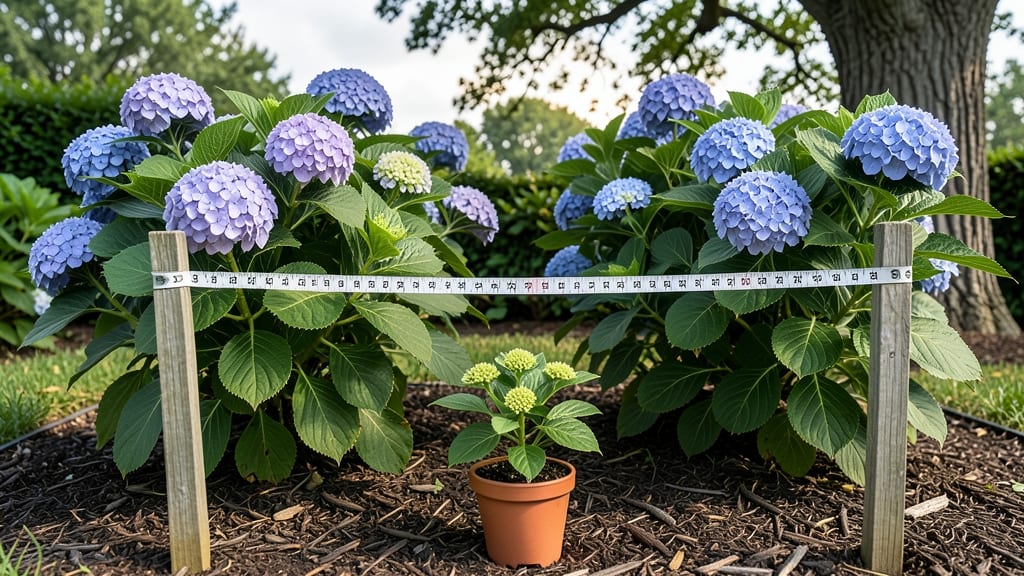
Proper spacing for hydrangeas 🌸 is the foundation of a thriving garden display, ensuring each plant gets the room it needs to grow and bloom beautifully.
Struggling to get your hydrangeas to thrive? You’re not alone—many gardeners overlook how spacing affects everything from bloom size to disease resistance. Whether you’re planting mopheads, panicles, or oakleaf varieties, getting this right can mean the difference between a lush, long-lasting shrub and one that fades fast.
In this guide, I’ll break down the exact spacing rules for each hydrangea type, including how sunlight, soil, and container size play into the equation. You’ll also learn how to spot and fix common spacing mistakes before they derail your garden plans.
By the end, you’ll know exactly how far apart to plant your hydrangeas for healthier growth, bigger blooms, and a garden that stays stunning year after year.
Hydrangea spacing guidelines by variety: Bigleaf vs. Panicle vs. Oakleaf
Choosing the right spacing for hydrangeas depends entirely on the variety you're growing. Each type—Bigleaf, Panicle, and Oakleaf—has unique growth habits and mature sizes that determine how much room they need.
Get this wrong, and you risk stunted growth, fungal diseases, or blooms that never reach their full potential. Let’s break down the exact distances for each type to ensure your hydrangeas thrive from the first season onward.
I’ve planted all three varieties in my own garden, and I can tell you firsthand that proper spacing makes a world of difference. Bigleaf hydrangeas, for example, can become top-heavy if crowded, while Panicle varieties need room to develop their iconic cone-shaped blooms.
Oakleaf hydrangeas, with their unique foliage, also benefit from strategic placement. Let’s dive into the specifics so you can plan your garden layout with confidence.
📌 Key Takeaway: Always measure spacing from the center of one plant to the center of the next. This ensures roots have enough room to spread without competing for nutrients.
| Variety | Mature Size | Spacing (In-Ground) | Spacing (Container) | Sunlight Needs | Growth Habit |
|---|---|---|---|---|---|
| Bigleaf (e.g., 'Nikko Blue', 'Endless Summer') | 3-5 ft tall, 3-6 ft wide | 4-6 ft apart | 15-18" pot diameter | Partial shade (4-6 hrs sun) | Bushy, rounded |
| Panicle (e.g., 'Limelight', 'Little Lime') | 4-8 ft tall, 4-6 ft wide | 6-8 ft apart | 20-24" pot diameter | Full sun to partial shade | Upright, vase-shaped |
| Oakleaf (e.g., 'Snow Queen', 'Pee Wee') | 5-8 ft tall, 4-5 ft wide | 5-7 ft apart | 18-20" pot diameter | Full sun to partial shade | Multi-stemmed, arching |
🌿 Pro Tip: Dwarf varieties (e.g., 'Mini Penny') can be spaced 3-4 ft apart in-ground or grown in 12-15" pots.
For Bigleaf hydrangeas, the 4-6 ft spacing rule applies whether you’re planting mopheads or lacecaps. These varieties grow wide and bushy, so giving them room prevents overcrowding, which can lead to powdery mildew or weak stems that snap under heavy blooms.
In containers, opt for pots at least 15-18 inches in diameter to accommodate their root systems.
If you’re growing Panicle hydrangeas, you’ll need to widen your spacing to 6-8 ft apart. These varieties grow taller and produce larger blooms that require more structural support.
Their upright growth habit also means they cast more shade on neighboring plants, so plan accordingly if you’re mixing varieties in your garden beds.
Don’t overlook Oakleaf hydrangeas, which strike a balance between Bigleaf and Panicle types. Their 5-7 ft spacing allows for airflow while accommodating their unique, multi-stemmed growth. Oakleaf varieties also have stunning fall foliage, so positioning them where you can enjoy their seasonal color is a must.
When planting in containers, always choose pots with drainage holes and use a high-quality potting mix. Hydrangeas are heavy feeders, so containers will need regular fertilization (every 4-6 weeks during the growing season) to compensate for limited root space.
I’ve found that 18-24 inch pots work best for most varieties, but dwarf types can thrive in smaller containers.
One mistake I see often is underestimating mature size. Many gardeners plant hydrangeas too closely, assuming they’ll stay compact. But within 2-3 years, those same plants can outgrow their space, leading to competing roots and reduced blooms.
Always err on the side of giving your hydrangeas more room than you think they’ll need.
For sunlight exposure, Bigleaf varieties prefer partial shade (4-6 hours of morning sun), while Panicle and Oakleaf types can handle full sun in cooler climates. If you’re in a hot, southern region, provide afternoon shade to protect leaves from scorching.
I’ve had great success with morning sun and afternoon shade for all varieties in my USDA Zone 7 garden.
Finally, consider companion planting to maximize your garden’s potential. Pair Bigleaf hydrangeas with ferns or hostas to create a lush, layered look. Panicle varieties pair well with ornamental grasses or perennials like coneflowers, while Oakleaf hydrangeas complement shrubs with fall interest, like smoke bush or
How to space hydrangeas for optimal airflow and sunlight exposure
Proper hydrangea spacing isn't just about making your garden look neat—it's a game-changer for plant health. When hydrangeas are too close, they compete for sunlight and nutrients, leading to weak stems and fewer blooms.
Worse yet, poor airflow creates a breeding ground for fungal diseases like powdery mildew. The right spacing ensures your hydrangeas get the morning sun they crave while keeping their foliage dry and airy.
Most gardeners focus on planting the right hydrangea varieties, but spacing often gets overlooked. Yet, it directly impacts how well your plants perform. For example, mophead hydrangeas need more room than panicle types because they grow wider.
Even oakleaf hydrangeas, which are slightly more compact, benefit from proper spacing to prevent overcrowding. Let's break down how to get it right for lush, long-lasting blooms.
Caution: Overcrowding Risks
Poor spacing leads to fungal diseases (like powdery mildew) and stunted growth. Hydrangeas need 3-6 feet of space depending on variety. Mopheads need the most room, while panicle types can tolerate slightly tighter spacing. Always space for mature size, not current size!
Start by planning your hydrangea layout based on their mature size. For bigleaf hydrangeas (like 'Endless Summer'), aim for 5-6 feet between plants. This ensures their leafy canopies don’t block sunlight from neighboring plants.
If you're planting near a fence or wall, leave at least 3 feet of clearance to allow airflow around the foliage edges. For panicle hydrangeas (like 'Limelight'), 4-5 feet is ideal since they grow taller but slightly narrower.
Don't forget to consider companion planting—strategic pairings can enhance airflow and sunlight exposure. Plant low-growing perennials like heuchera or ajuga underneath hydrangeas to fill gaps without competing for space. Avoid planting tall shrubs directly behind hydrangeas, as they'll cast too much shade on the upper leaves.
Instead, opt for medium-height companions like dwarf conifers or ornamental grasses to create a layered look while maintaining airflow.
For container-grown hydrangeas, spacing becomes even more critical. In pots, hydrangeas need at least 15-20 gallons of soil to thrive, which translates to 18-24 inches of space per plant. Place containers 3-4 feet apart to allow airflow between them.
If you're using a large planter with multiple hydrangeas, ensure each plant has its own dedicated root zone—don’t let roots intertwine. This prevents competition and makes future pruning or dividing easier.
One final tip: Prune strategically to maintain airflow. Remove any crossing branches or overgrown stems that block sunlight from reaching the center of the plant. Thin out dense foliage in early spring to encourage new growth and better airflow.
With the right spacing and a little maintenance, your hydrangeas will reward you with vibrant blooms and healthy foliage all season long.