
Planting
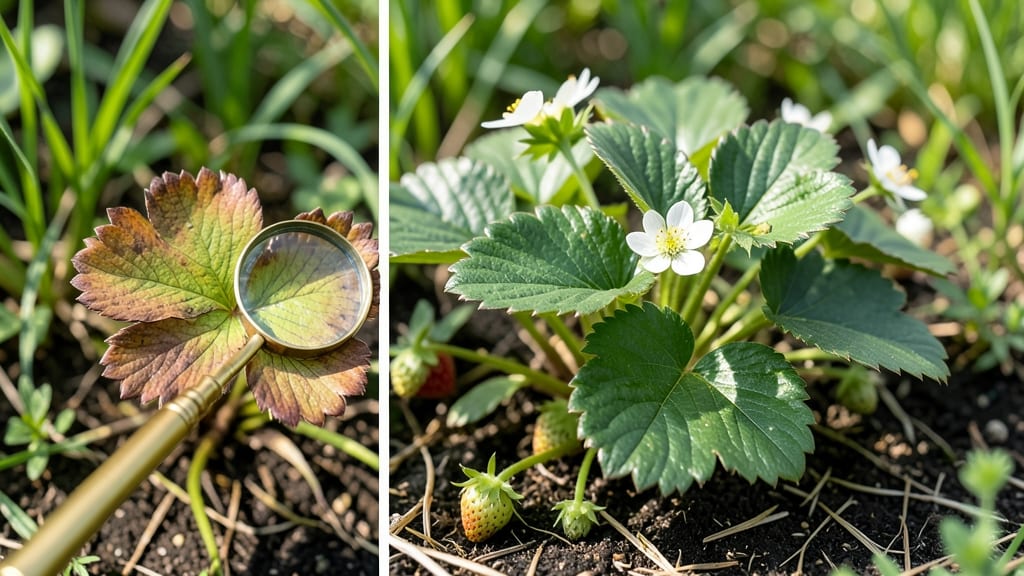
Your strawberry plant leaves turning with brown edges? That’s your plants screaming for help—usually from water stress or hidden pests. 🌱 I’ve nursed back dozens of strawberries with these same fixes, and the key is acting fast before the whole plant wilts.
The good news? Most brown edges aren’t fatal if you catch them early, and the solutions are simpler than you’d think.
First, check the soil—strawberries hate soggy roots and dry crust. If the dirt feels like a sponge (sticky when squeezed) or powdery (falls apart easily), that’s your culprit. Overwatering causes yellowing, but underwatering makes edges curl and brown like parchment.
Then peek under leaves for spider mites or aphids—tiny pests that suck juices, leaving crispy edges behind.
With the right fix, you’ll see fresh green growth in 7-10 days. Adjust watering to keep soil moist but not soggy (think damp sponge, not wet towel), and spray leaves with neem oil if pests are the culprits.
Prune any severely damaged foliage to redirect energy to healthy parts—your plants will bounce back faster than you’d expect.
Prevention is even easier: mulch with straw (yes, the same kind you eat!) to lock in moisture, and water in the morning so leaves dry quickly.
I’ve kept strawberries thriving for three full seasons using these same tricks—no fancy tools or expensive sprays required. Let’s turn those brown edges green again.
Root Causes Behind Browning Edges
Understanding why your strawberry plant’s leaves develop brown edges is the first step to saving them. These symptoms rarely appear in isolation—they’re usually a cry for help from your plant, signaling stress from environmental or cultural factors.
Below, we break down the most common culprits, their scientific triggers, and why they cause that telltale browning.
Strawberry plants are sensitive to moisture imbalances, and brown edges often stem from hydration extremes. Here’s how it plays out:
- Underwatering (Most Common Trigger) - When soil dries out, roots struggle to absorb water efficiently. The plant prioritizes critical functions (like fruit production) over leaf maintenance, causing marginal necrosis (browning at the edges). - Why? Cells in the leaf margins contain higher concentrations of salts and nutrients.
Without enough water, these compounds crystallize and damage cell walls, leading to browning. - Tell-tale sign: Leaves feel crispy or papery to the touch, and the soil pulls away from the pot edges.
- Overwatering or Poor Drainage - While less common, soggy roots can’t absorb oxygen, leading to root rot.
The plant then transports toxins (like ethylene) to the leaves, causing brown, wilted edges. - Why? Anaerobic conditions trigger oxidative stress, breaking down chlorophyll and causing cell death. - Tell-tale sign: Yellowing between veins (chlorosis) before browning, plus a foul smell from the soil.
- Inconsistent Watering - Fluctuating moisture levels stress the plant, leading to osmotic shock.
Cells lose turgor pressure, and the edges plasma membranes rupture, turning brown. - Pro tip: 💡 Water deeply but infrequently—aim for 1–1.5 inches per week, and always check the top 1–2 inches of soil before watering.
Strawberries thrive in cool climates (60–75°F) and can’t handle prolonged heat or intense sunlight, especially in dry conditions.
- Sunburn (Direct UV Damage)
- When leaves are exposed to harsh afternoon sun without adequate hydration, UV rays oxidize cell membranes, causing photoxidative stress.
- Why? The plant’s protective cuticle layer (a waxy coating) dries out and cracks, exposing cells to direct damage.
- Tell-tale sign: Browning appears suddenly on leaves facing the sun, often with a leathery texture.
- Heat Stress (Above 85°F) - High temperatures disrupt photosynthesis and increase transpiration rates, pulling moisture from leaves faster than roots can replace it. - Why? Enzymes like Rubisco (critical for CO₂ fixation) denature, leading to chlorophyll breakdown and browning. - Pro tip: ✨ Provide afternoon shade (use shade cloth or dappled sunlight) during heatwaves.
Mulch with straw or wood chips to retain moisture.
Strawberries are not frost-tolerant (except everbearing varieties to ~20°F). Sudden cold snaps or chilly nights can cause:
- Cold Stress (Below 32°F)
- Freezing temperatures crystallize water inside leaf cells, rupturing them in a process called ice nucleation.
- Why? The damage starts at the edges (where cells are thinner) and spreads inward as ice expands.
- Tell-tale sign: Browning appears frosty or glassy, often with a blackened, mushy texture.
- Windburn (Drying Winds)
- Strong, dry winds increase evaporation faster than roots can compensate, leading to desiccation (drying out) of leaf margins.
- Why? The stomata (pores) close to conserve water, but the edges lack protective hairs, making them vulnerable.
- Fix: 🌡️ Windbreaks (like burlap or tall plants) reduce exposure, especially in open gardens.
Strawberries are light feeders and need a balanced diet. Over- or under-fertilizing can lead to browning:
- Salt Burn (From Fertilizer or Tap Water)
- Excessive sodium, chlorine, or other salts in soil or water disrupt cellular osmosis, causing cells to lose water and shrivel.
- Why? High salt concentrations inhibit root uptake of water, leading to marginal necrosis.
- Tell-tale sign: Browning appears crusty or white (salt deposits) on soil and leaf edges.
- Potassium Deficiency (Critical for Cell Health) - Potassium regulates water balance and enzyme activity.
A deficiency weakens cell walls, making them prone to browning and curling. - Why? Without enough potassium, guard cells (which control stomata) malfunction, leading to water loss and necrosis. - Fix: 💪 Apply a balanced fertilizer (like 10-10-10) or potassium-rich compost (banana peels, wood ash).
- Magnesium or Calcium Deficiency
- These minerals stabilize cell membranes. A lack of either leads to weakened cell walls, causing edges to brown and die.
- Tell-tale sign: Interveinal chlorosis (yellowing between veins) before browning appears.
While less common, pests and diseases can mimic water stress symptoms:
- Spider Mites (Tiny Sap-Suckers)
- These pests pierce leaves, draining sap and causing stippling (tiny brown dots) that expand into larger brown patches.
- Why? Their saliva contains toxins that disrupt chlorophyll production, leading to cell death.
- Fix: 🔥 Spray leaves with water (they hate humidity) or use neem oil as a natural repellent.
- Fungal Infections (Like Leaf Spot)
- Fungi like Botrytis cinerea thrive in humid, stagnant conditions, causing brown, circular lesions with fuzzy edges.
- Why? The fungus blocks water transport, leading to necrosis (dead tissue).
- Fix: ⏰ Remove infected leaves immediately and apply copper fungicide preventatively.
- Root-Knot Nematodes
- These microscopic worms damage roots, reducing water and nutrient uptake. The plant compensates by shedding leaves, which appear brown and crispy.
- Tell-tale sign: Stunted growth + browning despite consistent watering.
Key Takeaway: Brown edges are almost always a multi-factor issue—combine solutions (like improving drainage and adjusting watering) for the best results. Next, we’ll cover how to diagnose the exact problem and reverse the damage before it spreads!
Revive Your Strawberries Now
Brown edges on strawberry leaves can feel like a slow-motion disaster, but the good news? Most issues are fixable with quick, targeted care. Below, we’ll break down solutions by cause, so you can diagnose and act fast—plus, tips to keep your plants thriving long-term.
Signs: Yellowing leaves, soggy soil, brown edges that feel mushy.
How to Turn It Around:
- 🔥 Stop Watering Immediately Let the top 1–2 inches of soil dry out before watering again. Overwatering suffocates roots, leading to rot and nutrient loss.
- 🍳 Improve Drainage
- Raise containers (if potted) with gravel or bricks to prevent water pooling.
- Amend garden soil with perlite, sand, or compost (20–30%) to loosen it.
- Check pots for drainage holes—if none, drill them or repot.
- 👨🍳 Prune Damaged Leaves Snip off brown, mushy leaves with clean scissors to prevent fungal spread.
💡 Prevention Tip:
- Water deeply but infrequently—strawberries hate "wet feet." Aim for 1–1.5 inches per week (adjust for rain).
- Mulch with straw or wood chips to regulate soil moisture.
Signs: Crispy, dry brown edges; soil feels bone-dry; leaves curl upward.
How to Treat It:
- 🥘 Hydrate Properly
- Water slowly and deeply at the base (not overhead) to encourage root growth.
- Morning watering is best—it gives leaves time to dry before nighttime humidity spikes.
- 🌿 Provide Shade on Hot Days
- Use shade cloth (30–50%) or dappled shade from trees if temps exceed 90°F (32°C).
- Mulch heavily (3–4 inches) to keep roots cool.
- 🎯 Boost Humidity (For Container Plants) Place pots on a tray of pebbles with water (but keep the pot above water to avoid rot).
💡 Prevention Tip:
- Group plants together to create a microclimate that retains moisture.
- Drip irrigation or soaker hoses deliver water directly to roots, reducing evaporation.
Signs: Brown edges with fuzzy gray/moldy spots; leaves may feel sticky or develop white powder.
How to Eliminate It:
- ⏰ Remove Infected Leaves ASAP
- Snip off all brown/diseased foliage and dispose of it in the trash (not compost).
- 🔪 Apply Fungicide
- Baking soda spray: Mix 1 tsp baking soda + 1 quart water + a drop of dish soap. Spray leaves every 7–10 days.
- Neem oil (1 tsp per quart of water) or copper fungicide for severe cases.
- 🌡️ Improve Airflow
- Space plants 12–18 inches apart (strawberries need room to breathe).
- Prune crowded foliage to increase circulation.
💡 Prevention Tip:
- Water at the base only—avoid overhead sprinklers, which spread spores.
- Rotate crops if you replant strawberries in the same spot yearly.
Signs: Brown edges with yellowing between veins (calcium deficiency); weak, brittle leaves (potassium).
How to Correct It:
- 📊 Test Your Soil A DIY soil test kit (or send a sample to a local extension office) reveals exact deficiencies.
- 💪 Fertilize Smartly
- For calcium: Sprinkle crushed eggshells or apply lime (follow package rates).
- For potassium/magnesium: Use a balanced fertilizer (10-10-10) or Epsom salt (1 tbsp per gallon of water, spray leaves).
- 🍎 Boost Organic Matter
- Compost or worm castings improve soil structure and nutrient availability.
💡 Prevention Tip:
- Side-dress with compost in early spring before fruiting begins.
- Avoid over-fertilizing with nitrogen—it burns roots and worsens deficiencies.
Signs: Brown, scorched edges; white crust on soil surface; stunted growth.
How to Reverse It:
- 🌿 Flush the Soil
- Water heavily for 10–15 minutes to leach out excess salts.
- Repeat 2–3 times over a week.
- 🍳 Adjust pH if Needed
- Test soil pH (ideal for strawberries: 5.5–6.5).
- Lower pH (more acidic): Add sulfur or peat moss.
- Raise pH (less acidic): Mix in lime.
- 🔥 Switch to Organic Fertilizers Avoid synthetic salts—opt for fish emulsion, seaweed extract, or compost tea.
💡 Prevention Tip:
- Use rainwater or distilled water for potted plants to avoid chlorine/salt buildup.
- Never fertilize in extreme heat—it concentrates salts in the soil.
🌱 Pro Tip for All Causes: Monitor your strawberries weekly—catching issues early means less damage and faster recovery. And remember: Healthy soil = happy plants! If brown edges persist after 2–3 weeks of treatment, dig deeper (literally—check roots for rot or pests).
Frequently asked questions
Why do my strawberry leaves only brown at the edges first?
Strawberry leaves develop brown edges because the outermost cells contain higher concentrations of salts and nutrients. When stressed (from underwatering, heat, or pests), these edge cells dry out or get damaged first since they have less protective tissue. Think of it like how a paper towel's edges fray before the center tears—it's the weakest point!
Can I save my strawberries if half the leaves are already brown?
Yes! Prune the severely damaged leaves immediately to redirect energy to healthy growth. Focus on fixing the root cause (water, nutrients, or pests) and provide optimal care. With proper treatment, new leaves should emerge within 7-14 days, and the plant can recover fully. Don't panic—strawberries are resilient!
Is it safe to use tap water for my strawberry plants?
Tap water can cause problems if it's high in chlorine or salts. For potted plants, use rainwater or distilled water to prevent buildup. If you must use tap water, let it sit out for 24 hours first to allow chlorine to evaporate. For garden beds, occasional tap water is fine, but monitor for signs of salt stress like crispy edges or stunted growth.
How often should I fertilize strawberries to prevent browning?
Strawberries need light feeding—apply a balanced fertilizer (like 10-10-10) every 4-6 weeks during the growing season (spring to early fall). Too much fertilizer causes salt buildup, while too little leads to deficiencies. For organic options, use compost tea or worm castings monthly. Always water thoroughly after fertilizing to prevent root burn.
Can I still harvest strawberries if the leaves have brown edges?
Yes, but only if the fruit itself looks healthy. Brown edges on leaves usually indicate stress, not fruit contamination. However, if the plant is severely affected by disease (like fungal spots), remove and discard any affected fruit. Healthy strawberries will continue ripening even with some leaf damage. The key is to fix the underlying issue so future harvests stay perfect!