
Planting
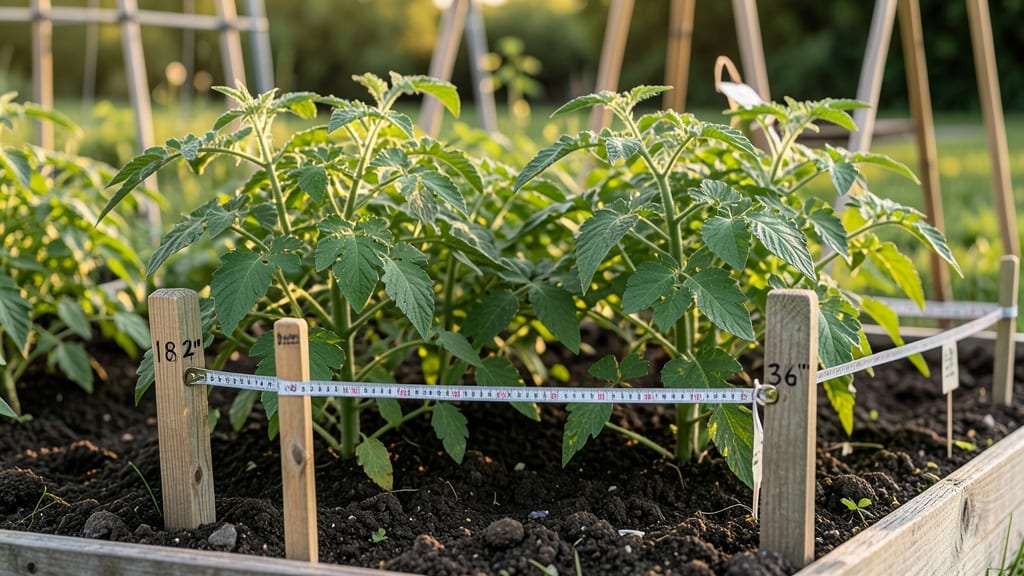
A tomato plant spacing chart is your secret weapon for turning a chaotic garden into a high-yielding tomato paradise 🍅 — because cramming plants together might save space, but it guarantees smaller fruit, more disease, and a lot of frustration.
If you’ve ever watched your tomato vines sprawl into each other, only to see blossoms drop or leaves yellow from poor airflow, you know spacing isn’t just about fitting more plants in.
It’s about giving each one room to thrive — and that means 24-36 inches between indeterminate varieties (like Sungold) and 18-24 inches for compact determinate types (like Roma).
This guide breaks down the exact distances for your zone, whether you’re growing in raised beds, containers, or open soil, plus how to tweak spacing for trellises, windy areas, or when you’re squeezing plants into small spaces.
No more guessing — just proven layouts for bigger, healthier tomatoes all season long.
Ready to stop sacrificing yield for looks? You’ll walk away with a customizable spacing plan, a downloadable chart for quick reference, and the confidence to arrange your tomatoes like a pro — no more crowded chaos, just bushels of flavor.

Zone-specific tomato plant spacing chart for maximum yield
Getting the tomato plant spacing right isn’t just about fitting more plants into your garden—it’s about unlocking their full potential.
In USDA zones 3-11, climate, variety, and growing methods dramatically change ideal spacing. Determinate tomatoes (bush types) need tight spacing, while indeterminate varieties (vining types) thrive with room to sprawl. Without proper spacing, you risk fungal diseases, stunted growth, and poor fruit quality.
Let’s dive into the science behind spacing to maximize your harvest.
Your garden zone plays a critical role in spacing decisions. Northern zones (3-6) often require tighter spacing due to shorter growing seasons, while Southern zones (7-11) benefit from wider spacing to combat heat stress and humidity. Trellising can also adjust spacing needs—vertical growth allows for denser plantings without sacrificing airflow.
Below, find a zone-specific chart that covers everything from row spacing to plant-to-plant distance for both bush and vining tomatoes.
| USDA Zone | Tomato Type | Row Spacing (ft) | Plant Spacing (in) | Trellis Height (ft) | Notes |
|---|---|---|---|---|---|
| 3-6 (Cool Climates) | Determinate (Bush) | 2-3 ft | 18-24 in | 3-4 ft (optional) | Compact growth; prioritize airflow |
| 3-6 (Cool Climates) | Indeterminate (Vining) | 3-4 ft | 24-36 in | 6-8 ft (required) | Trellis essential for support |
| 7-9 (Warm Climates) | Determinate (Bush) | 3-4 ft | 24-30 in | 4-5 ft (optional) | Wider spacing for heat tolerance |
| 7-9 (Warm Climates) | Indeterminate (Vining) | 4-5 ft | 36-48 in | 8-10 ft (required) | Shade cloth may help in peak heat |
| 10-11 (Hot Climates) | Determinate (Bush) | 4-5 ft | 30-36 in | 5-6 ft (optional) | Drip irrigation recommended |
| 10-11 (Hot Climates) | Indeterminate (Vining) | 5-6 ft | 48-60 in | 10-12 ft (required) | Morning harvests reduce heat stress |
| All Zones (Containers) | Determinate or Indeterminate | N/A | 1 plant per 5-gallon container | 5-6 ft (for vining types) | Use lightweight potting mix |
For cool climates (zones 3-6), focus on compact spacing to make the most of your short season. Determinate tomatoes like 'Early Girl' or 'Stupice' can handle closer spacing (18-24 inches apart) since they produce all their fruit at once. Indeterminate varieties like 'Sungold' or 'Brandywine' need more room (24-36 inches) to sprawl vertically, especially if you’re using a trellis system.
In these zones, prioritize airflow to prevent fungal issues like early blight.
In warm climates (zones 7-9), wider spacing becomes critical. Heat and humidity create ideal conditions for disease pressure
How to adjust tomato spacing for different growing conditions
Not all tomato gardens are created equal—and neither should your tomato spacing be! Whether you're working with a raised bed, containers, or a vertical trellis system, adjusting spacing can mean the difference between a meager harvest and a bushel basket overflowing with ripe tomatoes.
The key is balancing plant needs with your growing setup to maximize both yield and health.
For example, indeterminate varieties like 'Sungold' or 'Brandywine' need more room to sprawl, while determinate types like 'Roma' or 'Celebrity' can handle tighter quarters. But what if you're growing in 5-gallon buckets or using square-foot gardening? Let’s break down how to tweak spacing for every scenario without sacrificing productivity.
Tomato Spacing Adjustments by Growing Method
✅ Pros of Proper Spacing
- ✅ Better airflow reduces fungal diseases like blight
- ✅ More sunlight per plant boosts fruit production
- ✅ Easier harvesting and pruning access
- ✅ Stronger stems support heavier fruit loads
❌ Cons of Poor Spacing
- ❌ Stunted growth from competition for nutrients
- ❌ Increased pests like aphids thrive in crowded foliage
- ❌ Poor fruit quality due to lack of sunlight
- ❌ Higher disease risk from trapped moisture
🌱 Spacing Chart by Method
| Growing Method | Determinate Spacing | Indeterminate Spacing | Pro Tip |
|---|---|---|---|
| In-Ground | 18-24" apart | 24-36" apart | Use trellises for indeterminate to save space |
| Raised Beds | 12-18" apart | 18-24" apart | Plant in blocks, not rows, for efficiency |
| Containers | 1 plant per 5-gallon pot | 1 plant per 10-gallon pot | Add compost to maximize root space |
| Vertical Trellis | 12-18" apart (bushy types) | 18-24" apart (vining types) | Prune suckers weekly to control spread |
If you're practicing companion planting, pair tomatoes with basil or marigolds to deter pests and improve flavor—but keep spacing in mind. Basil should stay 12-18 inches away from tomato stems to avoid competition, while marigolds can edge the bed 6-12 inches out for maximum benefit.
For high-density gardens, try square-foot gardening with 1 tomato plant per square foot (use dwarf varieties). In organic setups, wider spacing helps prevent soil-borne diseases, while conventional gardens can sometimes squeeze plants closer if using fungicides—but I always recommend prioritizing airflow over chemical fixes.
Remember, pruning is your best friend for optimizing space. Regularly remove suckers (the shoots between main stems and branches) and lower leaves to improve airflow and redirect energy to fruit production. This works especially well for indeterminate tomatoes growing on trellises.
Adjusting tomato spacing isn’t just about fitting more plants—it’s about creating the perfect environment for each plant to thrive. With the right setup, you’ll enjoy healthier plants, fewer pests, and a harvest that rivals the pros! 🌱