
Planting
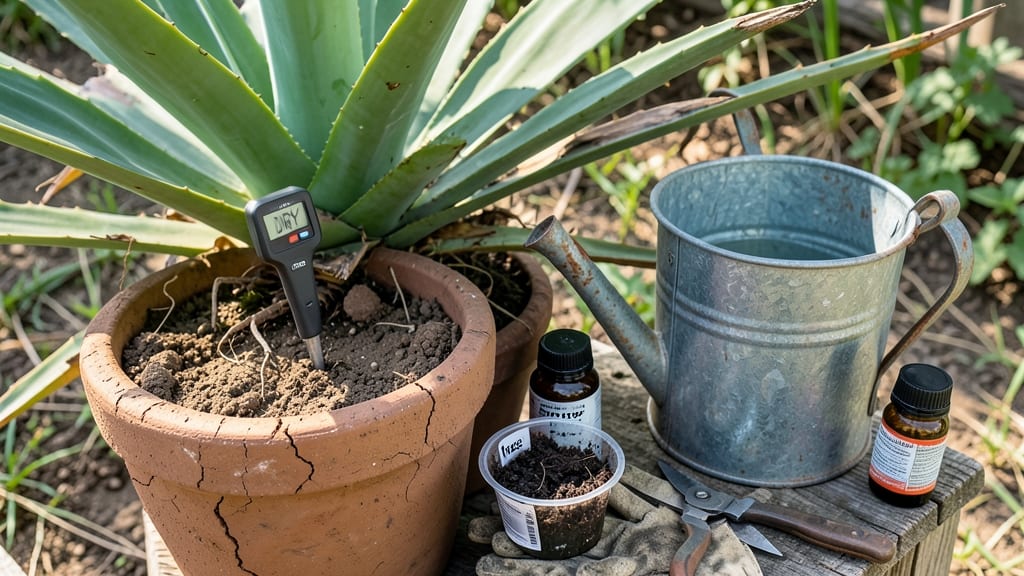
When your dying agave plant looks like a sad, droopy mess, it’s usually overwatering or root rot doing the damage. 🌱 I’ve nursed back more than a few agaves that looked beyond saving—even ones with mushy stems and brown tips—so I know the right steps can turn things around.
The key is acting fast before the rot spreads too far.
Most agaves die from overwatering, which leads to root rot. You’ll spot the problem with soft, blackened stems or a foul smell at the base. Mealybugs or environmental stress (like sudden cold snaps) can also weaken your plant, making it more vulnerable.
The good news? Agaves are tough—they bounce back if you catch these issues early.
Start by stopping all water immediately and letting the soil dry completely. If the roots are mushy, trim away the rotten parts with clean scissors and repot in fresh, drainage-heavy soil.
Place your agave in bright, indirect light (no soggy soil or shade) and water only when the top inch feels bone-dry.
With the right care, your agave will start pushing out new growth in 2-4 weeks. The secret is patience—agaves store water in their leaves, so they’ll recover even after severe neglect.
Once it’s back on track, adjust your watering schedule to every 2-3 weeks (or less in winter) to keep it thriving.
Root Causes Of Agave Decline
A healthy agave thrives with minimal fuss, but when it starts to wilt, yellow, or rot, the issue often traces back to a few key environmental or care-related factors.
Understanding these triggers is the first step to revival. Let’s break down the most common reasons your agave is struggling—and what’s really killing it from the roots up.
💧 Overwatering And Poor Drainage
Agaves are succulents, meaning they store water in their leaves and roots, making them highly susceptible to root rot when overwatered. Unlike moisture-loving plants, agaves prefer dry conditions and can’t tolerate soggy soil. Here’s how it happens:
- Excess moisture in the soil triggers anaerobic bacteria and fungi (like Phytophthora), which suffocate roots by blocking oxygen uptake.
- Compacted or clay-heavy soil holds water too long, creating a breeding ground for rot. Agaves need well-draining soil (a mix of cactus/succulent soil with perlite or pumice works best).
- Overpotted agaves with no drainage holes trap water at the bottom, leading to root decay. Yellowing leaves or a mushy base are classic signs.
Pro Tip: 🌡️ Stick your finger 2 inches deep into the soil—if it’s damp, wait before watering again. Agaves should go weeks without water, not days.
🌡️ Temperature And Cold Stress
Agaves are tropical to subtropical plants, but most varieties can’t handle freezing temperatures or extreme cold drafts. When exposed to chilly conditions:
- Cell membranes rupture below 30°F (-1°C), causing cold damage that appears as blackened, shriveled, or translucent leaves.
- Root systems slow down in cold soil (below 50°F/10°C
- Windburn or evaporative stress in dry, cold climates can dehydrate leaves, making them crispy or brown at the edges.
Pro Tip: ❄️ If you live in a cold climate, mulch heavily around the base (use gravel or straw) and move potted agaves indoors before frost hits. Most agaves thrive in USDA Zones 8–11.
☀️ Sunburn And Light Exposure Issues
Agaves love bright, direct sunlight, but too much—or too little—can stress them out. Here’s how light-related problems manifest:
- Sunburn: Leaves develop white, yellow, or brown patches (like scorch marks) when exposed to intense afternoon sun after being shaded. This is common when moving agaves from indoors to outdoor heat.
- Leggy growth: Stretched, pale, or etiolated leaves signal low light, weakening the plant’s structure and making it prone to pests.
- Bleached or see-through leaves: A sign of UV damage, often seen in high-altitude or desert climates with unfiltered sunlight.
Pro Tip: 🌞 Acclimate agaves gradually to full sun (a process called hardening off) by exposing them to morning sun first. If indoors, place them near a south-facing window or use a grow light.
🐜 Pests And Pathogens Attacking Roots
While agaves are tough, they’re not immune to insect infestations or fungal infections. Common culprits include:
| Pest/Pathogen | Signs of Damage | How It Kills Agave |
|---|---|---|
| Scale insects | Sticky residue (honeydew), black sooty mold, wilting leaves | Sap-sucking pests weaken the plant by blocking nutrient flow and spreading disease. |
| Mealybugs | Cottony white clusters, curled leaves, stunted growth | They inject toxins while feeding, causing leaf drop and root stress. |
| Fungal root rot (Fusarium, Pythium) | Black, mushy roots; foul smell; sudden wilting | Fungi clog root vascular tissue, preventing water/nutrient transport. |
Pro Tip: 🔥 Inspect the underside of leaves and soil surface for pests. Treat infestations early with neem oil or insecticidal soap. For fungal rot, sterilize soil with hydrogen peroxide (3%) before repotting.
🌱 Nutrient Deficiencies Or Toxicity
Agaves are low-maintenance when it comes to fertilizer, but over-fertilizing or poor soil quality can do more harm than good. Key issues:
- Salt buildup from tap water or synthetic fertilizers burns root tips, leading to fertilizer burn (brown leaf edges, stunted growth).
- Nitrogen excess causes soft, pale leaves and weak stems, making the plant vulnerable to collapse.
- Micronutrient deficiencies (like magnesium or iron) show as interveinal chlorosis (yellowing between leaf veins).
Pro Tip: 💡 Use a balanced, diluted fertilizer (like 5-5-5) once a year in spring. Flush soil with water every 6 months to prevent salt buildup. For deficiencies, a chelated iron supplement can help.
🏺 Physical Damage Or Improper Repotting
Agaves have shallow, fibrous root systems that are easily disturbed. Common mistakes include:
- Root trauma from rough handling during repotting can cause bleeding or infections at the wound sites.
- Overcrowded pots lead to root competition, weakening the plant and increasing rot risk.
- Buried crowns (where the base is planted too deep) trap moisture and strangle the plant by preventing air circulation.
Pro Tip: ✨ When repotting, trim damaged roots with sterilized scissors and let them callus for 24 hours before replanting. Use a pot only 2 inches wider than the root ball to avoid overpotting.
Revive Your Agave: Step-by-Step Fixes
If your agave plant is struggling, don’t panic—most issues have straightforward solutions! Below, we’ve mapped out practical fixes based on the most common causes of decline, along with prevention tips to keep your plant thriving. Follow these steps to nurse your agave back to health and avoid future setbacks.
If your agave’s leaves are mushy, yellowing, or falling over, root rot is likely the culprit. Agaves hate soggy roots, so act fast!
🔥 Step 1: Stop Watering Immediately
- Let the soil dry out completely before watering again. Agaves are succulents and store water in their leaves—overwatering suffocates their roots.
🍳 Step 2: Check the Roots
- Gently remove the plant from its pot and inspect the roots. Healthy roots are firm and white; rotten roots are brown, mushy, or smell foul.
- Trim away any black or squishy roots with clean, sharp scissors.
👨🍳 Step 3: Repot in Fresh, Dry Soil
- Choose a well-draining cactus/succulent mix (or amend regular potting soil with perlite/pumice for aeration).
- Use a terracotta or unglazed pot to prevent moisture buildup. Ensure the pot has drainage holes—this is non-negotiable!
🥘 Step 4: Let It Recover
- Place the repotted agave in a bright, indirect spot (no direct sun for a few weeks to avoid stress).
- Wait 7–10 days before watering again—only give it a light drink when the top 2–3 inches of soil are bone-dry.
💡 Prevention Tips:
- Water only when the soil is completely dry (stick your finger 2 inches deep—if it’s damp, wait).
- Avoid saucers under pots unless they have drainage holes (or empty them after watering).
- Group agaves with other succulents to create a microclimate with lower humidity.
If your agave’s leaves are wrinkled, shriveled, or turning brown at the tips, it’s either thirsty or getting too much harsh sun.
🌡️ Step 1: Assess the Light
- Move your agave to a spot with bright, indirect light (east or north-facing windows are ideal).
- If it’s in direct midday sun, provide light shade (a sheer curtain works).
💧 Step 2: Water Deeply (But Not Too Often)
- Water thoroughly until it drains from the bottom, then let excess water run out.
- Wait until the soil is completely dry (3–4 inches deep) before watering again.
🎯 Step 3: Adjust Your Routine
- Morning watering is best—it gives roots time to dry out during the day.
- Avoid ice cubes or misting—agaves hate humidity and can rot from excess moisture on their leaves.
✨ Prevention Tips:
- Rotate the pot occasionally so all sides get even light.
- Use a moisture meter if you’re unsure—stick it in the soil to check dryness.
- Group agaves with other drought-tolerant plants to mimic their natural habitat.
If your agave’s leaves are discolored, mushy, or wilting after a cold snap, it’s likely suffering from cold damage. Agaves are tropical but can’t handle frost or chilly drafts.
🔥 Step 1: Move It Indoors (Temporarily)
- Bring your agave inside to a warm (65–80°F), sunny spot until temperatures rise.
- Avoid placing it near AC vents, drafty windows, or heaters.
🍳 Step 2: Check for Damage
- Inspect leaves for blackened or soft spots—these won’t recover.
- Trim away dead or dying foliage with clean scissors.
👨🍳 Step 3: Gradually Acclimate It
- If moving back outside, harden it off by placing it in a sheltered spot for a few hours a day, increasing time gradually.
- Avoid sudden temperature swings (e.g., moving from a cold garage to direct sun).
💡 Prevention Tips:
- Know your agave’s hardiness zone—most thrive in USDA Zones 9–11.
If you’re in a colder zone, grow it in a container for easy winter moves. - Use frost cloth or a greenhouse if you can’t bring it inside. - Avoid placing agaves near doors or windows that open frequently.
Yellowing leaves, sticky residue, or tiny bugs mean your agave might have pests or fungal issues. Act quickly to prevent spread.
🔪 Step 1: Isolate the Plant
- Move the agave away from other plants to prevent infestation.
🍳 Step 2: Identify the Problem
- Mealybugs/spider mites? Wipe leaves with a soapy water solution (1 tsp mild dish soap + 1 quart water).
- Scale insects? Scrape them off with a soft brush or cotton swab dipped in rubbing alcohol.
- Fungal spots? Prune affected leaves and treat with neem oil or copper fungicide.
👨🍳 Step 3: Deep-Clean the Pot & Soil
- Remove the plant and rinse the pot with soapy water.
- Replace the top 2–3 inches of soil with fresh, sterile mix.
💡 Prevention Tips:
- Inspect new plants before bringing them home.
- Wipe leaves occasionally with a damp cloth to remove dust (pests love hiding there).
- Encourage beneficial insects like ladybugs to keep pests in check.
With these fixes, your agave should bounce back in weeks to months, depending on the damage. Remember: patience and consistency are key—agaves are resilient once given the right care! For severe cases, don’t hesitate to propagate healthy pups to save the parent plant.
Frequently asked questions
Why does my agave plant suddenly turn brown at the tips?
Brown tips usually mean underwatering or low humidity. Agaves store water in their leaves, but when the air gets dry (like from indoor heat or winter air), the leaf edges lose moisture and crisp up. Try misting the leaves lightly once a week or placing the pot on a tray of pebbles with water to increase humidity around it.
Can I save an agave with black, mushy stems?
Yes, but act fast! The black mush is root rot from overwatering. Cut away all blackened stems and roots with clean scissors, then repot in dry, gritty soil (mix cactus soil with perlite). Let it sit 10 days without water in bright, indirect light. If the center is completely rotten, propagate the healthy pups instead.
How often should I water my agave in winter?
In winter, water your agave every 3-4 weeks—or even less if your home stays cool. The plant goes dormant, so it needs very little moisture. Stick your finger 3 inches deep into the soil: if it's damp, wait longer. Overwatering in winter is the #1 killer of agaves.
What do white cottony spots on my agave mean?
Those are mealybugs, sap-sucking pests that weaken your plant. Wipe them off with a cotton swab dipped in rubbing alcohol or spray with neem oil (mix 1 tsp with 1 quart water). Isolate the plant while treating to prevent spread. Check the soil surface and leaf undersides—they love hiding there!
Will my agave recover if I've been overwatering for months?
Possibly, but it depends on how much damage there is. Stop watering immediately and let the soil dry completely. If the roots are still firm (not mushy), it can recover with dry soil and bright light. For severe cases, propagate the healthy pups—agaves often send out new growth even when the main plant looks dead. Patience is key!