
Plants
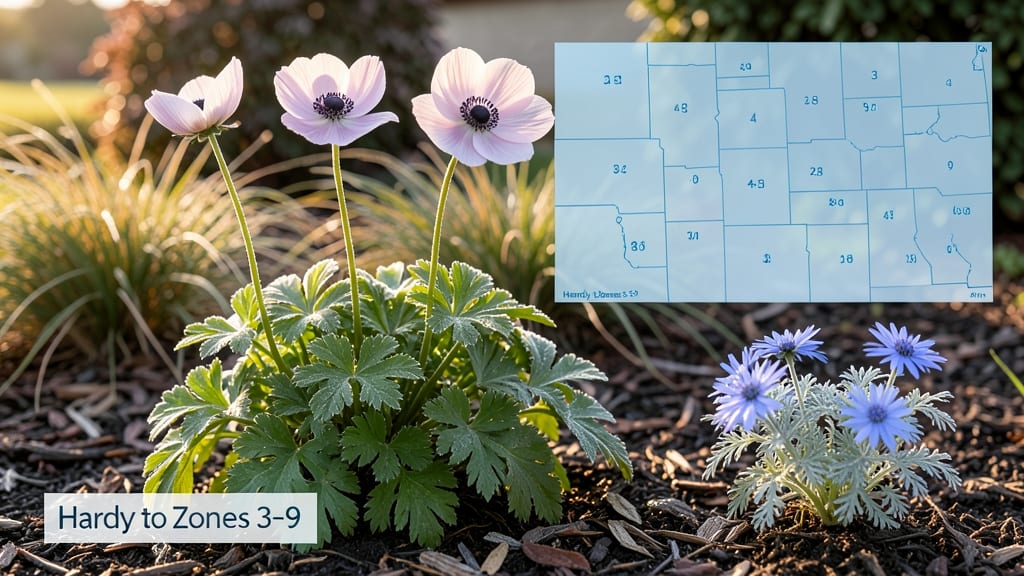
Understanding anemone hardiness zones is key to selecting the right variety for your climate, as they span from USDA Zone 3 for hardy Japanese types to Zone 9 for tropical species. Most anemones thrive in cooler regions (Zones 4-8), with Japanese anemones enduring Zone 3 winters while heat-sensitive varieties like Anemone hupehensis need Zone 7-9 protection.
Anemones showcase remarkable adaptability across climates, but their survival hinges on winter temperatures. 🌱 The hardiest varieties, like Japanese anemones (Anemone × hybrida), can withstand subzero conditions down to -40°F, making them perfect for northern gardens.
Meanwhile, tropical anemones struggle below 20°F, which is why Zone 7-9 gardeners should opt for mulching or container growing to simulate warmer conditions. What's fascinating is how soil insulation—like thick mulch layers—can extend anemone hardiness by 2-3 zones in marginal climates.
For gardeners in transition zones (like Zone 6), choosing the right cultivar makes all the difference. Cold-tolerant types like Anemone tomentosa (fuzzy anemone) handle Zone 4 winters beautifully, while Anemone hupehensis (hybrid anemone) thrives in Zone 7's milder winters.
The key is matching your zone to the plant's natural range—this ensures blooms without constant winter stress. Always check your local microclimate too, as sheltered spots can push anemones into slightly colder zones than official maps suggest.
💡 In This Article
- How Climate Affects Anemone Survival in Different Zones
- Best Anemone Varieties for Cold vs. Warm Climates
How climate affects Anemone survival in different zones
Anemones survive winter through a combination of natural cold resistance and environmental protection strategies. Their hardiness stems from deep root systems that store energy and insulating foliage that acts like a natural blanket.
For example, Japanese anemones (Anemone × hybrida) can tolerate temperatures as low as -40°F, thanks to their thick, woody stems and underground rhizomes that protect vital tissues. In contrast, tropical varieties like Anemone hupehensis struggle below 20°F, as their delicate stems lack these adaptations.
The key difference lies in their cellular structure—hardy anemones produce antifreeze proteins that prevent ice crystal formation in their tissues during freezing events.
Soil temperature plays a critical role in winter survival. Anemones planted in well-drained, organic-rich soil with 3-4 inches of mulch can withstand 5-10°F colder conditions than those in exposed or sandy soils. This insulation layer maintains root-zone temperatures above freezing, even when air temps drop below 15°F.
In Zone 5, where winters dip to -20°F, gardeners often see anemones die back to the ground only to regrow in spring—a survival tactic that avoids permanent damage.
The science here is fascinating: anemone roots contain high levels of sucrose, a natural cryoprotectant that lowers the freezing point of their cellular fluids.
Microclimates create dramatic survival differences within the same zone. A south-facing slope might push anemones into Zone 6 where they’d normally struggle, while a frost pocket could drop a Zone 7 garden to Zone 5 conditions.
This is why gardeners in marginal zones (like Zone 6b) should plant anemones near walls or under evergreens to capture 10-15°F of additional warmth. The wind chill effect also matters—exposed sites can feel 5-8°F colder than sheltered spots, making location selection as important as zone matching.
For instance, Anemone tomentosa (fuzzy anemone) thrives in Zone 4 when planted against a brick wall but may fail in an open meadow.
Water management becomes critical during freeze-thaw cycles. Wet soil conducts cold more efficiently, so anemones in Zone 5-6 need well-draining soil to prevent root rot during spring thaws.
The ideal soil mix for cold climates combines 50% native soil, 30% compost, and 20% perlite to balance moisture retention with drainage. In warmer zones (7-9), tropical anemones benefit from regular watering to prevent drought stress, which weakens their frost resistance.
The contrast is stark: a Zone 3 anemone can handle dry winters, while a Zone 8 variety may need consistent moisture to survive summer heatwaves.
Light exposure affects cold tolerance too. Anemones grown in partial shade (4-6 hours of sun) develop stronger stems and deeper roots than those in full sun, making them more resilient to winter dieback. This is why shade-loving varieties like Anemone × hybrida 'Honorine Jobert' outperform sun-loving types in colder zones.
The trade-off? Too little light reduces flowering—so gardeners must balance winter hardiness with summer vigor. In Zone 7, for example, anemones planted in full sun may struggle with heat stress during summer while those in dappled shade thrive year-round.
What most gardeners overlook is how late-season growth impacts winter survival. Anemones that send up new shoots after mid-August in Zone 5-6 risk frost damage, as these tender stems lack time to harden off. The solution? Prune back leggy growth by early August to redirect energy to root development.
This timing trick can extend anemone hardiness by 1-2 zones in transitional climates. For tropical varieties in Zone 8, container growing with winter protection (like frost blankets) mimics their native warm conditions, allowing them to survive where they’d otherwise perish.