
Vegetables
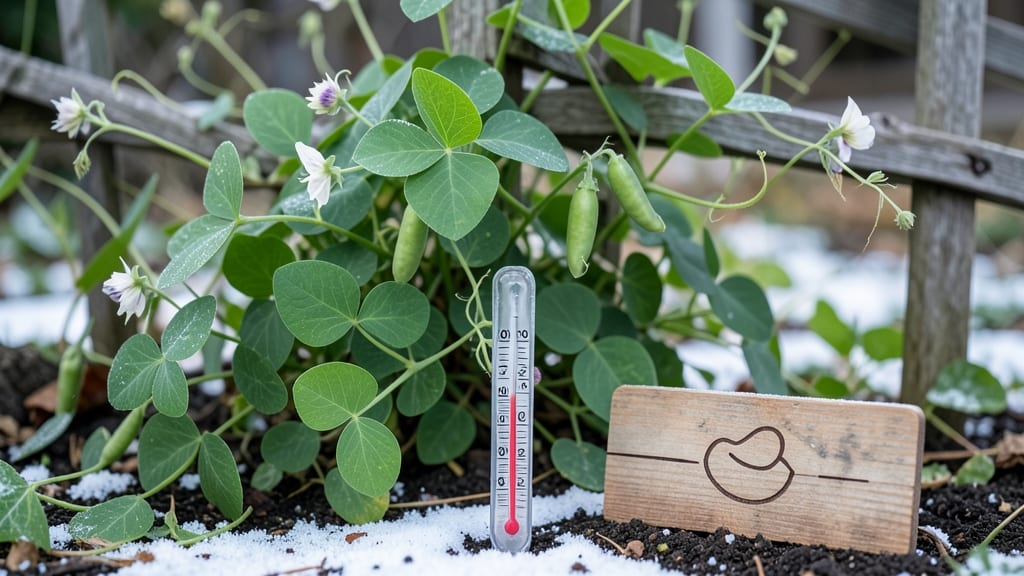
Peas are cold hardy and thrive in cool temperatures, surviving light frosts down to 20°F (-7°C) and even brief dips to 10°F (-12°C) when mature. Early planting in spring or fall extends harvest windows before summer heat sets in.
Cold hardiness in peas isn't just about surviving frost—it's about their ability to germinate and grow in temperatures as low as 40°F (4°C), making them one of the earliest vegetables you can plant in spring. 🌱 The secret lies in their natural antifreeze proteins, which protect cell membranes from ice crystal damage.
I've seen gardeners in Zone 3 successfully grow peas by planting them in early spring or late summer, taking advantage of the cooler months when other crops struggle. Just remember, while young plants can handle light frost, established vines with pods are far more resilient.
What's interesting is how different pea varieties respond to cold. For instance, sugar snap peas often tolerate colder temperatures better than shelling peas, which is why they're a favorite for early spring gardens.
If you're in an area with unpredictable late frosts, consider using floating row covers—they can raise soil temperatures by 5-8°F (3-4°C) and provide an extra layer of protection without smothering the plants.
💡 In This Article
- Pea Varieties and Their Cold Tolerance Levels
- Protecting Peas from Late Frost and Freezing Temperatures
Pea varieties and their cold tolerance levels
Peas aren't all created equal when it comes to frost resistance. Snow peas and sugar snap peas generally handle cold better than shelling peas because their thinner pods freeze more easily.
For example, varieties like 'Oregon Sugar Pod' can survive down to 15°F (-9°C) when mature, while shelling peas like 'Wando' typically tolerate only 20°F (-7°C) without protection. The key difference lies in their pod structure—thinner pods freeze faster, but thicker pods like snap peas retain moisture better in cold snaps.
Maturity stages dramatically affect cold hardiness. Young pea plants can sprout in soil temperatures as low as 40°F (4°C), but their tolerance improves as they mature. A 3-inch-tall seedling might survive 25°F (-4°C), while a fully vined plant with pods can handle 10°F (-12°C) for short periods.
This is why gardeners in cold climates often plant peas in early spring—they establish roots before summer heat arrives. Heirloom varieties like 'Green Arrow' often outperform hybrids in cold tolerance because they've been selectively bred over generations for resilience.
Here's what's fascinating about pea cold tolerance: their cells produce natural antifreeze proteins that prevent ice crystals from forming within plant tissues. These proteins, called ice nucleation proteins, bind to water molecules and create tiny ice crystals outside the cells first, protecting the delicate internal structures.
This biological mechanism is similar to how some fish survive in Arctic waters! 🌟 The downside? These proteins degrade in prolonged cold, which is why mature peas can handle brief freezes but not extended sub-freezing temperatures.
If you're comparing varieties, consider these cold tolerance rankings:
- Most cold-hardy: Sugar snap peas (e.g., 'Sugar Sprint') - 15-20°F (-9 to -7°C)
- Moderately cold-hardy: Snow peas (e.g., 'Oregon Sugar Pod') - 20-25°F (-7 to -4°C)
- Least cold-hardy: Shelling peas (e.g., 'Lincoln') - 25-30°F (-4 to -1°C)
Temperature isn't the only factor—soil moisture plays a crucial role. Peas grown in well-drained but consistently moist soil can tolerate 5°F (3°C) colder temperatures than those in dry soil. This is why mulching with straw or grass clippings (2-3 inches deep) helps maintain soil temperature and moisture during cold snaps.
The mulch acts like a blanket, reducing temperature fluctuations by 10-15°F (5-8°C) compared to bare soil.
What most gardeners don't realize is that peas actually prefer cool weather for optimal growth. Ideal temperatures for pea development range between 60-70°F (15-21°C) during the day and 50-55°F (10-13°C) at night.
When temperatures climb above 80°F (27°C), peas stop producing pods entirely. This makes them perfect for early spring or fall planting when other vegetables struggle to thrive. 🌱
The coldest pea varieties can handle are often the oldest—heirloom peas like 'Telephone' or 'Mammoth Melting Sugar' have been grown for over a century in Europe's colder climates. These varieties developed through natural selection in harsh conditions, giving them genetic advantages modern hybrids sometimes lack.
For extreme cold climates (Zones 1-3), consider planting peas under cold frames or in microclimates near south-facing walls where temperatures can be 10°F (5°C) warmer than the surrounding area.