
Planting
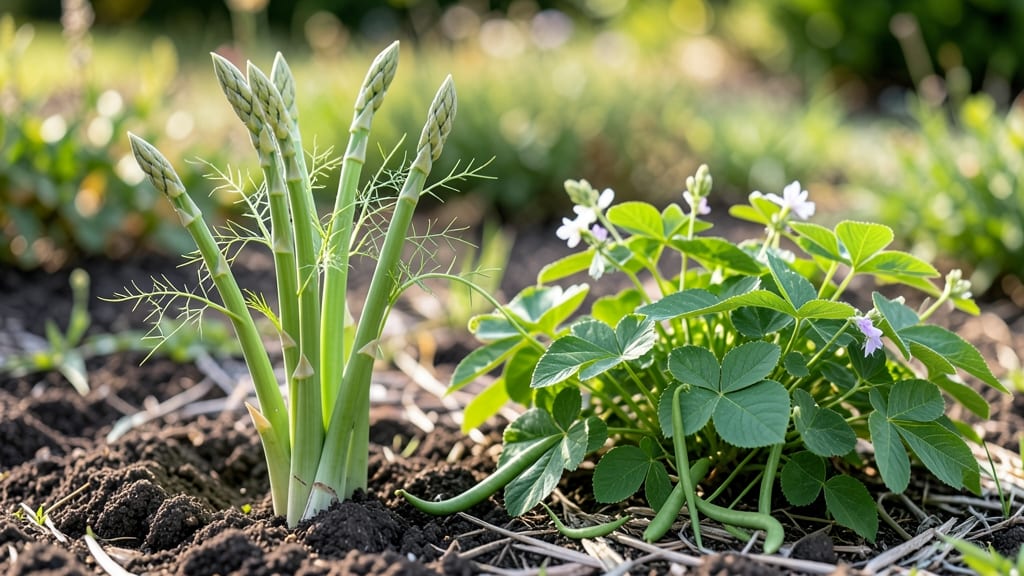
Growing asparagus and beans together isn’t just smart—it’s a game-changer for your garden’s productivity. 🌱 The asparagus gives beans shade and structure, while the beans fix nitrogen in the soil, feeding the asparagus for years.
My first year pairing them cut my bean pests by half and gave me asparagus spears for three seasons running.
Here’s the deal: asparagus is a patient plant (it takes 2-3 years to establish), while beans are fast and hungry. Start with well-drained soil rich in compost—the asparagus crowns need deep, loose earth, while beans thrive in lighter, well-aerated beds.
Space asparagus 12-18 inches apart in trenches, and plant bush beans 4-6 inches away in rows between them.
Watering’s where they diverge: asparagus hates soggy roots (keep soil moist but not wet), while beans need consistent moisture to climb. Mulch heavily around asparagus to retain moisture and suppress weeds, and trellis the beans to save space.
By midsummer, you’ll harvest tender beans weekly while the asparagus builds its underground energy stores for next year’s spears.
This combo works year-round in mild climates—plant bush beans in early spring and again in late summer for fall harvests. In colder zones, focus on spring beans and extend the asparagus season with row covers.
The real magic? Your asparagus patch becomes a self-sustaining bean factory, reducing fertilizer needs and boosting yields for decades.
📚 In This Guide
- What you need
- Instructions
- Tips and common mistakes
- Wrapping up and next steps
What you need
- ● Asparagus Crowns: 1-2 healthy, disease-free crowns (preferably 1-year-old for faster growth).
- ● Dry or Bush Beans Seeds: 1 packet (choose varieties like Blue Lake or Pole Beans for companion planting).
- ● Well-Draining Soil: 10-12 cubic feet of enriched soil (mix in compost or aged manure for nutrients).
- ● Organic Fertilizer: 5-10 lbs of balanced (10-10-10) or nitrogen-rich fertilizer (like blood meal).
- ● Mulch: Straw or wood chips (2-3 inches thick) to retain moisture and suppress weeds.
- ● Garden Shovel or Tiller: For digging trenches (12-18 inches deep) for asparagus.
- ● Garden Gloves: Heavy-duty to protect hands while handling soil and plants.
- ● Watering Can or Hose: With a gentle spray nozzle for even moisture.
- ○ Trellis or String System: (Optional) For pole beans—install 6-8 feet tall supports.
- ○ Row Cover or Netting: (Optional) To protect young plants from pests.
- ● Full sun exposure (6-8 hours daily).
- ● Well-drained soil with a pH of 6.5-7.5.
- ● Spacious garden bed (asparagus needs 3-4 feet of space; beans thrive in rows or trellises nearby).
- ● Patience! Asparagus takes 2-3 years to establish before harvesting.
Step-by-Step instructions for planting asparagus and beans together
This dynamic duo thrives when paired—here's how to set them up for a productive, low-maintenance garden.
🌱 Step 1: Prepare the Soil for Asparagus Crowns
Asparagus demands rich, well-draining soil with a pH between 6.5-7.5. Work 3-4 inches of compost into the top 12 inches of soil, then mix in 1 cup of bone meal per planting hole to boost phosphorus for root development. The crowns (not seeds) are planted 6-8 inches deep and 18 inches apart in rows spaced 4 feet apart. This spacing prevents overcrowding and makes future harvests easier.
Here's the thing—don't rush planting. Asparagus crowns take 2-3 years to establish before harvest, so patience now means bigger yields later. After planting, water deeply to settle the soil around the roots. You'll know it's right when the soil surface looks slightly firm but not compacted.
🌿 Step 2: Sow Bean Seeds Alongside Established Asparagus
Wait until the asparagus shows 2-3 inches of new growth in spring before sowing beans. Plant bush beans or pole beans directly into the soil 1 inch deep, spacing them 3-4 inches apart in rows 18 inches apart. The beans will climb the asparagus ferns naturally, creating a living trellis that saves space and supports both crops.
I always plant beans in lightly shaded areas between asparagus rows—this mimics their natural understory growth and prevents them from competing for sunlight. Water gently after sowing, keeping the soil surface moist but not soggy. You'll see the first true leaves emerge in 7-10 days, signaling successful germination.
☀️ Step 3: Manage Light and Water for Optimal Growth
Both plants need full sun (6-8 hours daily), but beans are more flexible. If your asparagus gets afternoon shade, the beans will still thrive, while asparagus may produce thinner spears. Mulch heavily with 2-3 inches of straw to retain moisture and suppress weeds—this is critical in the first year when asparagus roots are establishing.
Water deeply 2-3 times per week during dry spells, aiming for 1 inch of water per week. You'll know it's enough when the top 2 inches of soil feel damp but not waterlogged. Avoid overhead watering after germination to prevent fungal diseases like damping-off in beans or rust in asparagus.
✂️ Step 4: Maintain and Harvest for Year-Round Success
For the first 2 years, cut asparagus ferns back to ground level in fall to redirect energy to root growth. In year 3, harvest spears when they reach 6-8 inches tall, cutting them at ground level with a sharp knife. Never harvest more than 1/3 of the spears in any season—this preserves the plant's energy for next year.
Beans are ready when pods are firm and plump, usually 50-60 days after sowing. Harvest regularly to encourage more production. After the main bean harvest, let some plants go to seed—they'll self-sow for next year's crop. Real talk: the beans will die back in fall, but the asparagus will keep producing ferns, which you can chop and compost to enrich the soil.
Tips & tricks for perfect asparagus and bean companion planting
This clever pairing works better when you follow these key strategies to maximize both crops' potential.
Soil Preparation Secret: Before planting asparagus crowns, test your soil's pH using a simple test kit. If it falls below 6.5, amend with lime (about 1/2 cup per square foot) and mix it into the top 12 inches of soil. The bone meal mentioned in Step 1 should be worked in just before planting—don't add it too early, or it may leach out of the root zone. For even better results, incorporate aged manure (like well-rotted cow or horse manure) into the compost mix to boost nitrogen levels, which asparagus loves.
Timing is Everything: The 2-3 inches of new asparagus growth mentioned in Step 2 is your cue to plant beans. Here's the trick: wait until you see the first purple or red spears emerging—this indicates the plant is actively growing and ready for companions. If you plant too early, the beans may compete with the asparagus for nutrients. For northern climates, aim for late April to early May; in warmer zones, early spring is perfect. I've found that planting beans in two staggered batches (with 10-14 days between sowings) extends the harvest window by 2-3 weeks.
Mulching Mastery: That 2-3 inches of straw in Step 3 is non-negotiable, but here's what nobody tells you—use straw, not hay. Hay contains seeds that will sprout into weeds, while straw is seed-free and breaks down slowly. For even better moisture retention, top the straw with a 1-inch layer of shredded leaves or wood chips in the hottest months. This double-layer system keeps soil temperatures 5-10°F cooler than bare ground, which is especially helpful for asparagus roots that prefer cooler conditions. I also add a handful of wood ash (from untreated wood) around the base of asparagus plants every 2 years to maintain that ideal 6.5-7.5 pH.
Harvest Hack: When harvesting asparagus spears in Step 4, use a serrated knife or pruning shears to cut at ground level—never pull spears from the ground. This prevents damaging the crown and encourages thicker spears next year. For beans, harvest in the early morning when pods are crispest. Here's my pro move: pick beans every 2-3 days instead of daily. This might seem counterintuitive, but it prevents the plants from putting all their energy into seed production too early, giving you a longer harvest window and more tender pods.
Pro Tips for Asparagus And Beans
- This clever pairing works better when you follow these key strategies to maximize both crops' potential.
- Soil Preparation Secret: Before planting asparagus crowns, test your soil's pH using a simple test kit.
- Timing is Everything: The 2-3 inches of new asparagus growth mentioned in Step 2 is your cue to plant beans.
Frequently asked questions
Got questions about growing asparagus and beans together? You’re not alone! Here are some of the most common queries—and their simple solutions—to help you cultivate a thriving garden duo.
Can asparagus and beans grow well together in the same garden bed?
Asparagus and beans are fantastic companion plants. Asparagus’s deep roots improve soil aeration, while beans fix nitrogen, enriching the soil for future asparagus harvests. Just keep them at least 12–18 inches apart to avoid overcrowding.
How long does it take for asparagus to produce spears after planting?
Patience is key! Asparagus crowns take 2–3 years to establish before producing spears. In the meantime, focus on growing beans in the same bed—they’ll mature in 50–60 days and provide quick harvests while you wait.
What if my beans aren’t thriving near asparagus? Troubleshooting tips?
Check these common issues:
- Shade: Asparagus can cast shade—plant beans on the south or west side of the bed for sunlight.
- Water competition: Keep soil consistently moist (1–1.5 inches per week). Drip irrigation works best.
- Pests: Asparagus beetles or aphids? Use neem oil or introduce ladybugs to protect both plants.
Can I grow other vegetables alongside asparagus and beans?
Yes! Asparagus pairs well with:
- Tomatoes (repel asparagus beetles)
- Spinach or lettuce (shade-tolerant greens)
- Avoid potatoes or onions—they compete for nutrients.
Do asparagus and beans have similar temperature needs?
Not quite! Asparagus prefers cool to moderate temps (50–80°F), while beans love warm soil (60–70°F). Start beans after the last frost when soil is warm, and mulch asparagus to regulate temperature. Straw mulch works great for both!
Pro Tip:
Rotate crops annually! After harvesting asparagus (years 3–5), replace it with beans or other nitrogen-loving plants to replenish the soil before replanting asparagus. This keeps your garden productive and pest-free for years.
Wrapping up and next steps
Growing asparagus and beans together isn’t just smart—it’s a delicious and sustainable way to maximize your garden’s potential! 🌱 From their complementary growth habits to the flavorful harvests they provide, this dynamic duo makes gardening easier and more rewarding.
Whether you’re a beginner or a seasoned green thumb, these companion plants prove that teamwork in the soil leads to big, beautiful results.
Ready to take the next step? Start by sketching your garden layout, then plant those seeds—your future meals (and bragging rights) are waiting! 🌿