
Planting
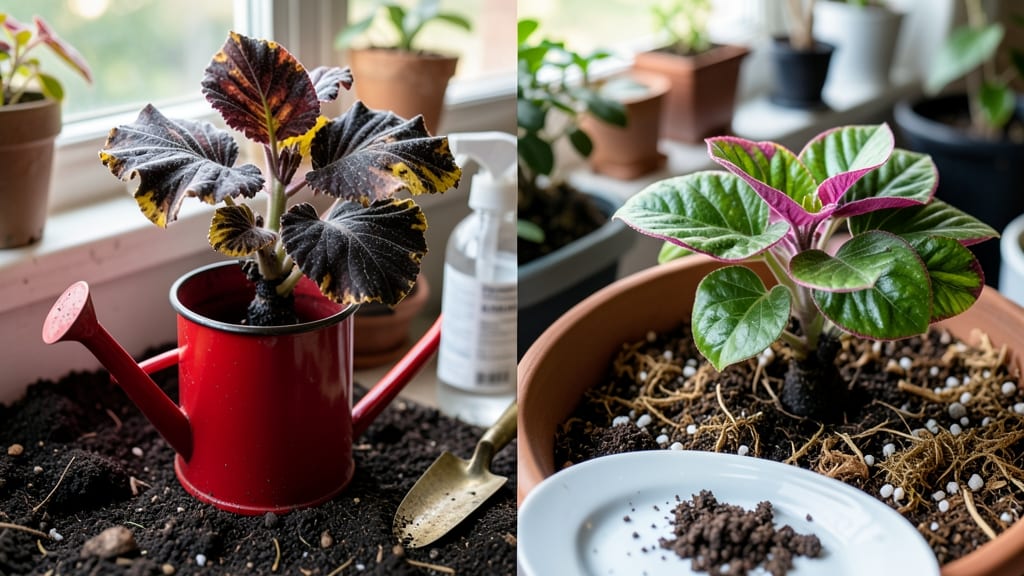
Your begonia plant dying from root rot isn’t a death sentence—it’s a 7-day rescue mission. 💧 I’ve nursed back more soggy begonias than I’d like to admit, and the key is catching it early when leaves turn yellow and stems feel mushy.
The good news? You can save it with the right steps, even if it looks hopeless now.
Root rot thrives when soil stays too wet, clogging roots and cutting off oxygen. Look for dark, smelly roots and leaves that wilt even when watered. The fix starts with stopping water immediately—let the soil dry completely before touching it again.
Most people overwater because they panic, but soggy roots can’t recover without air.
In just 7 days, you’ll see new growth if you act now. Repot in fresh, well-draining mix, trim any blackened roots, and water lightly only when the top inch feels dry.
Place it in bright, indirect light (no scorching sun) and watch those crisp leaves bounce back—it’s shocking how fast they respond.
Prevent this next time by using pots with drainage holes and a mix designed for begonias. A 50/50 blend of peat moss and perlite keeps roots happy without suffocating them. Your plant will thank you with vibrant blooms all season long.
Root Causes Of Begonia Decline
Begonias are resilient plants, but when they start to wilt, yellow, or drop leaves, it’s often a sign of stress from underlying issues. Understanding the why behind your begonia’s decline is the first step to saving it.
Let’s break down the most common culprits—each with a clear scientific explanation and actionable insights to help you diagnose the problem.
Begonias thrive in consistently moist but never soggy soil. When overwatered, their delicate roots suffocate due to lack of oxygen, leading to root rot—a fungal or bacterial infection that cuts off nutrient and water uptake.
Here’s how it happens: - Waterlogged soil (below 50% porosity) triggers anaerobic conditions, where harmful microbes like Pythium and Phytophthora flourish. - Compacted or clay-heavy soil holds excess moisture, worsening the issue. - No drainage holes in pots trap water at the root zone, accelerating rot.
🔍 Quick Test: Stick your finger 1–2 inches into the soil. If it’s damp after 2–3 days, you’re overwatering.
While overwatering is more common, chronic underwatering causes leaf scorch, wilting, and eventually root collapse.
Begonias are tropical plants—they need consistent moisture to mimic their natural humid environment. - Dried-out roots lose their ability to absorb water, leading to osmotic shock (cells dehydrate and die). - Potted begonias dry out faster than in-ground plants due to limited soil volume. - Low humidity (below 50%) increases transpiration (water loss through leaves), stressing the plant.
💡 Pro Tip: Group begonias together to raise humidity naturally, or use a pebble tray with water underneath the pot.
Begonias are prone to pathogenic infections when stressed (from over/underwatering or poor air circulation).
The most common offenders: - Powdery Mildew (Erysiphe spp.): Appears as white, powdery patches on leaves, blocking sunlight and causing leaf drop. - Botrytis Blight (Botrytis cinerea): Causes gray, fuzzy mold on stems and flowers, thriving in damp, stagnant air. - Root Rot (Pythium or Phytophthora): Starts as black, mushy roots and spreads upward, turning stems soft and discolored.
🔥 Warning Sign: If leaves develop brown, water-soaked spots that spread rapidly, isolate the plant immediately to prevent spread.
Tiny invaders like spider mites, aphids, and thrips weaken begonias by sucking sap, injecting toxins, or spreading disease. Their damage often goes unnoticed until:
- Yellowing or curled leaves (from aphids/whiteflies).
- Fine webbing on undersides (spider mites).
- Stunted growth (thrips feeding on new shoots).
🎯 Prevention: Spray leaves with neem oil weekly or wipe them down with a damp cloth to deter pests.
Begonias prefer warmth (65–75°F) and indirect light—too much or too little throws them off balance.
- Cold drafts (below 50°F) cause leaf drop and root damage due to cellular membrane breakdown.
- Direct sunlight (especially in summer) leads to sunburn (bleached, crispy patches on leaves).
- Fluorescent lighting (too blue) can weaken growth over time.
⏰ Action Step: Move your begonia to a bright, east-facing window or provide sheer curtain shade if leaves yellow near glass.
Begonias need balanced nutrients, but imbalances cause decline:
- Nitrogen deficiency (pale yellow leaves) from overused soil or lack of fertilizer.
- Magnesium deficiency (yellow patches between leaf veins) from acidic soil (pH <6.0).
- Fertilizer burn (brown leaf tips) from excess salts in soil.
💪 Fix It: Use a balanced 10-10-10 fertilizer every 4–6 weeks in spring/summer, and flush soil with water monthly to prevent salt buildup.
Disturbing roots during repotting or division can sever nutrient pathways, causing wilting. Signs include:
- Sudden leaf drop after repotting.
- Stunted growth or soft stems (roots didn’t recover).
- Mushy roots if handled roughly.
👨🍳 Best Practice: Repot only when roots circle the pot, and water lightly for 3–5 days post-transplant to reduce stress.
Revive Your Begonia Fast
Now that you know the signs and causes behind your struggling begonia, let’s roll up our sleeves and get it back to its vibrant best! The good news?
Most issues are reversible with quick action. Below, we’ve mapped out practical fixes for each common problem, plus prevention tips to keep your plant thriving long-term.
Fix:
- 🔥 Emergency Extraction
- Gently remove the plant from its pot and inspect the roots. Healthy roots are firm and white; mushy, brown, or black roots are rotten.
- Use sterilized scissors (wipe with rubbing alcohol) to trim away all soft, discolored roots. Keep only the firm, white sections.
- 🍳 Fungal Treatment Bath - Fill a clean container with 1 part hydrogen peroxide (3%) to 4 parts water and soak the roots for 10 minutes.
This kills fungus and bacteria. - Alternative: Use a fungicide like copper fungicide or neem oil solution (1 tsp neem oil + 1 quart water).
- 👨🍳 Repotting with Fresh Mix
- Choose a terracotta pot (better drainage!) and fill it with a well-draining mix:
- 50% peat moss or coconut coir
- 30% perlite or pumice
- 20% orchid bark or vermiculite
- Replant the begonia, ensuring the crown (where stems meet roots) sits just above the soil line.
- Choose a terracotta pot (better drainage!) and fill it with a well-draining mix:
- 🥘 Recovery Care
- Skip watering for 3–5 days to let roots heal.
- After that, water only when the top 1–2 inches of soil are dry (stick your finger in to check!).
- Place the pot in bright, indirect light (no direct sun yet) and avoid misting.
💡 Prevention Tips:
- Upgrade your pot: Terracotta or pots with drainage holes are a must.
- Water wisely: Stick to the "soak and dry" method—water thoroughly, then wait until the soil is dry before repeating.
- Avoid soggy soil: If your plant sits in a saucer, empty excess water after 10 minutes.
Fix:
- 🔪 Trim the Damage
- Snip off any yellowed, crispy, or bleached leaves with clean scissors, cutting back to healthy green tissue.
- 🌡️ Relocate Immediately
- Move your begonia to a spot with bright, indirect light (east or north-facing windows are ideal).
- If outdoors, provide dappled shade (under a tree or sheer curtain).
- ✨ Hydration Boost
- Give the plant a deep watering to help it recover from stress.
- Increase humidity by placing the pot on a pebble tray with water (ensure the pot isn’t sitting in water).
💡 Prevention Tips:
- Know your begonia’s needs: Rex begonias tolerate more light than wax or angel-wing varieties.
- Acclimate slowly: If moving from indoors to outdoors, introduce it to sunlight gradually over 1–2 weeks.
- Watch for signs: If leaves start curling or turning yellow, it’s time to move it.
Fix:
- 📊 Diagnose First
- Yellowing from the bottom up? Likely overwatering or root rot (follow the root rot rescue steps above).
- Yellowing with brown edges? Could be underwatering or low humidity (see next fix).
- Yellowing with green veins? Magnesium deficiency (Epsom salt fix below).
- 💪 Fertilizer or Epsom Salt Fix - For general weakness or slow growth, use a balanced liquid fertilizer (10-10-10 or 20-20-20) diluted to half strength.
Feed every 4–6 weeks during spring/summer. - For yellowing with green veins, mix 1 tbsp Epsom salt per gallon of water and water the plant. Repeat every 2 weeks until leaves green up.
- 🥗 Adjust Watering
- Let the top 1–2 inches of soil dry out between waterings.
- If the soil is too dense, mix in perlite or sand to improve drainage.
💡 Prevention Tips:
- Fertilize lightly: Begonias are sensitive—overdoing it causes more harm than good.
- Flush the soil: Every few months, water the plant with plain water to leach out excess salts.
- Monitor leaves: Regularly check for early signs of nutrient issues (e.g., purple stems = phosphorus deficiency).
Fix:
- 🔪 Isolate and Inspect
- Move the plant away from others to prevent spread. Check undersides of leaves and stems for pests.
- 🍳 DIY Pest Spray (Safe & Effective) - Option 1: Soap Spray - Mix 1 tsp mild dish soap + 1 quart water in a spray bottle. Test on a small leaf first. - Spray thoroughly, focusing on infested areas.
Repeat every 3–5 days until pests are gone. - Option 2: Neem Oil - Mix 1 tsp neem oil + 1 tsp mild soap + 1 quart water.
Spray and reapply every 7 days for 2–3 weeks. - Option 3: Alcohol Wipe - For stubborn pests like mealybugs, dab 70% isopropyl alcohol on a cotton swab and wipe them off.
- 🌿 Boost Plant Health
- After treating, fertilize lightly to help the plant recover (use a half-strength balanced fertilizer).
💡 Prevention Tips:
- Quarantine new plants: Keep them separate for 2–4 weeks before introducing to your collection.
- Encourage beneficial insects: Ladybugs and lacewings eat aphids—attract them with companion plants like marigolds.
- Wipe leaves regularly: Dust and debris attract pests—gently clean leaves with a damp cloth monthly.
| Problem | Fix Timeframe | Signs of Improvement |
|---|---|---|
| Root Rot | 3–7 days (with trimming) | New growth, firmer stems, fewer yellow leaves |
| Sunburn | 1–2 weeks | Leaves unfurl, no new browning |
| Yellow Leaves | 2–4 weeks | New leaves emerge green and healthy |
| Pest Infestation | 1–3 weeks | No visible pests, leaves stop wilting |
🎯 Pro Tip: Keep a plant journal! Note watering schedules, light changes, and pest treatments. This helps you spot patterns and adjust care faster next time. Your begonia will thank you with lush, happy leaves in no time!
Frequently asked questions
Why are my begonia leaves turning yellow from the bottom up?
This is almost always a sign of overwatering or root rot. Begonias hate soggy roots—when soil stays too wet, oxygen gets cut off, and harmful fungi like Pythium take over. Check the roots: if they're mushy or black, trim the bad ones and repot in fresh, well-draining mix. Water only when the top 1-2 inches of soil feel dry.
Can I save a begonia with black, mushy stems?
Yes, but act fast! Cut back to healthy green tissue above the blackened area with sterilized scissors. Soak the remaining plant in a 1:4 hydrogen peroxide (3%) to water solution for 10 minutes to kill fungus. Repot in fresh mix and hold off watering for 3-5 days to let roots recover. Place in bright, indirect light.
What's the best way to tell if my begonia is getting enough light?
Watch the leaves: Leggy growth with small leaves means it needs more light, while crispy brown patches or bleached spots mean it's getting too much direct sun. Begonias thrive in bright, indirect light—think east-facing windows or 6-10 feet from a south window with sheer curtains. Rotate the pot weekly for even growth.
How often should I fertilize a struggling begonia?
Start with half-strength balanced fertilizer (10-10-10) every 6-8 weeks during spring/summer. Over-fertilizing burns roots! If leaves show yellow with green veins, it's likely a magnesium deficiency—try 1 tbsp Epsom salt per gallon of water every 2 weeks. Always water thoroughly before fertilizing to prevent salt buildup.
My begonia's leaves are curling—what's wrong?
Curling usually means underwatering or low humidity. Stick your finger in the soil—if it's bone dry, give it a deep watering and place the pot on a pebble tray with water (keep pot off the water). For extra humidity, group begonias together or use a humidifier. Avoid cold drafts, which also cause curling.