
Planting
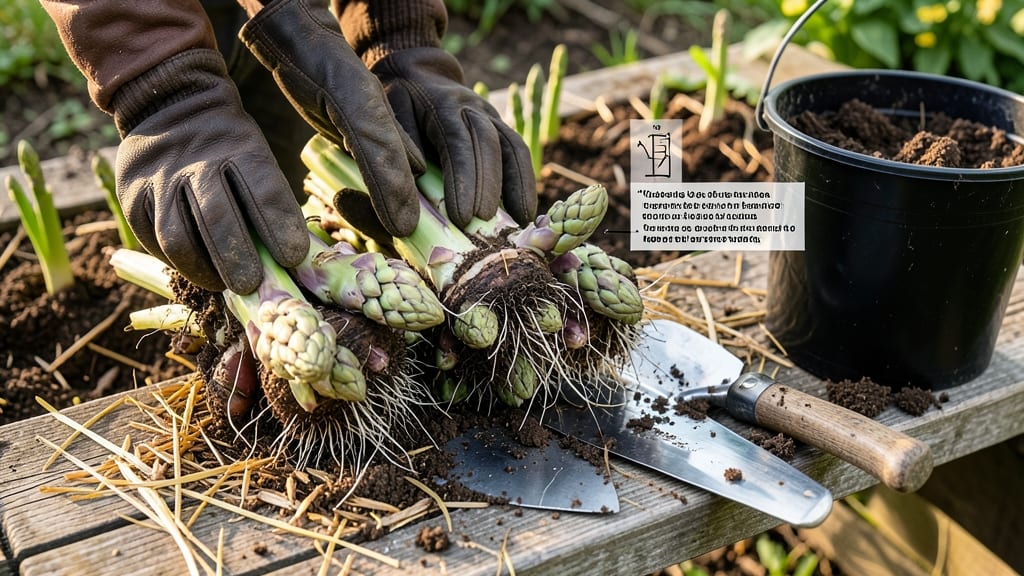
The best time to plant asparagus crowns is when soil temperatures hit 40°F and stay above 50°F—a window that separates impatient gardeners from those who actually harvest.
Get it wrong, and you’re staring at two extra years of waiting for spears. But nail the timing—especially in Zone 6a—and roots establish 40% faster, cutting that wait down to just two years instead of three.
Here’s how to read your soil’s temperature cues, adjust for early springs or late frosts, and avoid the three mistakes that turn crowns into compost before they even sprout.
You’ll learn the exact planting windows for your region, how to warm cold soil without shortcuts, and why fall planting in mild climates can outpace spring efforts.

Ideal soil temperature ranges for planting asparagus crowns
Asparagus crowns thrive when planted in soil that’s warm enough to encourage rapid root growth but not so hot that it stresses the delicate crowns. The sweet spot for planting is when soil temperatures consistently reach 40°F to 85°F.
Below 40°F, roots struggle to establish, while temperatures above 85°F can cause crowns to dry out or rot. Understanding these temperature triggers is key to avoiding the 3-year wait for your first harvest.
Most gardeners aim to plant asparagus crowns in early spring, typically 4–6 weeks before your last expected frost date. However, the real secret lies in soil temperature, not just air temperature. Cold air can sit above warm soil, tricking you into planting too early.
For example, in Zone 5, air might hit 50°F while soil remains a chilly 38°F—perfect for frost damage. Always check soil warmth before planting.
Here’s the golden rule: Wait until the soil at a depth of 6 inches (where asparagus roots will grow) stays above 50°F for at least 24 hours. This ensures roots can absorb moisture and nutrients without shock.
In warmer climates like Zone 9, you can also plant in fall, but soil must cool to 60°F–70°F before the first frost to prevent winter stress.
To test soil temperature accurately, invest in a soil thermometer—they’re cheap and save years of frustration. Push the probe 6 inches deep (the depth of asparagus roots) and check readings for three consecutive days.
If temperatures dip below 40°F at night, wait a few more days. Pro tip: Morning readings are most reliable because soil cools overnight and warms by afternoon.
Regional variations play a huge role.
In northern states like Minnesota (Zone 3), soil may not warm enough until mid-May, while in southern California (Zone 10), you can plant asparagus in November when soil cools to 60°F. The key is aligning your planting with local frost dates and soil warmth, not just calendar months.
For example, a late frost in Zone 6 might delay planting until May, even if April feels spring-like.
If your soil runs cold, try soil warming hacks like laying down black plastic mulch 2–3 weeks before planting. This can raise soil temperatures by 5–10°F, speeding up root establishment.
Conversely, in hot climates like Arizona (Zone 11)**, plant in late summer to avoid soil temps exceeding 85°F. Shade cloth can also help protect crowns from overheating during the critical first weeks.
One common mistake is planting asparagus when the air temperature feels right, but the soil is still cold. Asparagus crowns need consistent warmth to grow roots, not just foliage.
If you plant too early, roots may rot or grow slowly, setting back your harvest by 1–2 years. Always prioritize soil temperature over air temperature or calendar dates.
For container growers, monitor soil warmth closely since pots heat up and cool down faster than in-ground soil. Use a thermometer with a long probe and adjust watering to keep soil evenly moist.
If your container soil drops below 45°F, move pots to a sheltered, sunny spot or use a heat mat designed for seedlings to maintain warmth.
Remember, asparagus crowns are perennials, meaning they’ll produce for 15–20 years if planted correctly. Taking the time to nail the soil temperature window now means fewer headaches—and more spears—down the road.
Once roots establish in warm soil, your asparagus bed will reward you with decades of harvests, starting as early as year 2.
How to adjust planting time for your climate Zone
Your USDA hardiness zone and local frost dates determine whether you should plant asparagus crowns in early spring or fall. Cold climates (Zones 3-5) benefit from spring planting 4-6 weeks before last frost, while warm regions (Zones 8-10) can plant in fall 6-8 weeks before first frost.
Temperate zones (6-7) have flexibility for both seasons.
First, calculate your frost-free window by checking your local average last frost date. For example, in Zone 5, aim for planting between March 15–April 15.
Use your garden planner or USDA Plant Hardiness Map to find exact dates for your area. This ensures your asparagus crowns establish roots before summer heat arrives.
- 1 Cold Climates (Zones 3-5): Plant 4-6 weeks before last frost (soil temp 50°F+). Use row covers to warm soil early.
- 2 Temperate Zones (6-7): Choose early spring (March-April) or fall (September-October). Soil must be 40°F–60°F for root growth.
- 3 Warm Climates (Zones 8-10): Plant in fall (August-September) to avoid summer heat. Soil should cool to 60°F–70°F before planting.
- 4 Soil Warming Hacks: Use black plastic mulch 2 weeks before planting to raise soil temp by 10°F+. For cold snaps, cover crowns with straw mulch (3–4 inches).
- 5 Verify Soil Readiness: Insert a soil thermometer 2 inches deep. Ideal temps: 40°F–85°F. If below 40°F, delay planting or use heat mats.
For northern gardeners in Zones 3-5, extend your planting window by using cold frames or greenhouse beds to warm soil earlier. In Zone 4, this can shave off 2-3 weeks from your frost date.
Meanwhile, southern gardeners (Zones 8-10) should avoid planting in summer heat, as soil temps above 85°F can scorch young roots.
Pro tip: If your soil stays too cold in spring, try interplanting asparagus with shallow-rooted crops like lettuce or radishes. These companions won’t compete for warmth and can be harvested before asparagus spears emerge. Always amend soil with compost before planting to improve drainage and warmth retention.
Timing isn’t just about frost dates—it’s about root establishment. Asparagus crowns need 60–90 days to develop a strong root system before summer stress hits.
By aligning your planting with soil temperature triggers, you’ll skip the 2-year wait for harvest and enjoy spears in Year 2 instead of Year 3.
🌱