
Planting
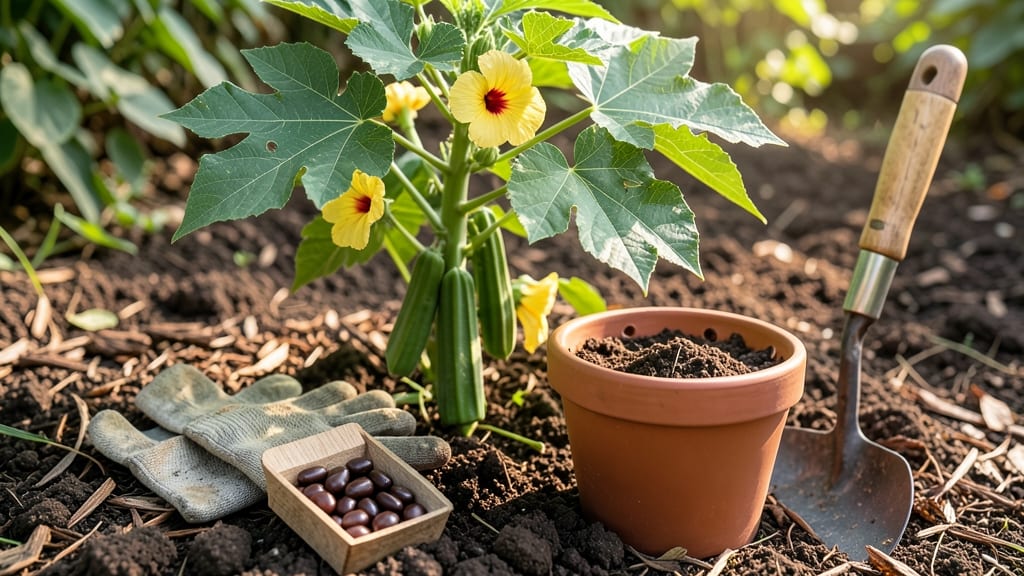
Planting okra seeds at the best time ensures a fast, bountiful harvest 🌱 — but get the timing wrong, and you’ll end up with bitter pods or no harvest at all.
Struggling to grow okra? Timing is everything—this heat-loving plant thrives only when planted at the perfect moment, or you’ll risk stunted growth, bitter pods, or even total failure. Discover the ideal planting schedule to harvest tender, flavorful okra all season long.
Okra loves warmth, so wait until soil temperatures hit at least 60°F (15°C) and all frost risk has passed. In USDA Zone 6a, that’s typically after your last frost date in April or May, but regional differences matter.
Inside, you’ll find zone-specific planting windows, soil temperature tips, and proven strategies to extend your harvest—whether you’re direct sowing or transplanting. Let’s get those seeds in the ground the right way!

Optimal planting windows for okra seeds by US hardiness zones
Okra is a heat-loving annual that demands precise timing to thrive. Plant too early, and frost will kill tender seedlings. Wait too long, and your harvest will suffer from bitter pods or poor yield.
The key? Understanding your USDA hardiness zone and soil temperature thresholds. Okra seeds need soil temps of 60°F+ (15°C+) to germinate, and air temps above 70°F (21°C) for vigorous growth.
In cooler zones (3-7), treat okra like a short-season crop—start seeds indoors or use transplants. Warmer zones (8-11) can direct-sow later, even into summer for fall harvests.
Below, I’ve broken down the ideal planting windows by zone, including soil prep tips and frost warnings to maximize your okra’s potential.
In Zones 3-5, where frosts linger into May, start okra seeds indoors 6-8 weeks before your last frost date. Use biodegradable pots to avoid root disturbance when transplanting.
Harden off seedlings for 7-10 days before setting them out after Memorial Day, when soil temps reliably stay above 60°F (15°C).
For Zones 6-7, direct-sow seeds 1/2 inch deep once nighttime temps exceed 55°F (13°C). Use black plastic mulch to warm soil faster and deter weeds.
In these zones, okra thrives in summer’s heat, so aim for planting by early May to harvest before fall frosts hit in September.
Gardeners in Zones 8-9 have flexibility: plant once in spring (March-April) for summer harvests, then again in late summer (August) for fall
5 Critical factors that determine the best planting time for okra
Okra isn’t your average vegetable—it demands warm soil, long daylight, and consistent heat to thrive. Plant too early, and your seeds rot in cold earth. Wait too long, and you’ll miss the peak harvest window.
The perfect timing depends on five key factors that interact like a finely tuned garden ecosystem. Let’s break them down so you can avoid common mistakes that lead to stunted plants or bitter pods.
First, soil temperature is non-negotiable. Okra seeds need soil that’s at least 60°F (15°C) to germinate—any cooler, and they’ll sit there forever. Next, daylight length matters because okra grows fastest with 12+ hours of daylight.
Then there’s humidity levels, which can either help or hinder germination depending on your climate. Don’t forget last-frost risks, which vary wildly by region, and microclimate conditions that can make your backyard warmer (or colder) than the official forecast.
🌱 5 Critical Factors for Planting Okra
- 1. Soil Temperature: Wait until soil reaches 60°F (15°C)—use a soil thermometer to check. Cold soil = failed germination. ⚠️
- 2. Last Frost Date: Plant 2-3 weeks after your area’s last frost. Okra cannot tolerate frost at any stage. ❄️
- 3. Daylight Length: Aim for 12+ hours of daylight—okra grows 30% faster in long days. Check your local sunrise/sunset times. ☀️
- 4. Humidity & Rainfall: High humidity (70%+) speeds germination but can cause fungal diseases. Drainage is key—avoid soggy soil. 💧
- 5. Microclimate Heat: South-facing beds warm up 5-10°F faster than north sides. Use black plastic mulch to raise soil temps by 5-7°F. 🌡️
"Okra hates cold—treat it like a tropical guest who needs warmth to stay happy."
Let’s tackle soil temperature first. Most gardeners rely on calendar dates, but that’s a recipe for disaster. A soil thermometer ($10 at any garden center) is your best friend here. If your soil is below 60°F (15°C), even in May, your seeds will rot before sprouting.
Pro tip: Dark-colored mulches like black plastic or straw can raise soil temps by 5-10°F, giving you an earlier planting window in cooler zones.
Next, daylight length is often overlooked. Okra is a short-day plant, meaning it grows fastest when days are long. In the Northern Hemisphere, this means planting after the spring equinox (around March 20).
If you’re in the Southern Hemisphere, aim for September-October. Use a sunlight tracker app to confirm your area’s daylight hours—12+ hours is ideal for maximum pod production.
Humidity plays a sneaky role too. Okra loves moderate humidity (40-60%) for germination, but too much (70%+) can lead to powdery mildew or root rot.
If your area is notoriously damp (like the Pacific Northwest), plant okra on raised beds with well-draining soil to prevent soggy roots. In dry climates (like Arizona or Texas), mulch heavily to retain moisture without suffocating the plants.
Finally, microclimates can shift your planting window by weeks. A south-facing wall or paved surface nearby can create a 5-10°F warmer spot than your yard’s average. Test your beds with a thermometer for a week before planting.
If your microclimate runs hotter than Zone 7 (even in Zone 5), you might plant 2-3 weeks earlier than the general guideline.
Remember: Okra is forgiving once established, but not when it’s young. Rush the timing, and you’ll end up with leggy, weak plants that produce bitter pods.
Play it smart, and you’ll enjoy tender, sweet okra all summer long. Start with these five factors, and your harvest will thank you. 🌱