
Planting
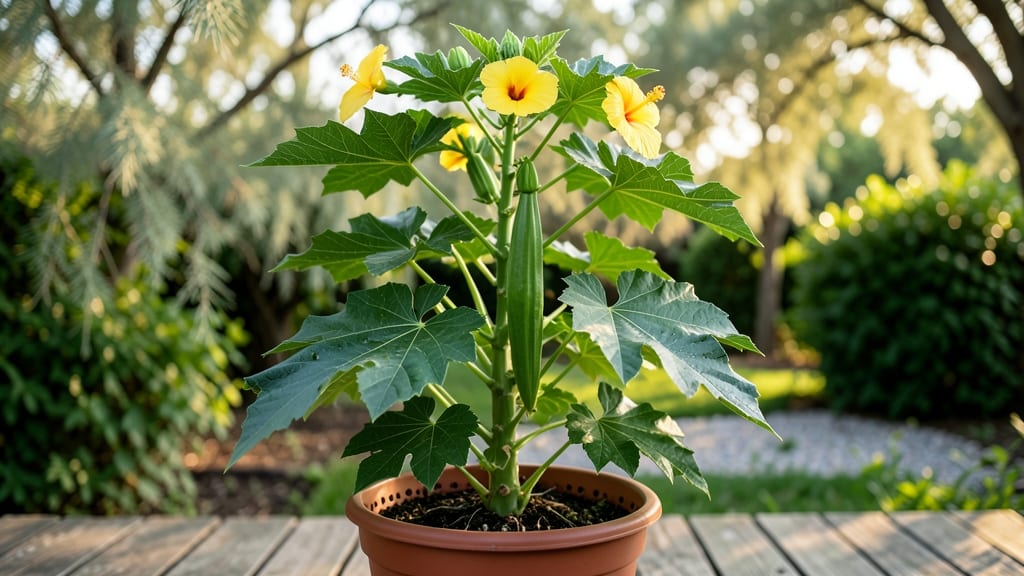
Growing okra in pots means sizing your containers just right for strong roots and big harvests—aim for at least 5-gallon capacity per plant to match its fast growth.
Struggling to grow okra in small spaces? The right pot size can transform your balcony or patio into a thriving okra garden—without sacrificing yield or plant health. Too small, and your 🌱 will bolt early or produce sparse pods; too large, and you waste space and water.
Okra’s deep taproots need 12–18 inches of soil depth, so shallow pots (like 5-gallon buckets) work only if you’re growing dwarf varieties. For standard okra, a 18-inch diameter pot gives roots room to spread while keeping the plant stable.
Below, I’ll walk you through the best pot types, how to maximize space with vertical supports, and the one trick that doubles your harvest in tight containers—no matter how limited your growing area.

Ideal okra plant pot size: minimum dimensions for healthy growth
Growing okra in containers is totally doable—even in tight spaces—if you choose the right pot size. Okra plants develop deep, fibrous roots that need room to spread, so cramming them into a tiny pot will stunt growth and reduce your pod yield.
The key is balancing root space with your available area while ensuring proper drainage and airflow.
For a single okra plant, the minimum pot diameter should be 12 inches to accommodate its root system and prevent overcrowding. However, if you're growing multiple plants, you'll need to increase the pot size or use separate containers.
Depth is equally critical—okra roots can extend 2–3 feet deep, so a pot with at least 18 inches of depth is ideal for healthy growth.
Why pot size matters: Smaller pots dry out faster, forcing you to water more frequently and stressing the plant. Larger pots provide stability, better moisture retention, and room for roots to explore, leading to taller plants and more abundant okra pods. If you're working with limited space, prioritize depth over width—okra roots grow downward more than outward.
| Pot Size | Minimum Dimensions | Best For | Notes |
|---|---|---|---|
| Small (1 plant) | 12" diameter x 18" depth | Balcony, patio | Minimum for 1 plant; use lightweight pot for easy moving. |
| Medium (2 plants) | 18" diameter x 24" depth | Small garden, deck | Space plants 12" apart; add trellis for support. |
| Large (3+ plants) | 24" diameter x 30" depth | Raised beds, large containers | Ideal for high yield; use well-draining soil mix. |
| Fabric Grow Bag | 14" diameter x 24" depth | Urban gardens, small spaces | Breathable material prevents root circling; lightweight. |
If you're growing okra in a fabric grow bag, opt for a 14-inch diameter x 24-inch depth container. Fabric pots allow roots to breathe and prevent circling, which is a common issue in rigid plastic or ceramic pots.
Just ensure the bag has sturdy handles or a stable base—okra can get top-heavy as it grows!
For multiple okra plants, space them at least 12–18 inches apart to avoid competition for nutrients and sunlight. If you're growing two plants in one pot, aim for a 18-inch diameter x 24-inch depth container.
This setup works well for small decks or patios but may require a trellis or cage to support the plants' height.
Okra thrives in well-draining soil, so avoid pots without drainage holes. If your container lacks holes, add a 1–2 inch layer of gravel at the bottom to prevent root rot.
Mix your potting soil with compost or perlite to improve aeration and moisture retention, especially in smaller pots that dry out quickly.
One common mistake is underestimating how fast okra grows. A single plant can reach 6–10 feet tall, so ensure your pot is stable enough to support its weight.
If you're growing okra in a 5-gallon bucket, it’s doable for one plant, but you’ll need to monitor watering closely—smaller pots dry out in 2–3 days during hot weather.
To maximize pod production, choose a pot with at least 5 gallons of soil volume for each okra plant. This ensures enough nutrients and moisture for robust growth.
If you're using a self-watering container, you’ll have more flexibility with watering schedules, but still prioritize depth over width for okra’s root needs.
Pro tip: If space is extremely limited, consider dwarf okra varieties like 'Burgundy' or 'Emerald'. These stay shorter (around 4–5 feet tall) and produce pods in smaller pots, making them perfect for balconies or windowsills.
Just remember—even dwarf okra needs 12 inches of diameter and 18 inches of depth to thrive.
Best compact pot options for okra: space-saving containers compared
Choosing the right container for okra isn't just about size—it's about creating an environment that supports root expansion and moisture retention while working within tight spaces. Okra's deep taproots need at least 12 inches of depth to thrive, but compact containers can still work with the right material and care.
Let's compare the best space-saving options to help you decide which will work best for your balcony or patio garden.
Fabric grow bags are a popular choice for okra because they're lightweight and breathable, which prevents soil compaction and root rot. Their flexible sides also allow roots to spread naturally, mimicking in-ground conditions. However, they dry out faster than rigid containers, so you'll need to monitor moisture closely.
For single plants, a 5-gallon fabric grow bag is ideal, while larger bags (7+ gallons) can support multiple okra plants if spaced properly.
Self-watering pots are another excellent option for space-conscious gardeners. These containers feature a built-in reservoir that slowly releases water to the roots, reducing the frequency of manual watering. This is especially helpful for okra, which needs consistent moisture but hates soggy soil.
Look for pots with at least 10 gallons of capacity for one plant, as they provide both depth and water efficiency. The downside? They're heavier and less portable than fabric bags.
| Container Type | Minimum Size for Okra | Material Benefits | Root Development | Best For |
|---|---|---|---|---|
| Fabric Grow Bags | 5–7 gallons (12" depth) | Breathable, lightweight, flexible | Encourages natural spread, prevents compaction | Balconies, patios, single plants |
| Self-Watering Pots | 10+ gallons (12" depth) | Moisture retention, durable | Consistent hydration, deeper roots | Drought-prone areas, busy gardeners |
| Vertical Pocket Planters | 3–5" deep pockets (cluster 3+) | Space-efficient, modular | Limited root growth, needs frequent feeding | Small spaces, urban gardens |
| Ceramic Pots | 15+ gallons (12" depth) | Aesthetic, good insulation | Slower drying, risk of root binding | Decorative gardens, cooler climates |
Vertical pocket planters are a game-changer for urban gardeners with limited floor space. These systems use a wall-mounted grid of pockets, each holding a single okra plant. While individual pockets may only be 3–5 inches deep, clustering 3–4 plants together can mimic the root space of a larger container.
The trade-off? You'll need to fertilize more frequently and monitor for pests, as the restricted root zone limits nutrient storage. This option works best for dwarf okra varieties like 'Burgundy' or 'Emerald.'
Ceramic pots offer a classic, decorative look but require more planning for okra. Their heavyweight and limited drainage can lead to root binding if not repotted annually. Opt for large, unglazed ceramic pots with at least 15 gallons of capacity to give okra enough room to grow.
These pots also insulate roots better in cooler climates, but they're not ideal for hot, dry areas where moisture retention is critical.
No matter which container you choose, prioritize drainage holes and well-draining soil to prevent root rot. Okra is a fast grower, so it will quickly outgrow small spaces—plan for at least 12 inches of depth and 18 inches of diameter per plant.
With the right container, you can enjoy a bountiful okra harvest even in the smallest of spaces! 🪴