
Plants
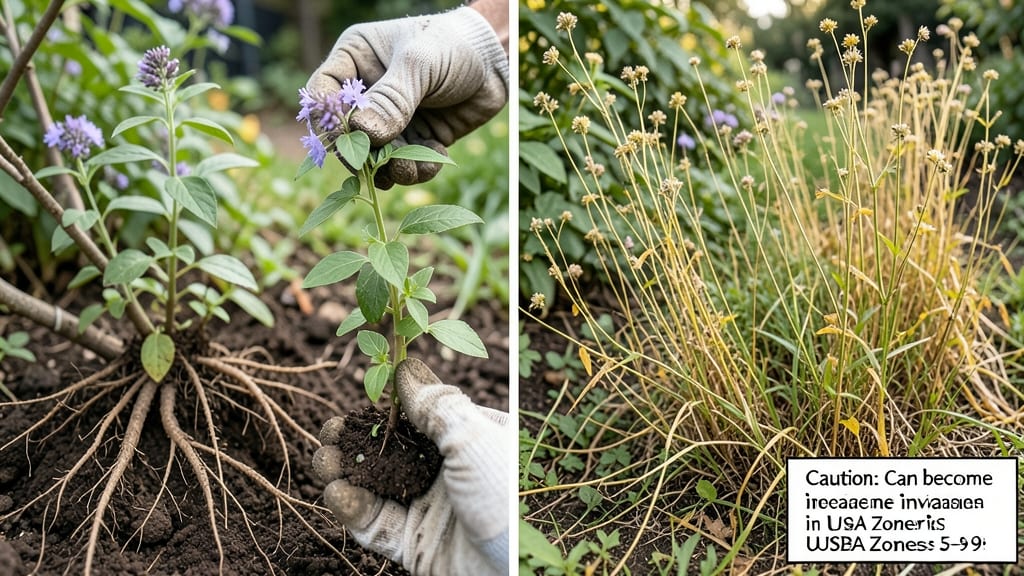
The bluebeard plant (Caryopteris × clandonensis) is an invasive species that spreads rapidly through underground roots and prolific self-seeding, creating thick mats that choke out native plants. Left unchecked, it can dominate gardens, roadsides, and disturbed areas, spreading up to 3 feet per year in favorable conditions. Immediate action and consistent monitoring are essential to stop its aggressive expansion.
The bluebeard plant's invasive nature comes from its dual invasion strategy: its extensive root system spreads underground while its tiny seeds hitchhike on wind and wildlife. 🌱 This combination lets it take over quickly, especially in sunny, well-drained areas where native plants struggle to compete.
I've seen it transform a peaceful garden into an unruly thicket within just two growing seasons, making early intervention absolutely critical. The key to controlling it lies in combining manual removal with long-term prevention strategies—like regular soil checks and strategic mulching—to prevent regrowth.
What makes this plant particularly troublesome is its adaptability. It thrives in poor soil conditions and drought, outcompeting many native species that can't handle those challenges. Once established, it forms dense colonies that block sunlight from reaching the ground, creating a hostile environment for other plants.
The good news? With the right tools and persistence, you can reclaim your space—but you'll need to act fast before it establishes a permanent foothold.
💡 In This Article
- How Bluebeard Plant Invades Ecosystems
- Step-by-Step Bluebeard Plant Removal Guide
How bluebeard plant invades ecosystems
The bluebeard plant (Caryopteris × clandonensis) deploys a two-pronged invasion strategy that makes it particularly aggressive. Its fibrous root system, known as a rhizome network, spreads horizontally underground at a rate of 12-18 inches per year under optimal conditions.
These roots release allelopathic chemicals that suppress competing plants, creating a chemical barrier that prevents other species from establishing roots nearby. 🌱 The rhizomes also store nutrients, allowing the plant to regenerate quickly even after partial removal.
Above ground, the plant produces thousands of tiny seeds that mature in late summer. Each seed weighs less than 0.5 milligrams, making them perfect for wind dispersal. Birds and small mammals further spread these seeds by carrying them in their fur or consuming the berries.
Once established, a single bluebeard plant can produce 50,000+ seeds annually, ensuring rapid colonization. The plant's ability to thrive in poor, dry soils gives it a competitive edge over native species that require richer, moister conditions.
Ecologically, bluebeard's invasion creates dense thickets that block sunlight from reaching the forest floor, effectively smothering ground cover plants. This monoculture reduces biodiversity by eliminating habitat for insects, birds, and small mammals that rely on native plant diversity.
The plant's drought tolerance also makes it resilient during dry spells when many native species would struggle, allowing it to dominate landscapes where water is scarce. 🌿 In urban areas, it often invades roadsides and construction sites, where disturbed soils provide perfect conditions for its rapid expansion.
What makes bluebeard particularly insidious is its growth habit. New shoots emerge from both the rhizomes and seed germination, creating multiple points of regrowth. Unlike many invasive plants that rely on a single strategy, bluebeard combines underground spread with prolific seeding, making complete eradication challenging.
The plant's ability to flower and set seed within its first growing season means it can establish new colonies faster than many gardeners can remove existing plants.
Seasonal timing plays a crucial role in its spread. Seeds germinate best in spring when soil temperatures reach 60-65°F, while rhizome expansion accelerates during late spring and summer when moisture is available.
This dual-phase growth pattern allows bluebeard to maintain its dominance year-round, making it a persistent challenge for land managers and gardeners alike. The plant's tolerance for a wide range of soil pH (5.0-8.0) further expands its potential habitats, from acidic woodlands to alkaline prairie soils.
Understanding these invasion mechanisms helps explain why bluebeard spreads so quickly and why traditional gardening methods often fail. The plant's ability to outcompete natives through chemical suppression, rapid growth, and multiple regeneration points creates a nearly impenetrable barrier once established.
This is why early detection and immediate action are critical—once bluebeard forms dense thickets, removal becomes exponentially more difficult. 💥