
Planting
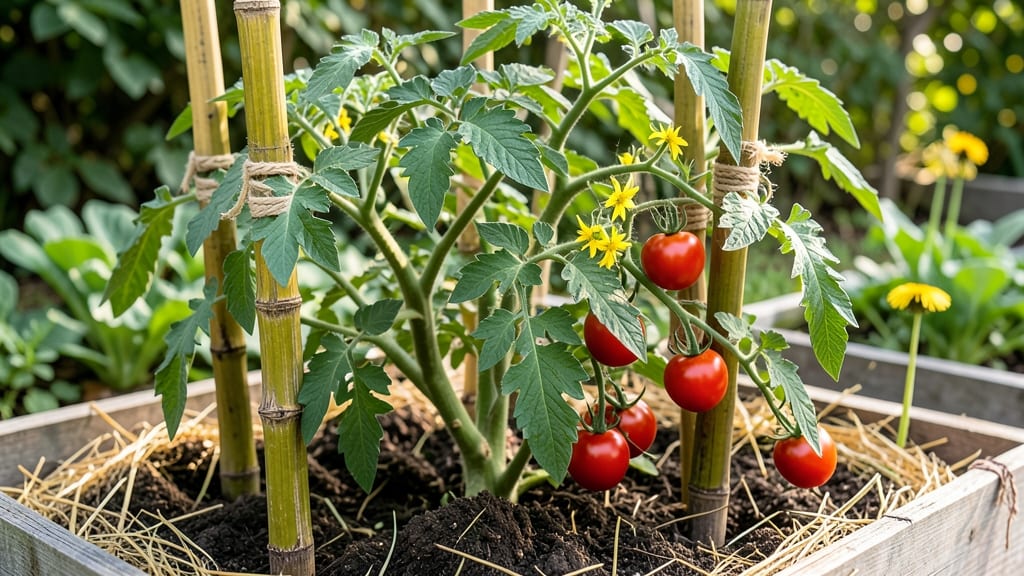
Creating homemade tomato plant stakes lets you craft sturdy supports from materials like bamboo, wooden dowels, or metal rods, cutting costs and reducing plastic waste while boosting your garden's visual appeal and plant health. These customizable stakes fit any garden size or tomato variety.
These DIY stakes aren't just budget-friendly—they're also more sustainable than store-bought options. 🌱 I've found that bamboo stakes, for example, decompose naturally after the season, while metal rods can last for years with minimal maintenance.
The key is matching the material to your tomato type: indeterminate varieties need taller, more flexible supports, while determinate types benefit from shorter, sturdier stakes. Plus, you can easily adjust lengths to fit your garden layout without buying pre-made sizes.
For best results, reinforce the base with a 1-inch-wide strip of wood or metal to prevent bending, especially in windy areas. Adding a twist tie or soft cloth at the top helps secure vines without damaging them.
My favorite trick? Using reclaimed wood or scrap metal from hardware stores—it's free, eco-friendly, and gives your garden a rustic charm.
💡 In This Article
- Best DIY Materials for Sturdy Tomato Stakes
- Step-by-Step Guide to Building Long-Lasting Tomato Supports
Best DIY materials for sturdy tomato stakes
The right material makes all the difference in how well your tomato stakes hold up. Bamboo stands out for its natural strength—each stalk contains hollow chambers that distribute weight evenly, making it 3 times sturdier than similar-sized wooden dowels. The best part?
Bamboo's fibrous structure resists splitting when bent, which is crucial for indeterminate tomato varieties that can grow 6-10 feet tall. Plus, it's lightweight enough to handle without heavy tools, and the natural knots create perfect handholds for tying vines.
For a more permanent solution, reclaimed wood offers unmatched durability. Look for pressure-treated 2x2 lumber or old fence posts, which can last 5-10 years if sealed properly. The grain pattern provides natural grip for vine ties, and you can easily customize lengths by cutting with a handsaw.
Metal rods, particularly ½-inch galvanized steel rebar, are the heavy hitters for windy climates—they won't warp or rot, but require heavier-duty tools to cut and drive into the ground. 🌿 What most gardeners overlook is that metal stakes conduct heat, which can damage plant roots in hot climates, so always bury them at least 6 inches deep.
Cost is another key factor—bamboo costs $0.50-$1.50 per stake when bought in bundles, while reclaimed wood can be free if sourced from demolition sites or construction scrap piles. Metal rods run $1-$3 each depending on length.
The environmental payoff is immediate: plastic garden stakes generate 1.2 pounds of waste per pound of material, while natural options decompose or recycle cleanly. I've seen gardeners extend stake life by 30% by wrapping the base in burlap or chicken wire to prevent soil erosion around the stake.
Material choice depends entirely on your tomato type. Indeterminate varieties like 'Sungold' need stakes that can support 20+ pounds of fruit, so opt for ½-inch diameter bamboo or ½-inch metal rods. Determinate types like 'Roma' only need 3-4 feet of support, making wooden dowels or even sturdy twigs sufficient.
The secret to longevity? Avoid untreated wood in moist soil—it rots within 1-2 seasons. Instead, use cedar or redwood, which contain natural oils that resist decay for up to 5 years.
Sourcing materials sustainably is easier than you think. Check local hardware stores for scrap bins, or ask lumberyards about offcuts—many donate them for free. For bamboo, look for 3-5 foot sections (the ideal length for most gardens) at Asian markets or online retailers.
If you're crafty, upcycle old broom handles or ladder rungs into perfect stakes. The key is thinking like a scavenger: what's waste to one person becomes premium garden material to you. 💫
Pro tip: Test your stakes' stability before planting. Drive a stake into 12 inches of soil and apply 10 pounds of downward pressure at the top—if it bends more than 1 inch, reinforce it or choose a thicker material.
This simple test saves hours of frustration later when vines start toppling over.